It is a belief that’Marriages are made in heaven’.It is also said that life partners has already decided and the marriage plays the role of connecting them. India has been always popular for its culture and traditions and marriage is one of the biggest ceremony of Indians.The bond between a husband and a wife is among the most solemn of human relationship.Wedding is an ausicious occassion and is done by the utmost enthusiasm . It is an extravagent affair between two families which is constituted by a traditional bent of mind. In Mithila it has its own traditions and rituals which has been following from thousands of years. There are many communities in Mithila region and all have there own wedding rituals , but Maithil Brahmims’ wedding is something which is considered as one of the popular among all because of its speciality and pecularity .Inhabitants of Mithila have until today managed to retain ties with their past traditions.
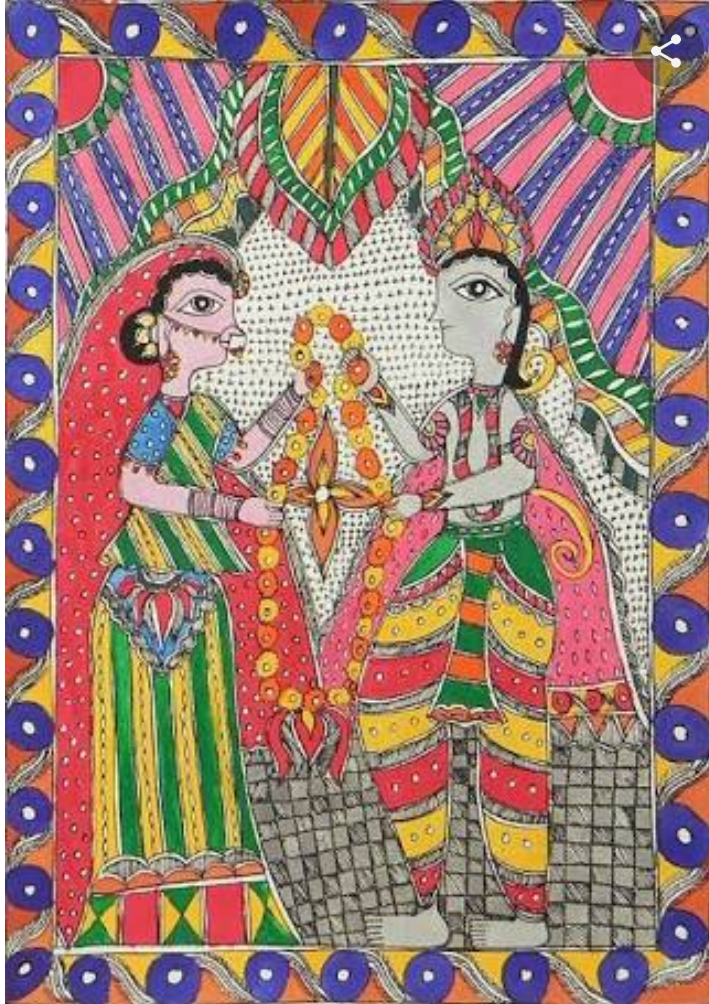
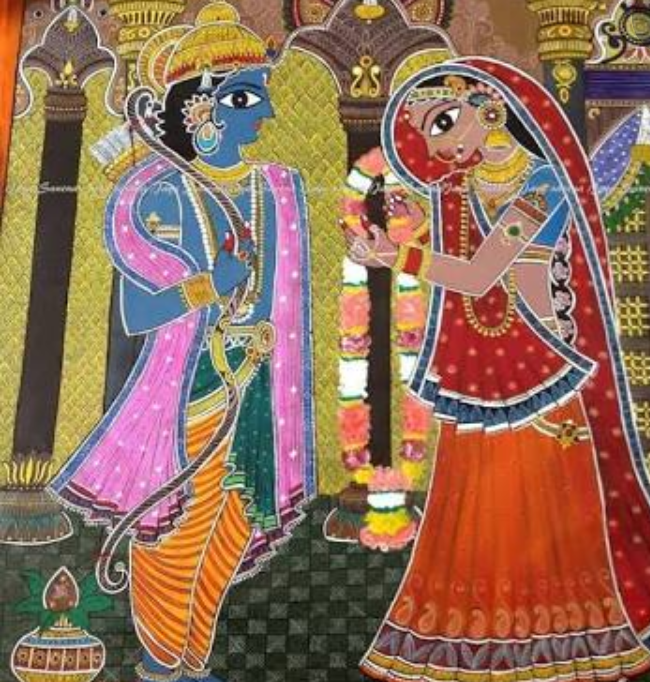
The major question that come into mind is , why only Maithil Brahmins wedding is special among all? It is because it has a direct connection to Ramayana. It is a belief that Maithil Brahmins’ marriage happens the same way with the same customs and rites as the marriage of Lord Rama and Mata Sita is mentioned in the Ramayana. Mata Sita was the daughter of Raja Janak of Mithila. For her wedding Raja Janak called for a ‘swayambar’ . Lord Rama won her in the ‘swaymbar’ and married her. Songs related to Ram and Sita is sung only. Thus this kind of marriage is exclusive to Mithila only.
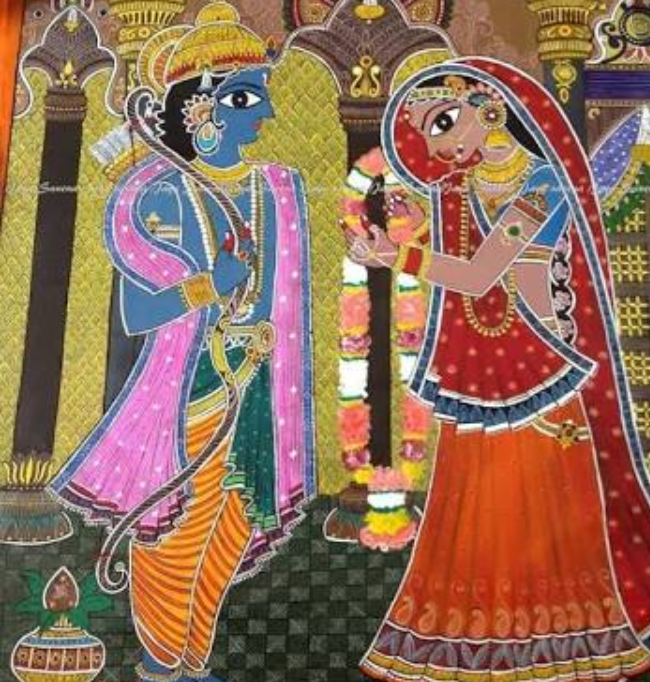
Saurath sabha (Bada Gaachhi)
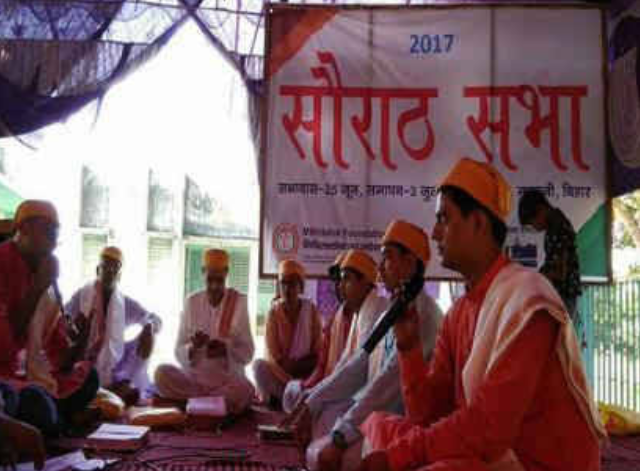
In the old times, this was a fair of bride- grooms held in the marriage season in the Saurath Village of the Madhubani district of Mithila. All the ‘elligible’ grooms would come to this fair , male members of the bride family would also reach, marriages would be fixed in this fair, and almost immediately carried out. This was something exclusive to the Mithila region which is now not in the tradition.The local folks are trying to revive this tradition .
Customs of marriages of Maithil Brahmins are very special and peculiar .
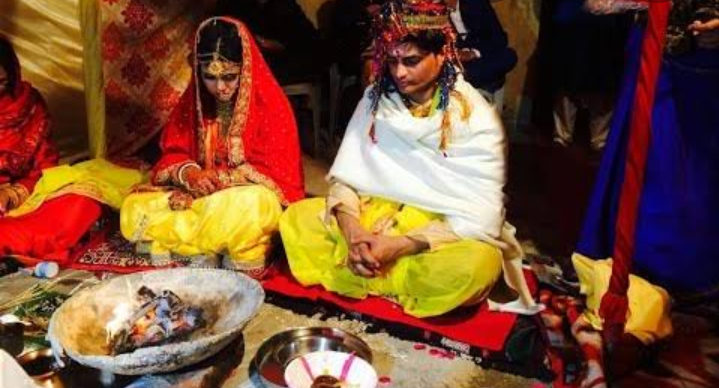
🌸 Marriage is not a ‘marriage on day -1 and Vidai on day -2 , period’ kind of ocassion in Maithil Brahmins. It is a four day affairs. Yes and without Chaturthi( 4th day of marriage) is not valid . Groom have to live at Bride’s home for four days , have to do many rituals and then can go with his bride or maybe sometime not with her. Traditionally, Bride does not go to her in law’s house even after chaturthi, that happens only in Dwirangman/Vidai which taken place in some odd year of marriage (1st, 3rd, 5th , 7th) due to early age of boys and girls. Now Dwirangman done soon after Chaturthi usually within 15 days , since within 15 days one need not look for a particular Mahurta – any day is fine.
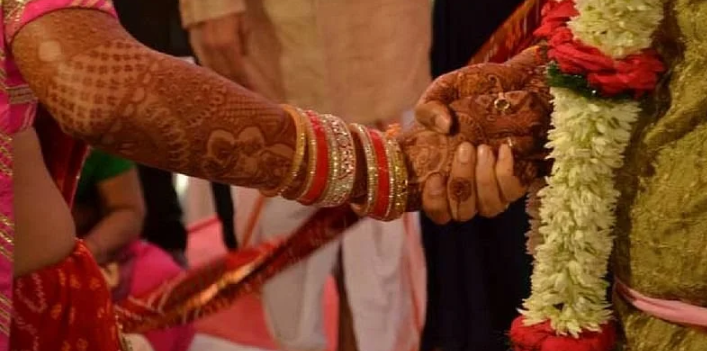
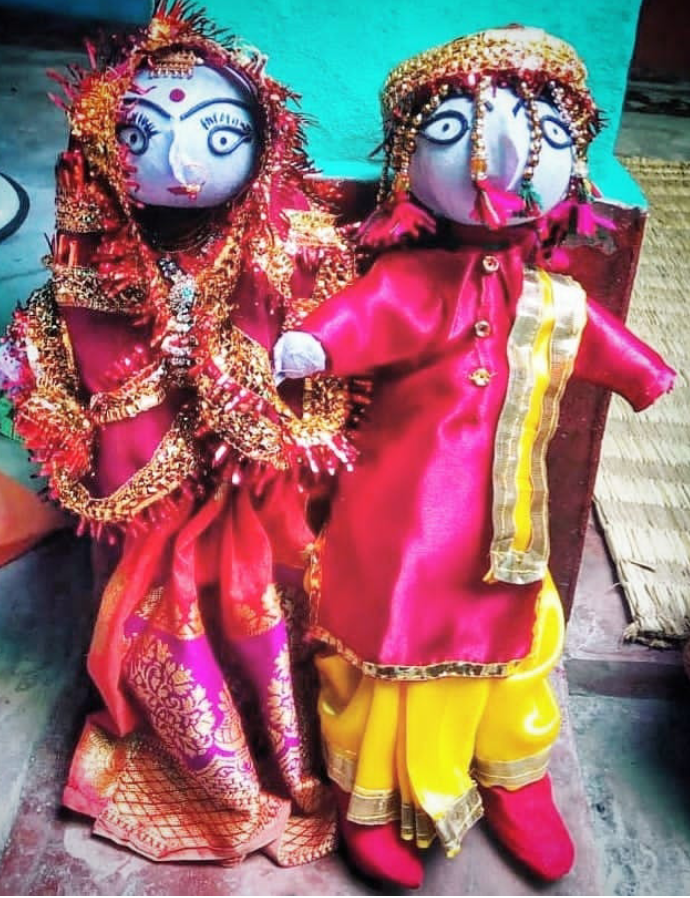
🌸 For a marriage to take place , the 1st thing to be looked at is’Gotra’. This system is familier to the people of many other Indian communities too. Each Gotra is named after some great Rishi/Monk . People belonging to a particular gotra are supposedly descendents of the Rishi after whom the gotra is named. Hence, people from the same gotra are considered brothers and sisters and cannot be married to each other. So for marriage to be happen the Bride and Groom should have same caste but different gotra.
🌸 There are things like Mool(stocks),Paanti which determine how high your Kul(lineage) is . Now consider this. If it were just the gotra the two families would have different gotra , then only the girl and the boy will marry. And also, there will be no any marriage relationship between these two families for seven generations. It means for the marriage to take place tjere should be no marriage affair between tjese two families for seven generations. So , after gotra is sorted out, family tree of past seven generations is matched to see that the intended bride and groom are not in any relation, where marriage should be prohibited . This process is called sidhananta . No family maintains its family tree. It is done by some people who are into this profession and maintaining family trees. They are called Panjiyaar. That is why they say There is only one person made for you!Not many people can possibly pass all these tests . Talking about these traditions following now, then yes some of them are not followed by those who have setteled somewhere else but those who are stills live in Mithila follows all the traditions till now.
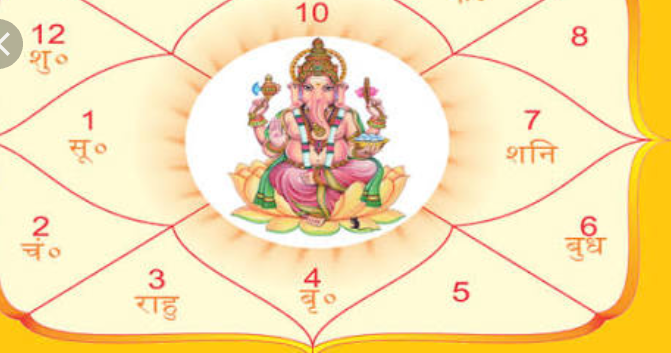
It is a belief that Kanyadaan or the gift of a girl in marriage is equal to a gift to a God. Wedding is a grand affair in the Maithil Brahmin caste. Having their own cultural and social traditions , the marriage ceremonies involve several steps or rituals that start from the pre-wedding period and extend till the post wedding period. The number of rites, traditions and rituals are perform on the wedding day in which involvement of the both families can be seen.
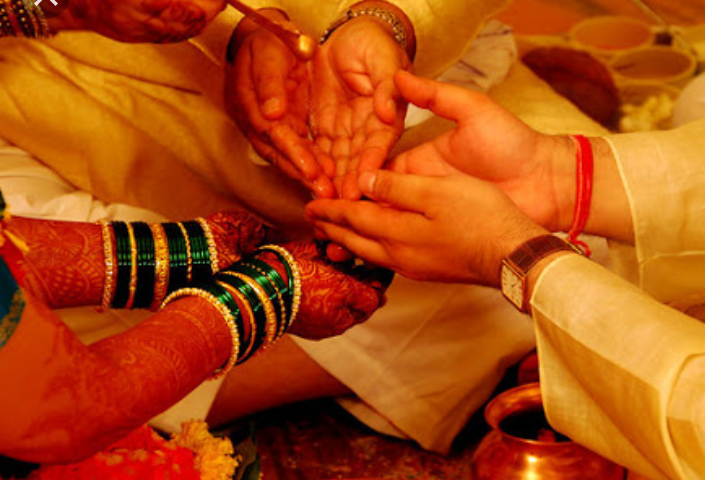
Rituals and Rites
Day before wedding day (Bride’s place)
🌸Mandappachadan/ Marhwa(settling of the Mandap / wedding alter)
Set up with bamboos and decorated with banana trees and mango leaves in the courtyard one day before martiage at the Bride’s place.
🌸Day Time: Bunch of married women gathered at to be bride’s place for singing the local songs of Lord Shiva, Lord Hanuman, Goddess Durga and songs referring to Brahmins. These married women are welcomed by the bride’s family with vermillion(sindoor) and hair – oil as a gift . They consider it very auspicious. Bride’s elder sister or her father’s sister fry paddy seeds (dhaan ka lava). At the evening ,all the wedding clothes, ornaments and accessories of bride’s, groom’s , and the clothes of thecperson who will do Kanyadaan are kept together .
Bride- wedding Saree, Lahthi(bangles) Groom-Dhoti, Kurta, Chadar(shawl), Janeu(sacred thread), Khadaam(slippers made up of wood), Paag(a very auspicious accesory of Mithila wear as a cap on head),Dhunesh, Darador(wear on waist) These are the local costumes that Bride and Groom must wear on their wedding .

Wedding Day
Bride take bath in the morning and wear new clothes and live the whole day with open hair.(The clothes that the bride wear the whole day has been given to the washerwoman, because washerwoman is considerd as the suhaag Giver to her.
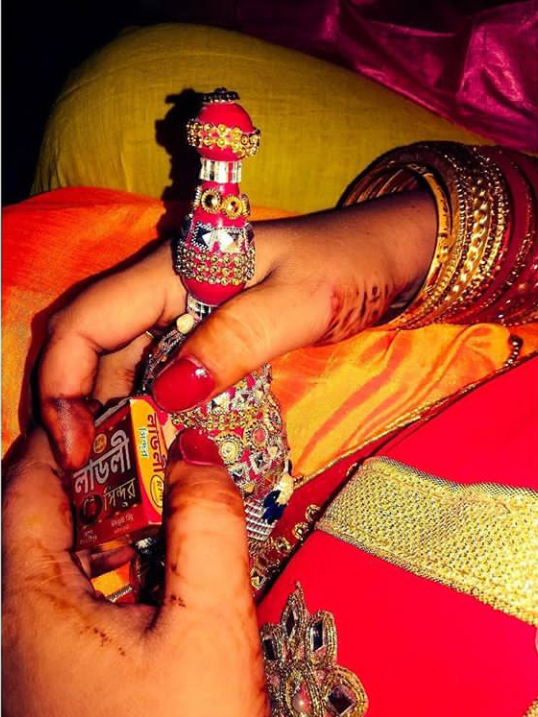
Kohbar Ghar A special place/room which has been selected for doing all the rituals during marriage, where bride and groom has to live for four days till Chaturthi.This place is decorated with Kohbar painting on one wall . An earthan pot called Kalash with four – wicked lamp, called Chaumukh on its top is placed in the Kohbar ghar.
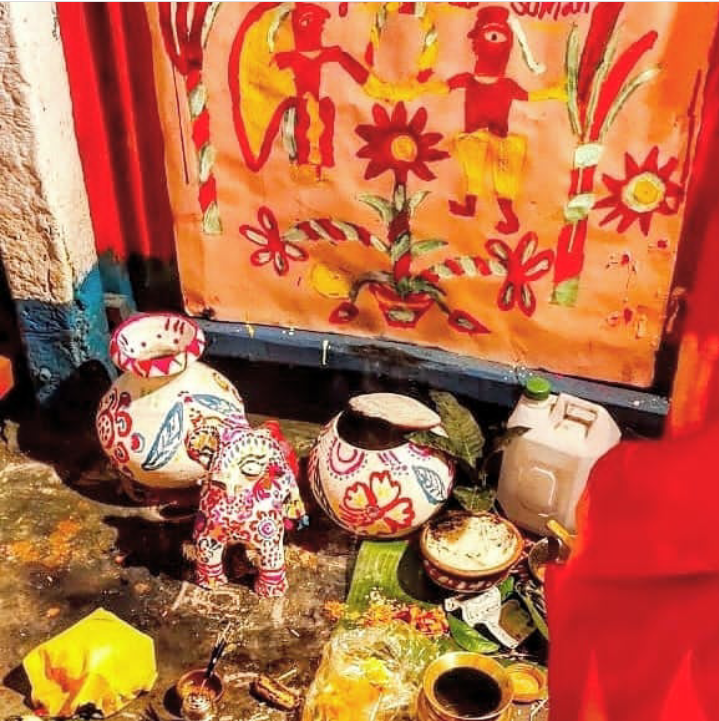
The Bride have to keep a betel-nut(sauns- supari) the whole day.
In afternoon, Pandit(priest) , Bride, and the person who is suppose to do Kanayadaan ritual(mostly they are the old aged of the family like grandfather, grandmother etc.) gathered at the Kul Devi/ family God place that is placed in some part of the home only and pray for her good wedding life and this is known as Matrika Puja.
In the evening, the washerwoman give blessings to the bride as Suhaag . Ritual related to this: The washerwoman dip her 4-5 hair in a pot of water and the bride have to drink that water. She also serves Chura-Dahi(local food) by her own hand to the Bride. Now the bride gift her the saree that she wore the whole day. This ritual is consider as very auspicious and it is happening in the same way till now.
Before coming Of Baraat, (The friends and family of the groom who come with all fun and enthusiasm for the wedding which is headed by the groom only) the bride worships the mango tree and Mahuwa tree with the help of grinned rice(pithaar) and red colored sacred thread.It is a belief that each and every girl take the blessings of nature for her marriage. This shows how people of Mithila coneented with the motjer nature.
Now the Baraat has arrived . These are the name of the traditions that has beem done after coming of Baraat.
AagyaDala: From Bride’s family elder member go to the groom’s family with a big plate made up of bamboo sticks decorated with Dhoop and incense sticks (Changeda). Now groom’s family placed clothes, ornaments and other accessories in the changeda for bride, her mother and other elders of the house and give permission for the initiation of the wedding.
Bride’s friends and realtives take groom to the house and greeted with sweets(Biggi).
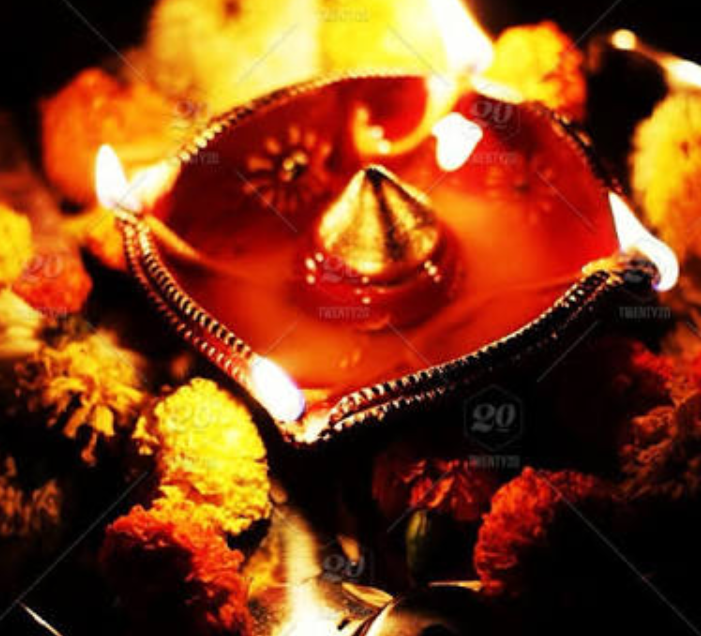
The wedding is always about the enjoyment and celebration. And people of Mithila has made each and every ritual so interesting and amazing which is full of hillarious acts that no rite seem to be boring and just a tradition.
Now going back to the wedding day the next ritual is Parichhan ( welcoming of the groom by the ladies of the bride’s side). All the rituals done by a experienced lady of the bride’s side who have also the responsibility to become a mediater between the bride and the groom for the next four days as in old times mostly arranged marriage happened , so boy and girl are not known to each other, and thus this lady used to connect them . The lady in local language called as Vidhkari. In Parichhan vidhkari started asking questions realted to the households, making fun of him in a traditional way , apply Kaajal and chaanan and then make him enter to the Kohbar ghar by holding his nose with the help of betel leaf.It is considered as a very funny scene .
The next ritual is Naina Jogin that takes place in Kohbar ghar.In this ritual groom have to find her bride who has been hidden under the big shawl with her sister. This ritual is very entertaining , the ladies of the bride’s side has been singing the local wedding songs . Here , the groom have to encounter with the bride’s sister’s attack of curd in her hand which is suppose to put on the groom’s face.
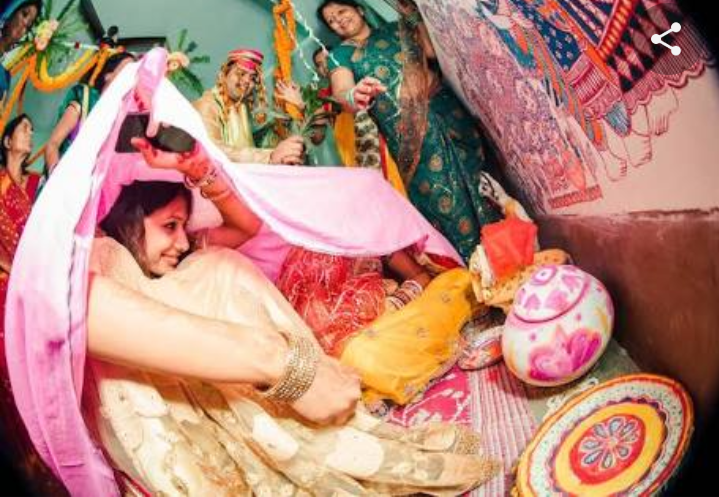
The next ritual is Othangar kootna .
After this Bride and groom are made to sit side by side in the mandapa. The ritual of Kanyadaan is started. Now Vivaah yagya has also started with the chanting of mantras by the priest and with the background local wedding songs.
Lavadahan as a ritual has been done by them where bride have to stand in front of the groom, with a plate made up of bamboo sticks(konia) . The groom hold her shoulder and the brother of the bride put lava (paddy seeds) on the plate three times and all the times bride and groom fluckered them in the air by moving three times around the mandapa. It may said that these are the first few steps that the couple takes together to mark the beginning of their married life.
In Mithila Vivaah , the Barber, the washerwoman , and many more local professionals of the society are being valued much .
Shilarohan, Sindoordaan, ghoonghat. Chumaun, Doorbaakshat, Naghar are the rituals being done at the wedding night. One more speciallity of Mithila Vivah is that it takes place the whole night until the morning. It is the longest running wedding in the Indian culture.
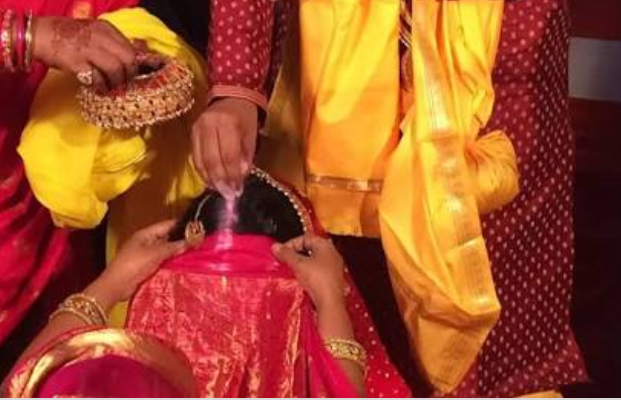
Shilarohan is a ritual done by the couple in the starting of the marriage ceremony.In this ritual the bride keep her right leg on a religious stone(shila) and the groom touches it and chants mantras.Sindoordaan means applying sindoor(vermillion)on the bride’s head. In Mithila the sindoor that applies on the wedding night on the bride’s head is not the red vermillion, it is their own traditional vermillion known as Bhuswa Sindoor , it is in the pink color. The original red sindoor is applied on the 4th day of the marriage(chaturthi). Ghoonghat is a tradition in which the bride is being gifted saree and ornaments as the blessings by the groom’s elder brother. This is a ritual in which groom’s elder brother put the veil of the bride down while the groom put it up . It happened for the three times. Chumaun and Doorbaakshat are the local traditions in which blessings are given to the new couole by the elder married women of the house or the community.Next ritual is Naghar in which bride’s elder sister or her father’s sister fill two soil pots and keep them in the Kohbar ghar.Now the first day of wedding has ended here.
2nd day of wedding
It is a ritual that the bride, the groom and the vidhkari have to survive on only sweet foods for four days . They are not allowed to eat salt. They are not allowed to take bathe also.Now the second day of wedding started in Kohbar ghar where some more rituals is done . The bride do Gauri Pujan with her groom . The groom opens the braid of the bride as a ritual , in another ritual he opens her fist too which she is suppose to make the fist three times and everytime the groom has to open her fist by his left hand. These rituals are entertaining and the ladies of the house who organises them enjoyes a lot. Another ritual is Mauhak in which many sweet food items has been made such as kheer, mithai . The food plates got ready with them and there happens once more a very entertaining act in which vidhkari, groom, bride and the ladies of the house participated.Again it follows Doorbaakshat and Chumaun.These rituals happens until the day before chaturthi.
Chaturthi(original wedding day)
On the 4th day of the marriage the bride and the groom are prepared for the original marriage. They are again dressed in the wedding clothes. The Kohbar ghar is prepared and decorated with airipan(rangoli) . Both are made to sit with each other . The priest again chants the mantras and the groom today put the red vermillion on the bride’s head. Now tje wedding is consider the real wedding.
The next day of the Chaturthi the bride with the five married ladies of the house go to the nearby pond with a plate having sindoor, satanja(mixture of grains) ,hair oil , clothes . The ladies apply sindoor and oil on the bride’s head as a blessing. She gifts them Satanja . This ritual is known as Danauhi. Now the bride is all ready to go with the groom. In old times , this day is the day when the groom go back to his house alone but in todays time the bride also go with him .Its all choice now.
The bride’s arrival to her groom’s house is known as Dwiraagman . Now all the riruals happens at the groom’s place.
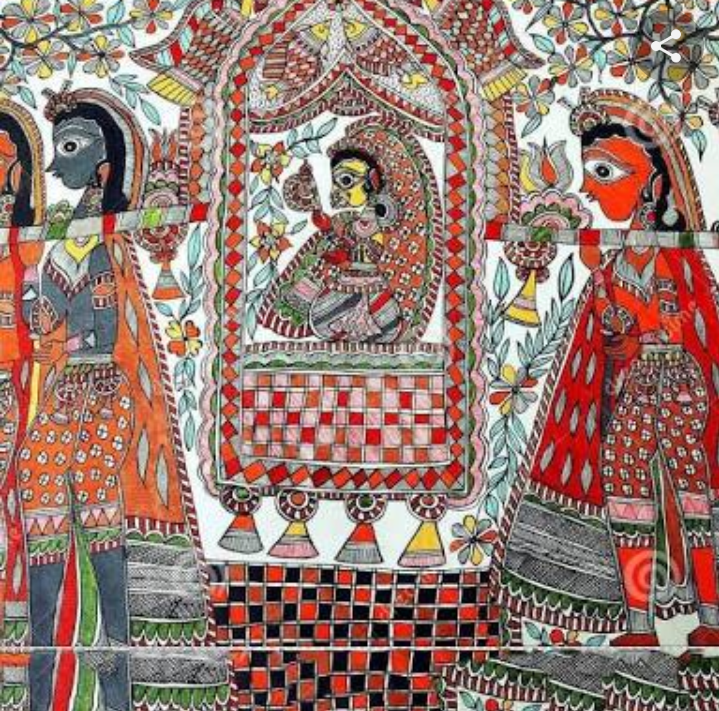
The culture of Mithila and the rituals that have been following depicts the people’s respect towards the nature the traditions and the common folks. The songs has a great role in the wedding. From the initiation of the wedding to the vidai ritual songs describe each ritual appropriately. The Mithila wedding is always flourishing and shinning because of its folks who are still following and keeping their traditions alive. May the tradition and the culture of this place live long.
 Mithila lifestyle and culture
❣❣❣
LikeLiked by 1 person
Thankyou so much❤✨
LikeLike
❤❤❤❤
LikeLike
Bestest ❤️❤️
LikeLiked by 1 person
Thankyou so much❤✨
LikeLike
👏👏
LikeLiked by 1 person
❤❤
LikeLike
Filled with information. 👏
LikeLiked by 1 person
Thankyou so much✨❤
LikeLike
Got to know so many new things
Keep growing girl❤️💫
LikeLiked by 1 person
Thankyou so much❤
LikeLike
Explained beautifully🥰
LikeLiked by 1 person
Thankyou so much
LikeLike
Very beautifully presented ❤️Even i want to knw and feel the culture.
LikeLiked by 1 person
Thankyou so much❣️
LikeLike
Gjbbbbbbb👌👌👌👌👌
LikeLike
Good to know that tradition is linked to Holy Ramayana 🌠
LikeLiked by 1 person
Yes❣️
LikeLike
Deeply explained 👏👏
LikeLiked by 1 person
Thankyou❣️❣️
LikeLike
Beautiful dear😘😘
LikeLiked by 1 person
Thankyou❣️
LikeLike
Beautiful dear 😘♥️
LikeLiked by 1 person
Thankyou ❣️
LikeLike