परिचय-संस्कृति और साहित्य का प्रदेश मिथिला जो न जाने कितने रहस्य अपने आप में छुपाते हुये सदियों से बिहार की स्वर्णिम धरती पर विद्यमान है। कहते हैं किसी भी प्रदेश की पहचान उसके गाँवो और शहरों से होती है। और यहाँ बसी होती हैं हज़ारों साल पुरानी कहानियाँ और इन कहानियों में समाई होती हैं कई आम ज़िंदगियाँ जो समय के साथ खास और मुल्यवान हो जाती हैं और जिनकी गाथा युगों – युगों तक कही और सुनाई जाती है। मेरा बचपन भी इन्हीं किस्से कहानियों मेंं बीता है। मैं बहुत गर्व महसूस करती हूँ कि मैंने उस धरती पर जन्म लिया जहाँ माँ सीता कण-कण में हैं, जहाँ श्री राम प्रत्येक व्यक्ति के मन में हैं। मेरे बचपन की राजा – रानी की कहानियों में राजा श्री राम हैं और रानी माता सीता। आज मैं जिस नगर की बात कर रही हूँ वह साक्षी है त्याग, बलिदान, पराकर्म, प्रेम, धर्म, वचन और जीवन की।
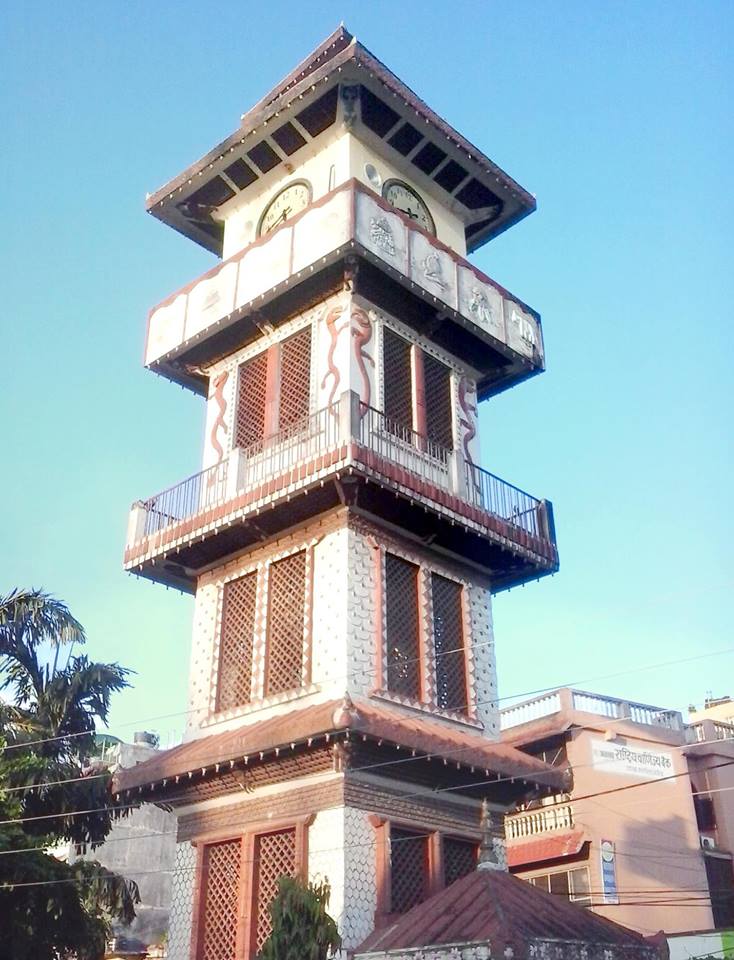
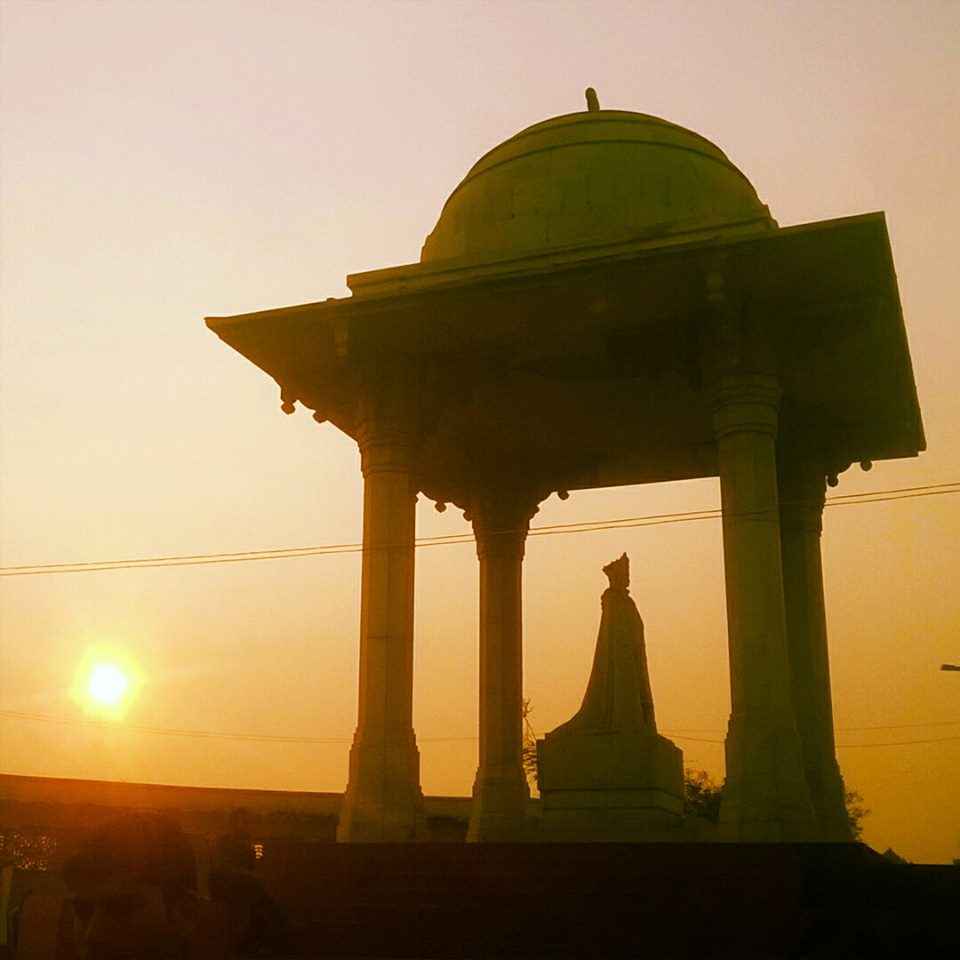
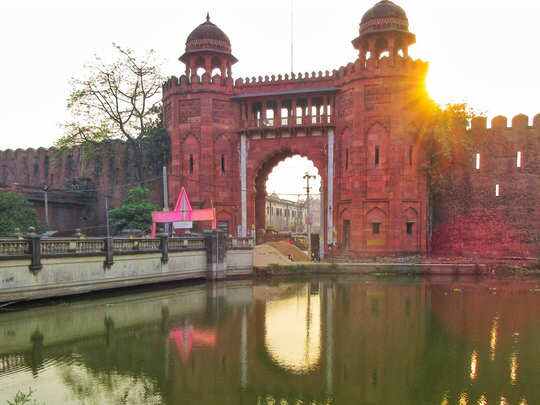
घंटाघर
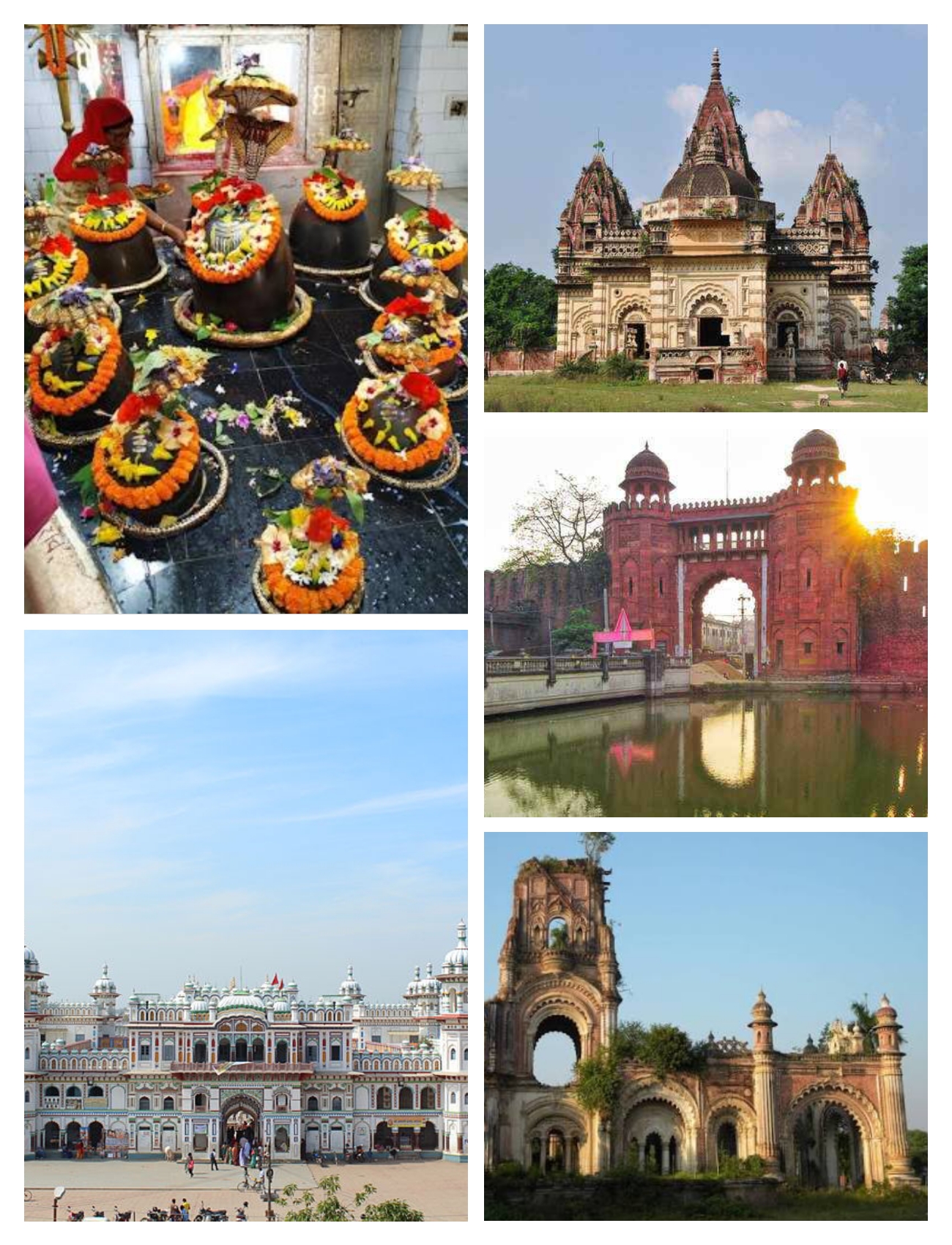
जनकपुर नेपाल के हिस्से में पड़ने वाले मिथिला का भाग है। यह शहर नेपाल के धनुषा जिले में बसा है। मिथिला नगरी की सीमायें वर्तमान नेपाल के कुछ हिस्से तक फैली है।जनकपुर शहर आज धार्मिक और सांस्कृतिक पर्यटन का केंद्र है। प्रत्येक वर्ष यहाँ देश – विदेश से हज़ारोें लोग भ्रमण के लिये आते हैं और अपने साथ यहाँ की पौराणिक कथाओं को ले जाते हैं। शहर के केंद्र में बसा जानकी मंदिर जनकपुर की गरिमा है। बाल्मिकी रामायण में वर्णित यह धार्मिक स्थल मिथिला का गौरव है। धर्म और आस्था में संल्गिन जनकपुर शहर और यहाँ के लोगों की छटा ही अलग है । आईये ले चलती हूँ मैं आपको ऐसी नगरी जहाँ कण-कण में कथा समाहित है सीता-राम की।
इतिहास- पौराणिक कथाओं के अनुसार जनकपुर राजा जनक के साम्राज्य की राजधानी थी। यहीं से राजा जनक पूरे मिथिला का कारभार संभालते थे। जनकपुर की खोज या स्थापना को लेकर अलग-अलग मान्यतायें हैें। जनकपुरधाम नाम से भी जाने जाना वाला शहर त्रेता युग के पन्नों में अंकित है। हिंदु मान्यताओं के अनुसार माता सीता को राजा जनक ने धरती माँ के कोख से प्राप्त किया और उन्हें अपनी पुत्री की तरह स्नेह और प्रेम से पाला पोशा। जनकपुर वही स्थान हैं जहाँ माँ सीता का बचपन और किशोरवस्था बीता। यहीं उनकी परवरिश हुई। पुरी दुनिया के लिये जो माँ हैं मिथिला के लिये वो युगों- युगों से बेटी है। जहाँ हर नर माता सीता का भाई और हर नारी बहन है। मान्यता है कि अयोध्या के राजकुमार प्रभु श्री राम का विवाह जनकपुर की राजकुमारी माता सीता से हुआ। और यह शहर साक्षी है त्रेता युग के उस ऐतिहासिक विवाह की। अद्वभुत है यह पावन धरा जहाँ आज भी श्री राम हर नगर वासी के दामाद हैं।
बाल्मिकी रामायण के अनुसार,जहाँ आज सीतामढ़ी (बिहार) है, त्रेताकाल में यहाँ तपोवन हुआ करता था। दस किलोमीटर के दायरे में ऋृषि- मुनियों के आश्रमों के अवशेष यहाँ आज भी मौजूद हैं। जो आज वर्तमान का जनकपुर है वह कभी त्रेता युग की मिथिला नगरी था। स्थानीये लोगों की मानें तो प्रभु श्री राम आज भा यहाँ मौजूद हैं।
बोलचाल की बात करें तो लोगों की बोली यहाँ मैथिली है। ज्यादातर लोग मैथिली बोलते हैं। लेकिन नेपाली को यहाँ की प्रथम भाषा का दर्जा दिया गया है। हिंदी, भोजपुरी, अवधी बोलने वालों की भी काफी संख्या है।
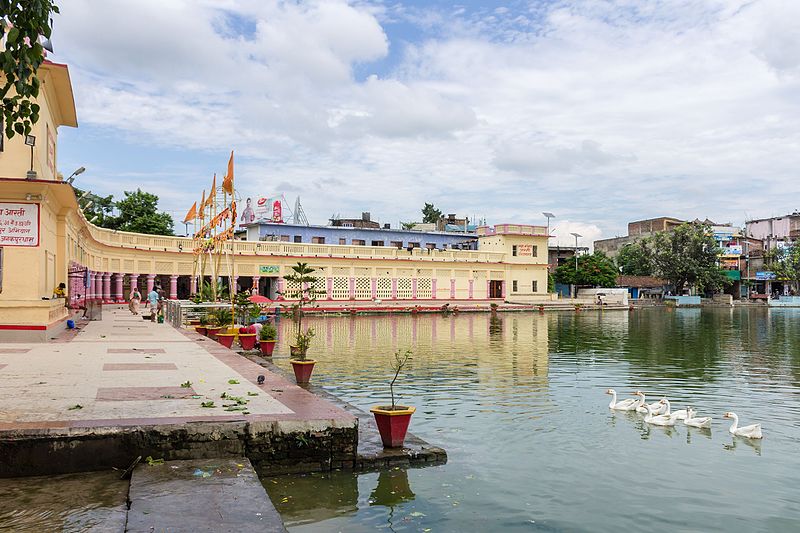
जनकपुर को तालाबों और पोखरों का भी शहर कहा जाता है। यहाँ काफी संख्या में तालाब देखने को मिलते हैं। उनमें से कुछ तालाबों का धार्मिक महत्व है। धनुष सागर,गंगा सागर, राम सागर, विहार कुंड इनमेंं मौजूद हैं। जनकपुर कई नदियों से घिरा नगर है। दुधमति, जलद, राती, बलान और कमला उनमें शामिल हैं।
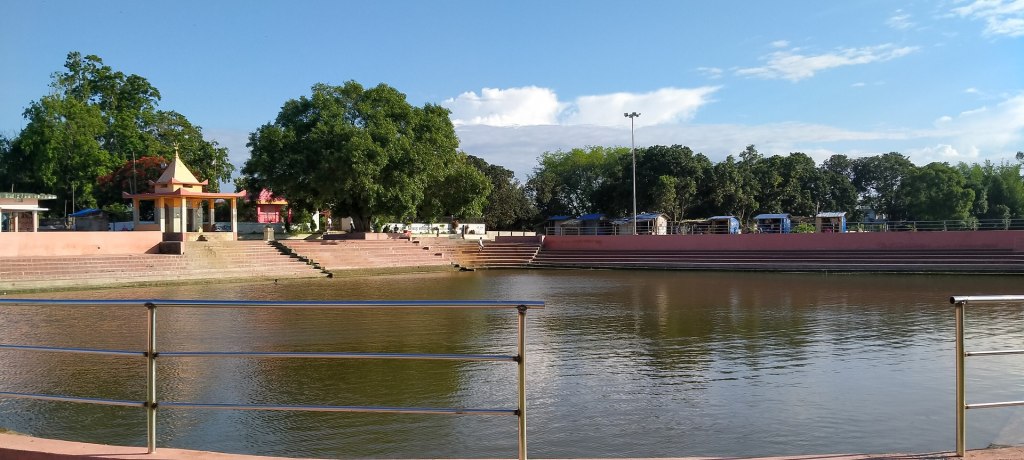
मणि मंडप तालाब
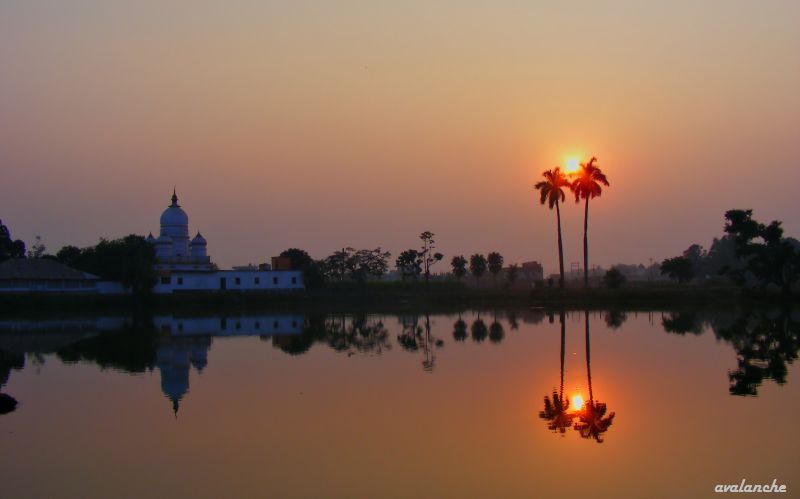
रत्ना सागर
दार्शनिक स्थल–
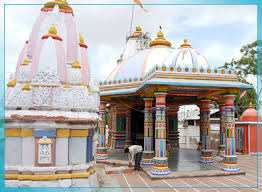
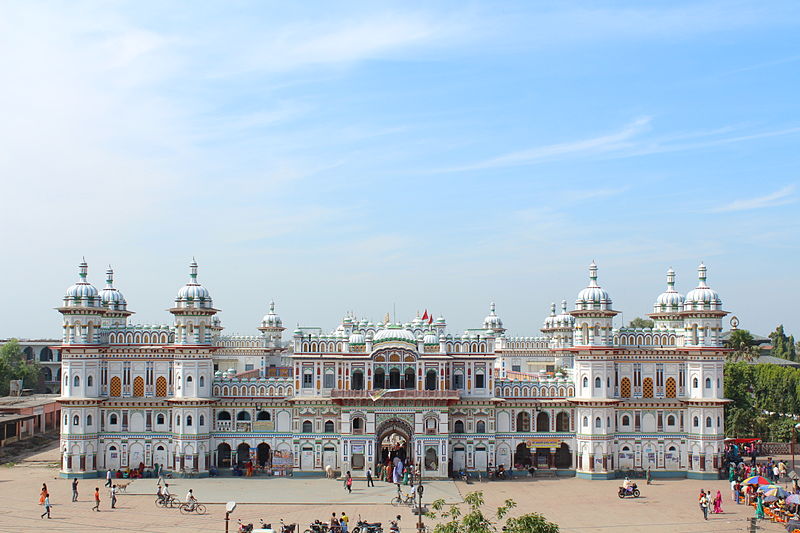
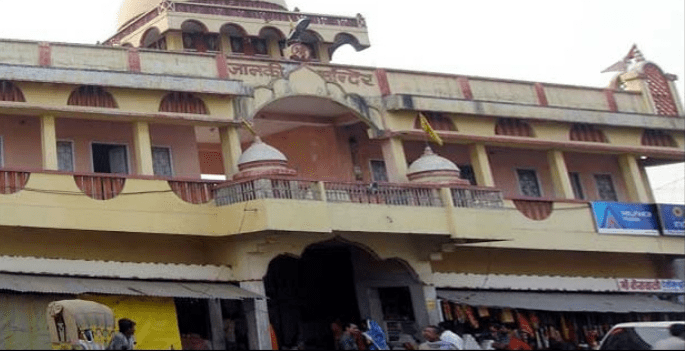
जानकी मंदिर- जानकी मंदिर जनकपुर का सबसे प्रसिद्ध धार्मिक स्थल है। जनकपुर के मध्य में बसा यह मंदिर नेपाल के सबसे बड़े मंदिरों में से एक है। अगर जनकपुर में कोई स्थान पर्यटकों को अपनी ओर सबसे अधिक खींचता है तो वह है जानकी मंदिर। जानकी मंदिर यहाँ आकर्षण का मुख्य केंद्र है। इतिहासकारों के अनुसार जानकी मंदिर 1898 में टीकमगढ़ की महरानी द्वारा बनवाया गया। जानकी मंदिर नौ लखा मंदिर के नाम से भी प्रसिद्ध है। चुंकि मंदिर के निर्माण में नौ लाख रुपये लगाये गये थेऔर यही कारण है इसके दूसरे नाम की । परंतु पौराणिक कथाओं के अनुसार जानकी मंदिर ही जनक महल है। इसी महल में राजा जनक ने अपना जीवन यापन किया, सीता माता के बचपन की अठखेलियाँ और किशोरावस्था का अल्लहड़पन आज भी इस महल में मौजूद है। जो विवाह त्रेता युग में हुआ जनकपुर की राजकुमारियां संग अयोध्या के राजकुमारों की वह विवाह वर्णन .आज भी मुर्तियों के रूप में जानकी मंदिर में शोभा बढ़ा रहा है।
जानकी मंदिर
स्थानीये मान्यता के अनुसार सीता जी के बारे में वर्णन मिलता है कि जब वह छोटी थी तबसे ही उनमें आध्यात्मिक शक्ति बहुत थी। उनके पिता राजा जनक के पास भगवान शिव का दिया हुआ एक धनुष था जिसे हिला पाना किसी के वश की बात नहीं थी लेकिन सीता माँ बचपन से ही उठा कर उसे रख दिया करती थीं। मिथिला के हर व्यक्ति के लिये वो आज भी यहाँ किशोरी रूप में विद्यमान हैं। जानकी मंदिर में राजा जनक और उनकी पत्नी महारानी सुनैना का भी मंदिर है। यहाँ लक्ष्मण, भरत और शत्रुघ्न के भी मंदिर स्थित हैं। इतना ही नहीं यहाँ अयोध्या के राजा दशरथ का भी मंदिर बड़े गर्व से विद्यमान है।
जानकी मंदिर के प्रांगण से कुछ कदम दूर स्थित है विवाह मंडप जहाँ मुर्तियों के ज़रिये विवाह की पूरी कहानी बताई गई है। कहते हैं कि इस जगह आज भी मुहुर्त के बिना भी विवाह संभव हो जाती है।
विवाह मंडप
जनकपुर के लोगों के क्या कहने । आज भी अयोध्या और जनकपुर के त्रेता युग के रिश्ते को उन्होनें कायम कर रखा है। आज भी हर बरस यहाँ त्रेता युग के विवाह की वो सारी रस्में निभाई जाती है जो कभी त्रेता में निभाई गई थीं। आज भी अयोध्या से जनकपुर बारात आती है।
इसे चमत्कार कहें या आश्चर्य लेकिन बाल्मीकी रामायण में जो भी वर्णित है वो हू-बहू उसी जगह पर है।
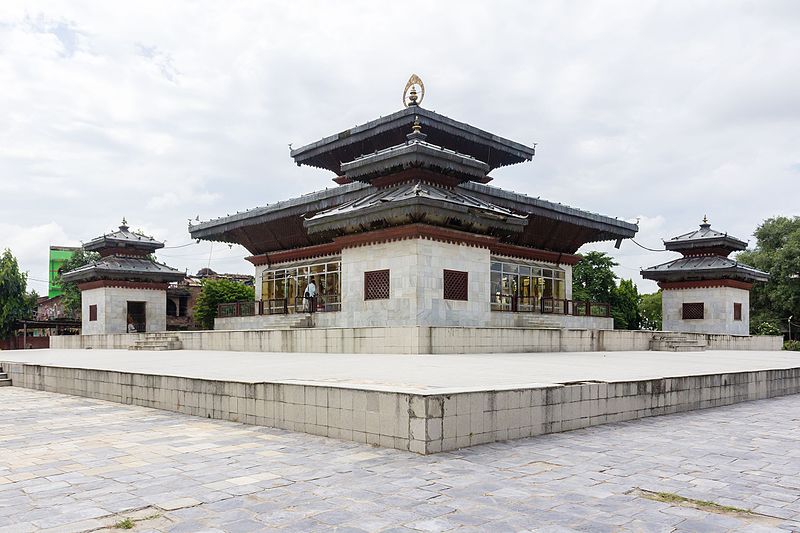
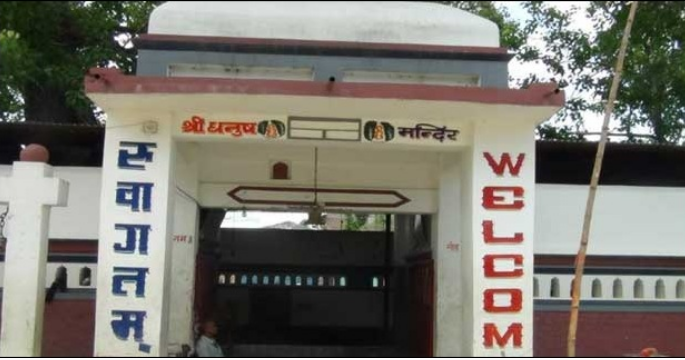
धनुषाधाम- जनकपुर से 30 किलोमीटर दूर स्थित है धनुषा धाम जहाँ आज भी शिवधनुष के अवशेष मौजूद हैं।ऐसी मान्यता है कि सीता-राम स्वयम्वर के दौरान जिस शिव धनुष को प्रभु श्री राम ने तीन हिस्सों में खंडित किया था उसका एक हिस्सा यहीं धनुषाधाम में आ गिरा जिसके साक्ष्य आज भी यहाँ हैं।
राम मंदिर- जानकी मंदिर के से कुछ कदम पर स्थित है राम मंदिर जहाँ नगर वासियों द्वारा भजनों का आयोजन किया जाता है और प्रेम और आस्था पूर्वक प्रभू श्री राम को याद किया जाता है।
इसके अलावे यहाँ पग-पग पे कई मंदिर स्थित हैं ।
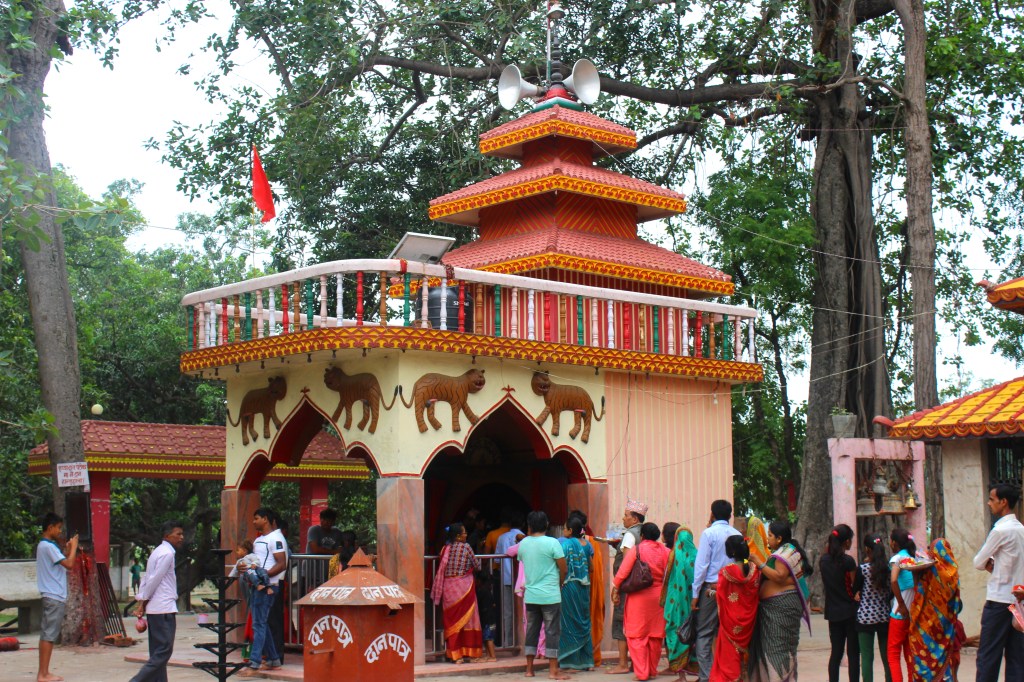
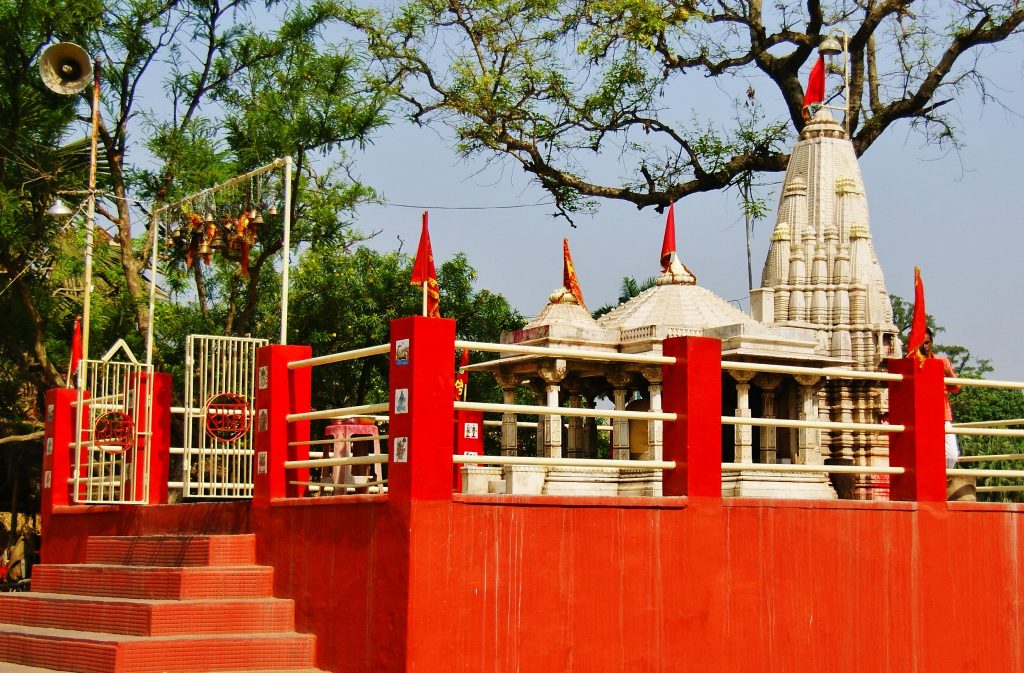
कनकालिनी मंदिर
छिनमस्ता मंदिरगढ़ीमाई मंदिर
जनकपुर नेपाल का सबसे तेजी से विकास करने वाला शहर है। यहाँ की आर्थिक व्यवस्था मुख्य रूप से पर्यटन, खेती और स्थानीये उद्योग पर निर्भर करती है। कलाकारों द्वारा निर्मित मिथिला पेंटिंग यहाँ पर आय का अच्छा स्त्रोत है।
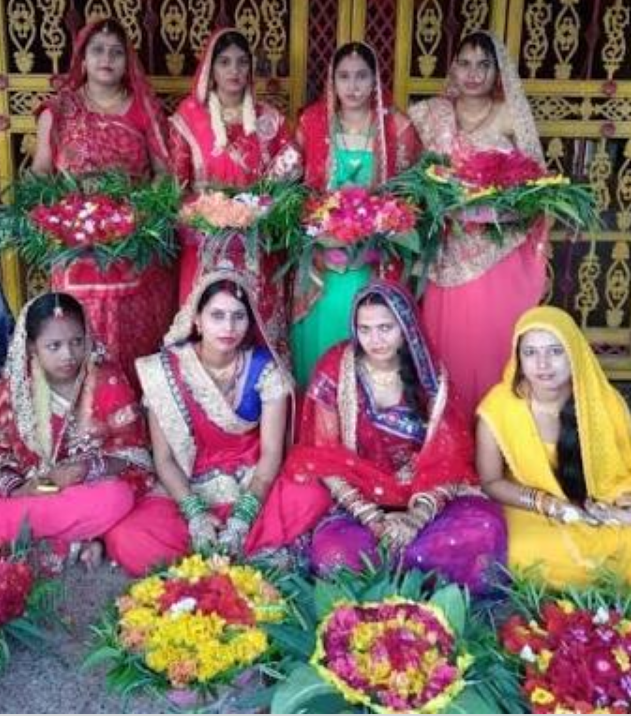
त्योहारों की बात करें तो विवाह पंचमी, दीपावली और वीजयादशमी, छठ, मकर संक्रांति और राम-नवमी बहुत ही धूम-धाम से मनाई जाती है।
जनकपुर के लोग बहुत धार्मिक प्रवृति के हैं जिनका जीवन बहुत सादा है।
जनकपुर वासी
मिथिला का यह धार्मिक शहर अपने आप में किसी चमत्कार से कम नहीं है। तरह- तरह की नई तकनीक को अपनाता यह शहर आज भी अपनी सदियों पुरानी छवी लिये इतिहास रच रहा है।
Bihar like other states of India is rich in various languages and dialects . There are 38 districts in Bihar where linguistic classification can be seen . There are various languages or dialects spoken in Bihar . People outside the Bihar get confuse most of the time and consider different languages or dialects as one and also started terming them together as Bihari language.
Bihari language is a General term for the languages speak in Bihar . There is also a big misconception about the languages of Bihar that all Biharis speak only Bhojpuri .
Difference between Language and Dialect :
As wikipedia says language is written as well as spoken where as Dialects is just spoken until it is promoted to the ellite status usually for political purposes. Simply we can say , dialect is a particular form of a language which is peculiar to a particular region or a social group. Dialect is a regional variation of a language .When different regions use different words to describe the same thing thisis dialect.
There are mainly three languages spoken in Bihar , otherwise there are other dialects spoken in Bihar.
Maithili, Magahi and Bhojpuri are the three main languages,apart from these Angika and Brajika are also spoken in Bihar in most of the places as Maithili , these are the dialects of Maithili which is politically influenced by the time.
Magahi or Magadhi is spoken in the district of Patna, and Gaya. From the time immemorial it is called the language of common people. There is no indegenous written literature , though number of folktales and popular songs tell the history of this language.
Bhojpuri is spoken in Bhojpur district, Buxar, Kaimur and Rohtas. It is also spoken in some states of Uttar Pradesh like Varanasi and Gorakhpur .
Angika is spoken in districs like Araria, Katihaar, Bhagalpur
In Bhagalpur , Munger and east Champaran Maithili is spoken.
Talking about the dialects spoken in Bihar they are : Musase, Sadri , Surajpuri, Kudmali, Panch Pargania , Sarmami, Vajjika
so as we saw there are different languages and dialects spoken in Bihar in different districts.This blog will take you to the Maithili speaking districts and will introduce you about the Maithili language of Bihar.
Introduction
“If you talk to a man in a language he understands , that goes to his head . If you talk to him in his language , that goes to his heart” – Nelson Mandela
Maithili is an Indo – Aryan language spoken in Darbhanga, Saharsa, Samastipur, Madhubani, Sitamarhi, Purnia, Katihar, Kishanganj, Bhagalpur, Madhepura, some parts of Muzaffarpur, Munger, Khagaria, Sheohar, Araria, Supaul, Shehohar and some parts of Vaishali.
Darbhanga and Madhubani constitute cultural and linguistic centers of Maithili language.
Janakpur in Nepal is an important linguistic center of Maithili.
It is also spoken in Terai region of Nepal. Maithili is the second most prevalent language of Nepal.
It is also spoken in some districts of Jharkhand like Ranchi, Bokaro, Jamshedpur, Dhanbad and Deoghar. Maithili received the second official language status of Jharkhand in March 2018.
According to the census of Government of India there are in total 13.5 million people at present who authorised their mother tongue as Maithili.
In 2003, Maithili was included in the 8th schedule of the Indian constitution as a recognized Indian language. Maithili literature is even older than Hindi. Vidayapati is the great name of Maithili Literature. As early as 1324 , Jyotirishwar Thakur wrote a prose work in Maithili. Many monthly magazines publish in Maithili language.
Maithili language is included as an optional paper in the UPSC exam.
History
Maithili is the only language of Bihar which has an ancient literary History. Going long back in history Maithili was called the language of common people and Sanskrit was considered as the language of Scholars.
Talking about the history of the Language . The oldest record of Maithii go back to 1771 when Amaduzzi’s preface to Belgatti’s Alphabetum Brammhanicum published.
In 1880,Hoernle in his book A comparative Grammar of the Gaudian Languages with special reference to Eastern Hindi and treated Maithili as a dialect very close to Bengal.
Then in 1801 Colebrooke in his famous essay on the sanskrit and Prakrit Languages describe Maithili as a different dialect . He also included Maithili’s affinity with Bengali.
In the year 1875 , Mr. Fallon gave a few few specimens of it in the Indian Antiquary.
In 1881 , Grierson in his book Introduction to the Maithili Language of North Bihar where he explained all the grammar rules of Maithili . In his book he gave glimpse on the alphabet, pronounciations, , parts of speech . The description however is based heavily upon Maithili forms obtained from by the Pundits, village school masters and educated Native Gentlemen. In next year he published its part 2 of the book in which he included large number of words that is vocabulary .
1893 was the year when Kelly the writer of the time continues to treat Maithili as a dialect of Hindi.
As per the record , 1958 was the first time when the formation of Maithili language was appeared . He did the most exhaustive diachronic description on Maithili. In it, he has undertaken to trace the history of Maithili from the old Indo – Aryan Period and has laboured assiduously to assign Sanskrit etymologically to practically all forms of Maithili.
The Royal Nepal Academy published a dictionary of synonyms of 14 languages including Maithili .
Other Informations:
The dialects of Bihar were legally absorbed under the overreaching lebel Hindi in 1961 census.
Hindi was given the official status through the Bihar Official language Act 1950.
Hindi was displaced as the sole official language of Bihar in 1981.Generally Hindi is a widely spoken language in Bihar.
Hindi is literary language of the state and several renowned and gifted Bihari writers created his literature in Hindi .
Despite the large number of speakers of these [Hindi, Bhojpuri, Magdhi] languages , only Maithili has been consitutionally recognised in India, which gained constitutional status via the 92nd amendment to the constitution of India.
Universities of Bihar have adopted Maithili as the medium of correspondence . It is also teach in Indian Universities of Kolkata, Bihar, Patna, Bhagalpur, Darbhanga and Varanasi. It is also teach in Tribhuvan University of NEPAL.
According to the International P.E.N. [ Poets, Essayists and Novelists] and the Sahitya Akadami [ National Academy of letters ] ,Maithili is the 16th largest language of India.
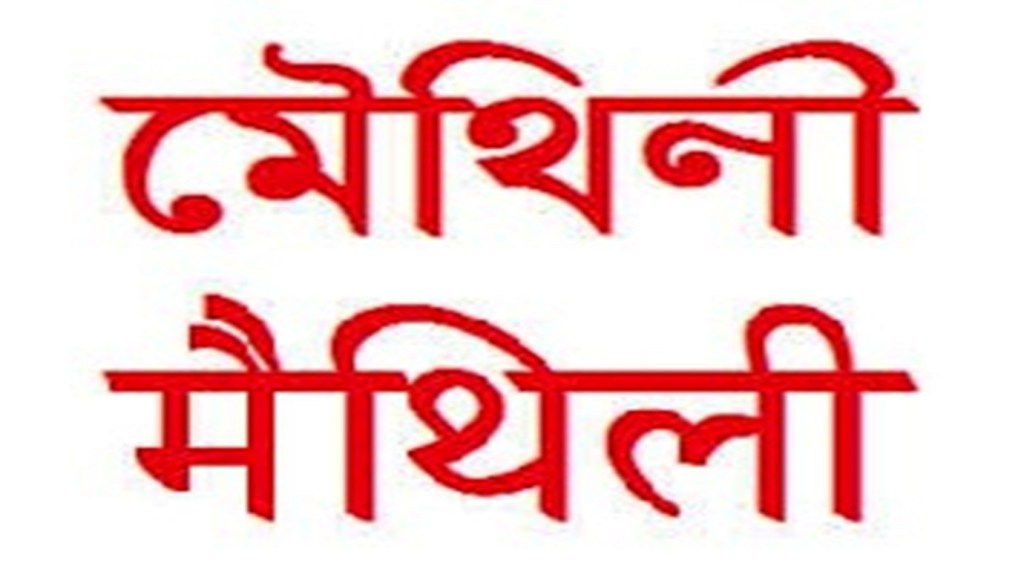
Above – In Tirhuta script, Below – In Devnagari Script
Music connects people to people but Folk Music connects people to God. Folk Music represents a particular community at the world’s stage in vivid manner. Folk music describes a particular land , the livelihood of the natives .
Introduction
Folk Music of Mithila is the most ancient types of music in the Indian subcontinent. No one knows exactly when Maithili Music came into existence , probably due to the length of its history. It may say that its age might have helped other music develop and flourish in India and Nepal. These folksongs are representative of the universal creativity of humanity. The society retains total system of knowledge through these songs. Mithila is a great cultural land where this significant tradition of the folk song is shinning from the thousands of years.
The Folk songs are associated with the various events in the life of ordinary person. A song for every occasion is ready here. These songs sung on every significant occasion from Birth to death , on festivals or the changing seasons.
History
The systematic of Maithili Folk Songs , from anthropological is relatively new. Looking a little deeper one finds some interacting differences. It is another case of the Unity – Diversity aspect of Indian Culture. In Mithila the women’s songs provide a concrete expression of tendencies that distinguishes Maithil culture from other parts of India. The regular history of Mithila Music dates back from Nanyadeva [1097 – 1133], a great patron of Music and author of a treatise on this art. He developed the popular ragas on systematic lines. Some of those ragas are : Nachari, Phag, Chaita, Purbi, Lagani.
The Maithili Music was carried to Nepal, Uttar Pradesh , Bengal and to many more areas of Indian subcontinent. Folk songs, religious songs of Vaishnavas were very popular in Medieval period. There were certain rural centers where fine forms of Music have been developed. Darbhanga, Panchgachhiya in Saharsa district, Ara and Jhabua towns have developed prolifically the Music of various forms.
There used to be a school of Music where village girls and boys were being trained in Folk Music. Some of the rich local Zamindaars families in different parts used to hold regular music conferences every year.
Classification of Maithili folk songs:
Songs representing the life – cycle events :
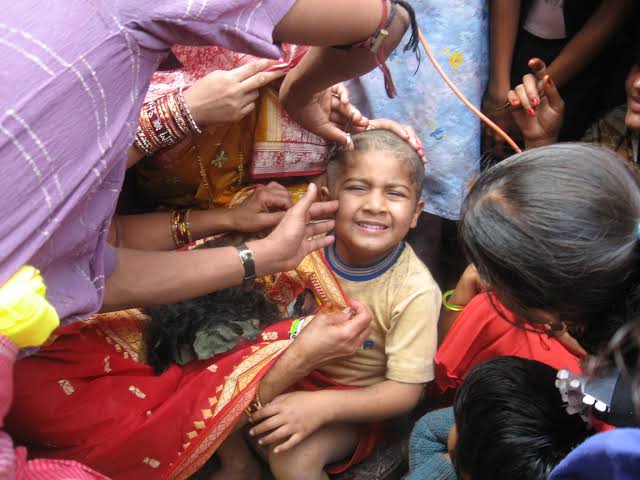
There are many songs that represent life – cycle events that is birth, marriage etc. Sahara songs are the songs which are being sung by the women on the sixth day of the birth of the baby to express thanks to Mother Goddess Sastika. Sahara songs are basically the description of the birth of Lord Krishna and Lord Rama. These are also sung on Upnayana [ sacred – thread ceremony ] , Mundana [ tonsure ceremony ] and marriage . The lullabies are sung to please the child and keep the child happy. The wedding songs often classified according to the name of the rituals or ritual stages. Marriage songs include Suhaag songs at the beginning day and Samdaun [ Vidai ] the concluding ceremony.
Songs representing the annual calendar of events :
There are two groups this classification falls, Agricultural Songs and Festival songs . Agricultural Songs are sung during sowing, ploughing , winnowing etc. The cycle of festivals begins with the month of Chaitra. Several songs are sung during the celebration of the festivals of Ramnavmi, Batsavitri, Nagapanchami, Madhushrabani, Kojegra, Sama – Chakeva, Bhardutiya.
Seasonal Songs:
Songs of the whole year with specific months are particularly popular.The common songs include under the category are Barahmasa, Chahomasa and Chanmasa .
Wisdom songs:
Every song represent wisdom of the people but there are some specific songs that explain how people retain their knowledge system consciously and there are some dietic and social restrictions to be followed every month.
As for example – Do not consume leafy vegetables in the month of savan and curd in Bhadab.Keep away from the dewdrops in Aswin and avoid eating buttermilk in Kartik.And thus so on .
Devotional Songs
In this category, Bhajan and Kirtan , Prati [morning songs], Gosaunik geet , Bhagwati geet, Songs of Shiva are being sung.
Songs of love and Beauty
Some songs explained the innermost feelings of a lover or beloved.The most important type of such songs is called lirahut These are sung in ritual occasion and also sung in leisure time. Thesesongs are songs of seperation as well as union.
Songs of Glory
These songs describe the glory, history , beauty of the land and the people etc. Glorious deeds of historical and mythical characters are sung.
These classifications and descriptions unfold the immense significance of Maithili Folk songs in understanding of the structure and function of the society.
New Era of Maithili Music
Maithili music is very much traditional . Maithili Music is usually played by classical instruments, but now use of modern instruments is making these folksongs more appreciable. From those times there are several contributers who has been giving their whole lives to music. Vidyapati was the patron of music and literature of Mithila.
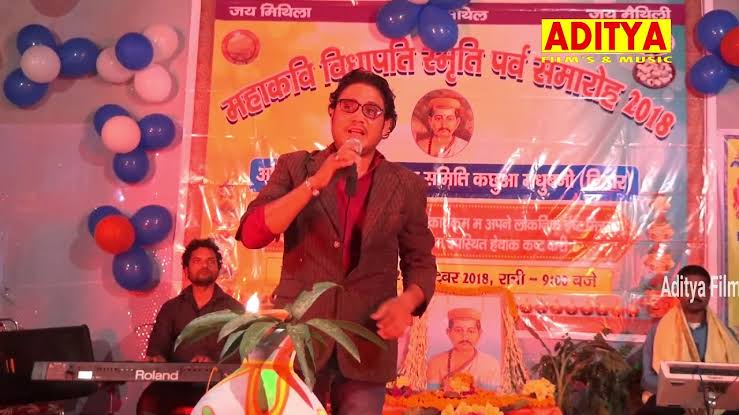
Now there are many musicians who are doing great for the Mithilanchal Music and are seem to have more popular outside Mithila. Some recognizable names are Kunj Bihari, Pravesh Mallick, Sharda Sinha, Maithili Thakur.
Cinema is supposed to be the vehicle of expression of literature of a language. Cinema is the biggest form of cultural representation. It may say that Cinema is the representation of us on the screen. Cinema is the biggest form of entertainment . It is the weapon which can change the point of view of the society . This is the time when the Cinema is not only limited to the Entertainment , it is going beyond this. It raises the issues of the society, it makes the vision clear towards any topic, it makes us understand the different aspects of any theme. Cinema is more than it appears in front of us. It is the language in which people can connect. There are millions of stories in me , in you and in all of us that are dying to be told. Cinema is the way in which our stories could come in front of the world.
Cinema make lives beautiful.
MAITHILI CINEMA
Maithili Cinema is the cinema of Mithila region of India and Nepal in the Maithili language . Maithili language is considered to be the sweetest and the most cultured language. There are 6 – 7 crores people in India and even in abroad too who speak Maithili.
INTRODUCTION
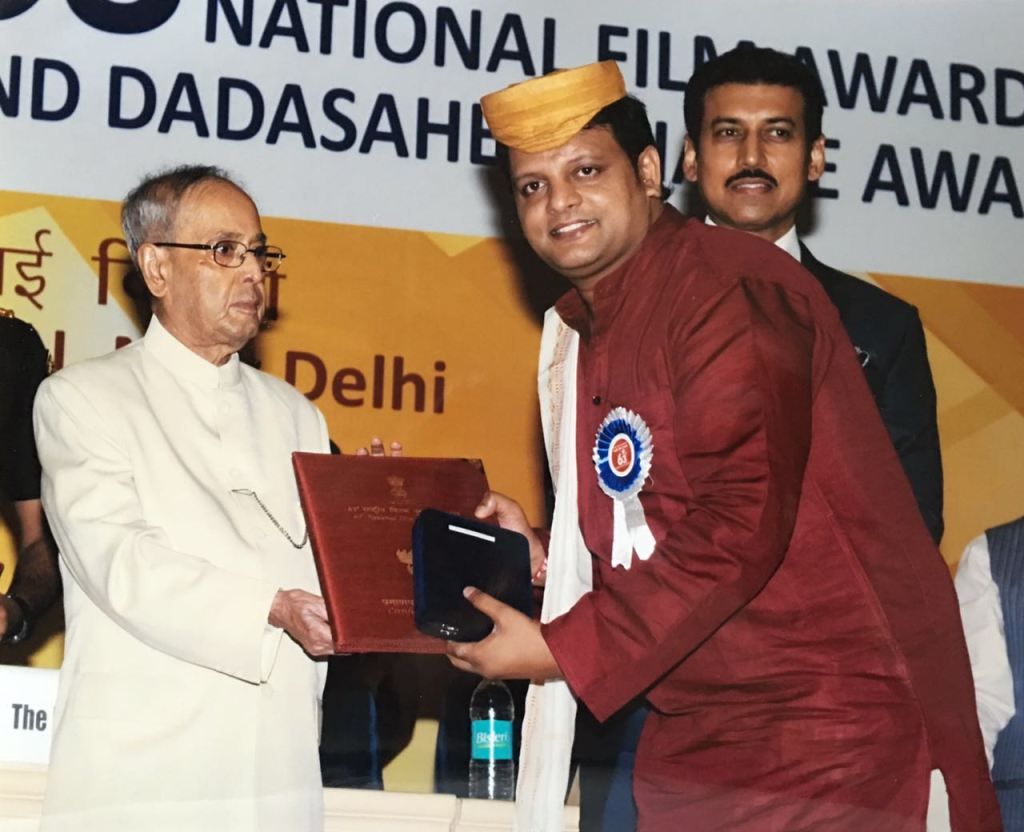
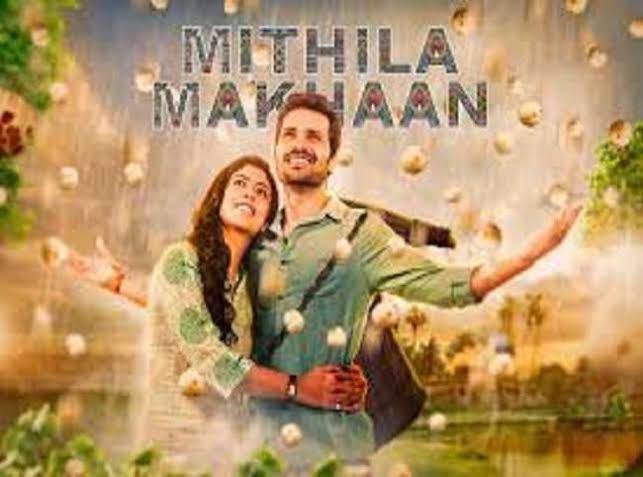
It was happening for the first time in the history when a Maithili film was nominated for the National Film Award . It was the year 2016 when MITHILA MAKHAAN won the 63rd National Film Award. Mithila Makhaan is the first ever film from Bihar and Jharkhand to get a National Award. Director Nitin Chandra said it was possible because he has always believed in standing by his roots. He is adding more by saying ” more rooted you are, more global you would be”. It is the collective achievement for the Maithili language and the identity. This movie takes Maithili Language Cinema on to a new horizon in terms of Film’s budget , script, cast and cinematography. Its 2nd part has also released in the year 2020.
Director Nitin Chandra
Achieving a National Award by any regional Film,is not as easy. For this milestone to reach The Maithili Film Industry has to see many hurdles, many unsuccessful nights and many sacrificing faces. Lets come with me in this journey of Maithili Cinema where I will talk about every aspect of Maithil Films.
REGIONAL CINEMA
Regional Cinema is the Cinema of any specific region in its own regional language . There are five dialects of Bihar in which Regional Cinema is being made and those are Bhojpuri, Maithili, Maghi, Vajjika and Angika.
Bhojpuri Film Industry , is often mistaken as the only Film Industry in Bihar . But what people don’t know is that there are three other Film Industries too and they are : Maithili , Angika and Maghi . These all three function simultaneously. In these three Industries the Filmmakers of Bihar make films in all five dialects of Bihar.
Maithili Films in those times were mostly made on the lives of POETS and on the happenings in the society. Talking about the issues of making Maithili Films are that, Films don’t get enough exposure as most of the small theatres have shut down in Bihar . And as the Box Office collection for those movies are not enough . Due to the absence of the proper space for Film releases even good Maithili Films don’t reach the audience .
Going back in the time when the Maithili Film Industry was emerging, that was the time when the Filmmakers were experimenting , soon the Films deviated from local issues and started copying films from the mainstream Bollywood and the South Industry. Thus Cinema from Mithilanchal hardly has an original story. There is also another aspect with the Maithili Films which we can put that in the issue . Most of the people think that the regional Films are made for lower segment of the society. They think these films are not for the sophisticated people.
Today we are in 2020 and Maithili Cinema has completed its fifty years . The Industry is still struggling and aspiring to be a known regional Film Industry in India.
HISTORY OF MAITHILI CINEMA
First MaithilI Film was Kanyadaan , which was released in 1965 , directed by Phani Majumdaar . It was not completely in Maithili language , but its significant portion was made in Maithili language. The film’s story revolves around a man , who is the protagonist of the story too who does not know Maithili language , but decided to learn Maithili as his wife knows only this language. This movie is based on Hari mohan Jha’s novel by the same name .
In the year 1984 – 1985 , another Maithili Film was released Mamta Gaave Geet . The melodious songs and good story line had attracted audiences and it had become very popular among folks. The film was directed by C. Parmanand. After that most of the films made but in dubbed form, one was Bhauji May . This film was dubbed from Gujarati film. Jai Baba Bijunath , and Ijot were some more movies of the time. The film Ijot means ray of light was produced by famous playback singer Udit Narayan . The songs of the Film were very good, but it flopped because of the bad script.
The year of 1999, a film made which went a long way in revival of Maithili Film Industries . The name of the film was Sasta Jingi Mahag Sinur . Muarli Dhar , a great director , Music Composer , Singer, Actor was directed this film. Moreover, Balkrishna Jha’s contribution in the film can also not be ruled out. It was the super – duper hit of that time. The songs in the movie were given by Md. Aziz, Sadhana Sargam , Udit Narayan and Deepa Narayan . The series of films were made in this time .Film like Senurak Laaj was also a good film of that time.
The main agenda of these films were more than entertainment. These films focussed on the daily lives of the natives and present them in the cinematic screen . Most films were based on local isuues like Dowry, Untouchability, Unemployement and Poverty. Some films also made which showed the actual problems of the region related to the environment , related to the government . These films had become the platform where problems were being told and discussed in the society . The films also showed the local culture and traditions .
The Maithil Films was facing ups and downs and in between all these, a film named Sindurdaan was released in 2007 , but it was quickly withdrawn from the theatres due to some sound problem.
Kakhan Harab Dukh Mor . It was a successful Maithili Film based on the life of Maithili Poet Vidyapati.
In the year 2000 when the world was meeting the new millenium, The Maithili Film Industry was also growing by making more films. The film Aau Piya Hummar Nagari was released in the year 2000.
Senuriya , directed by B. D. Prasad Chaudhary with music by Gyaneshwar Dubey , is dubbed from Tamil into Maithili with Surya and Divashree in lead roles as actors and Rami Reddy as an antagonist.
In 2005, Garibak Beti listed in the list of successful Maithili Films. Manoj Jha was the director of the Film and Ajay Yash was the producer.The film was made in low budget and that is why it is considered as the low Budget Maithili success. Manoj Jha is considered as one of the best Filmmakers of Maithili Cinema. 2011 was the year when the films like Suhagin and Khurluchhi came on screen.
Director Murli Dhar directed Film Sajna ke Anagna me Solah Singaar and Mukhiya Jee was directed by Vikash Jha . In the year 2014 a successful Maithili Film was directed by Niraj Yadav and Randhir Singh and the film was An ideal Lady – Ramaulwali.
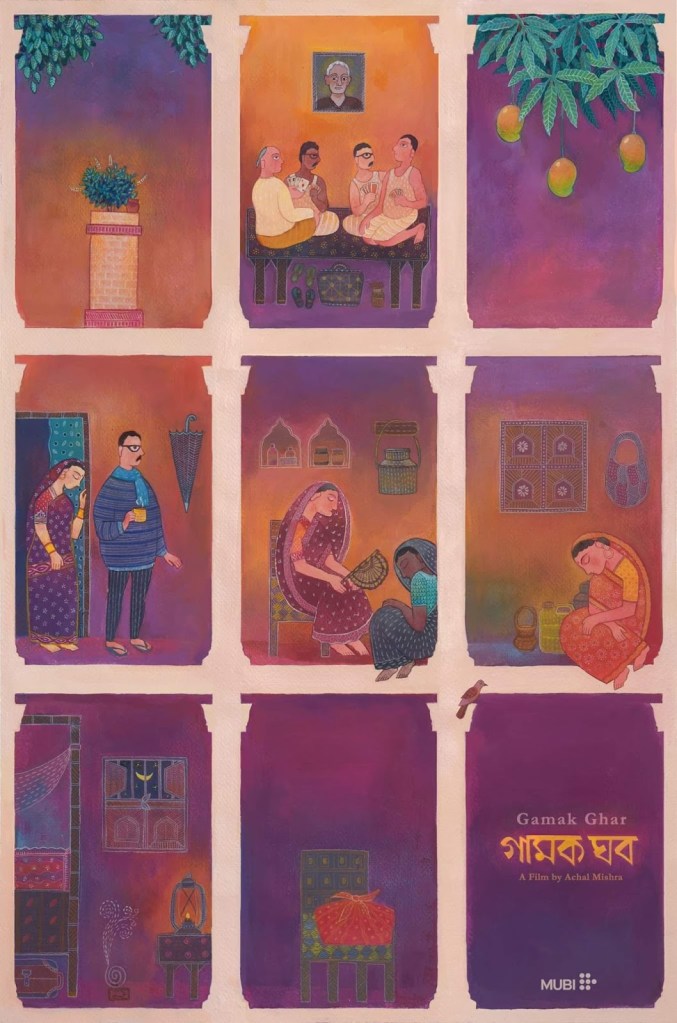
In the year 2019 , Gaamak Ghar was premiered at 21st Jio MAMIMumbai Film Festival2019, becoming the first Maithili Film to be selected for the Festival . It was cited as the first art – house film from the region , the film received a warm reception both at the Festival and Online release on streaming Platform Mumbai.
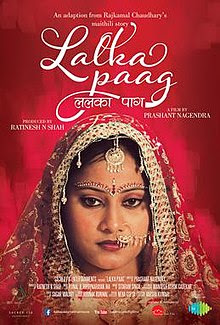
Films like love You Dulhin, Premak Basaat, Lalka Paag,Hero Tohaar Deewana, Half Murder , Premak Basaat these are more in the list of Miathil Films.
Deswa , the film had gone through 37 Film Festival and was also showcased at IFFI in the Indian Panaroma.
From the year 1965 to the year 2020, The Maithil Cinema is growing day by day . The Maithili Films which have been shot at the sacred soil of Mithilanchal have always been proved to maintain and save the culture as well as cultural environment .
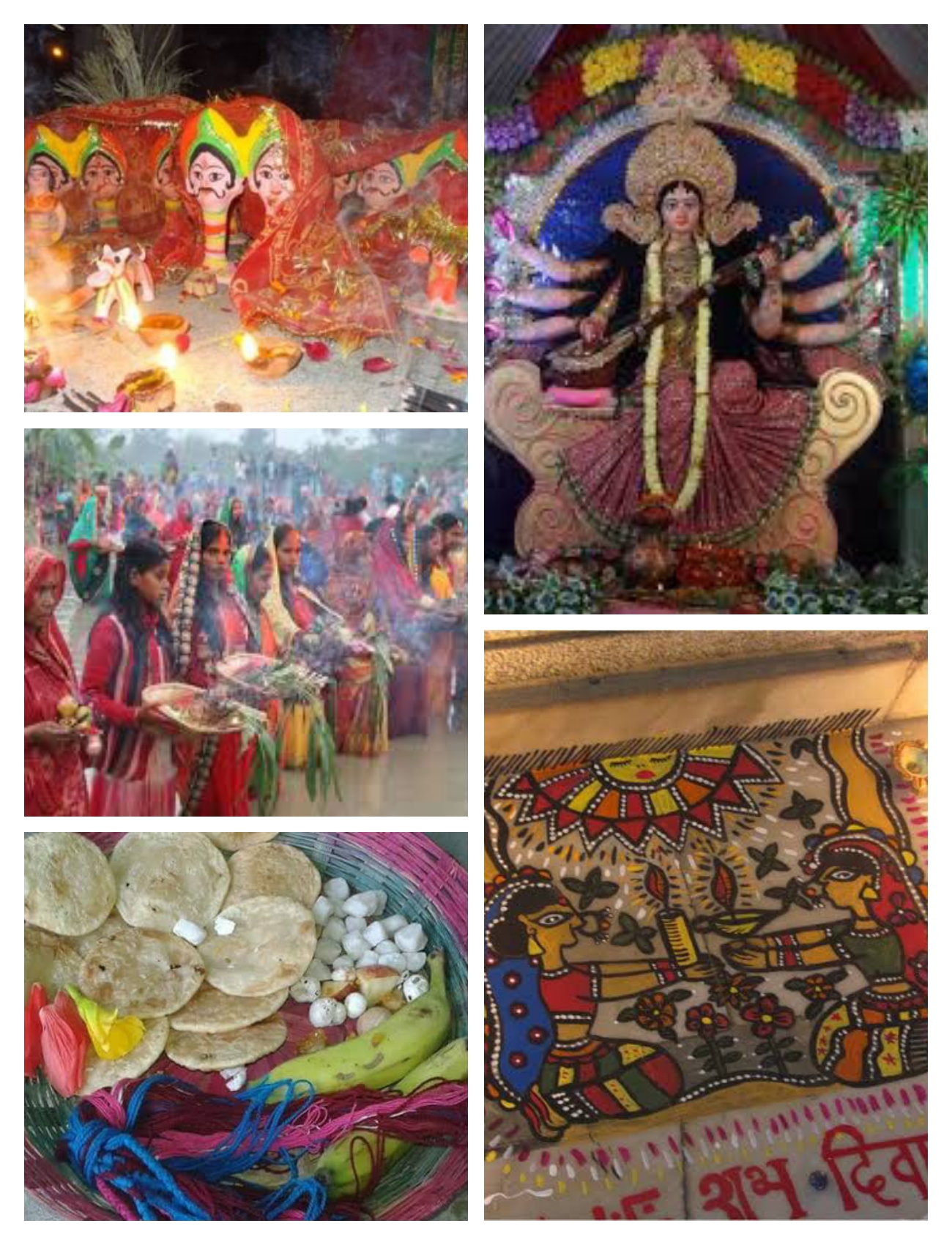
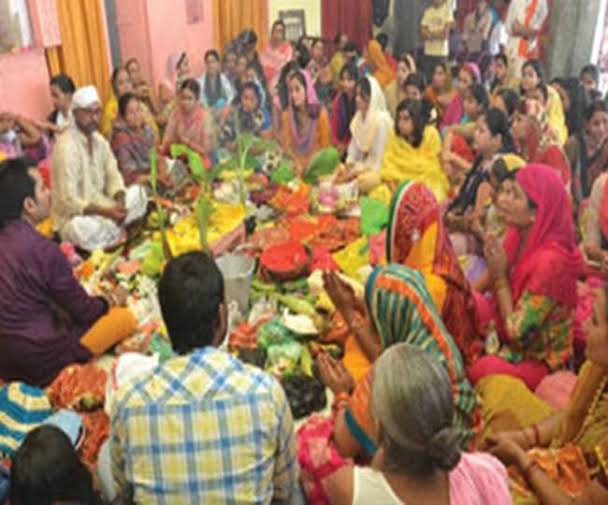
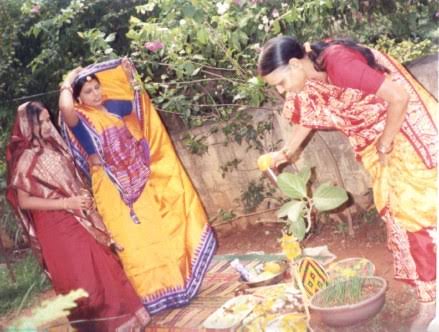
Festivals are always fascinating and are identification of any place or any culture. Festivals of Mithila is symbolizing the heart and soul of the place. In this era of modernization , people of Mithilanchal are preserving their culture by celebrating their local festivals . These festivals are directly connected to nature and all have some beautiful importance.
1. Jude Sheetal
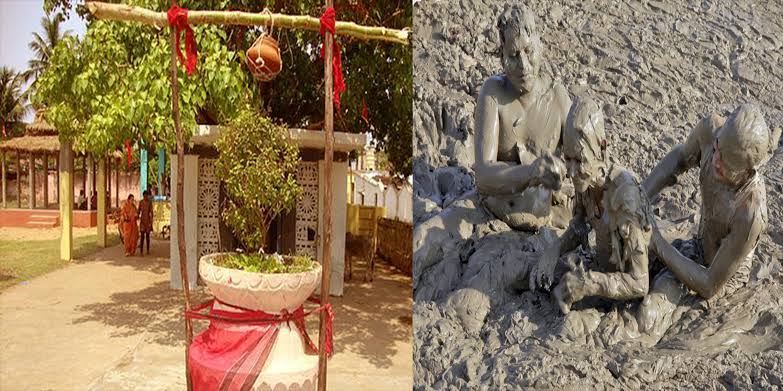
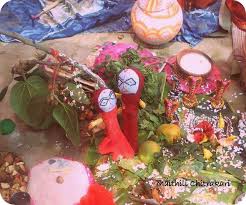
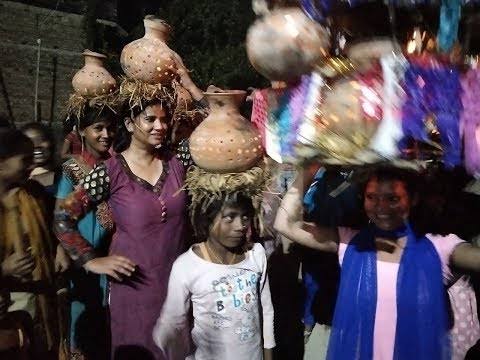
Jude Sheetal is called the Maithil New Year. This festival is celebrated in whole Bihar but particularly this is known as the festival of Maithils. It is celebrated on 14th April every year . The people of Mithila follow Gorgarian Calender and according to the calender they celebrated each and every festival. This festival is directly related to the nature as every festival of Mithila. This festival is related to cleanliness. The festival falls in the Summer season, so the tradition is to shower the water on the heads of the younger ones by the adults of the family. The water is put in the soil pot a night before the festival. It also signifies the caring nature of the people. They welcome the new year by showering the water which brings cool and calm environment everywhere. There is a belief behind this , that by doing such activity no one can face heat all over the year. For travellers too , the water is sprinkled on the roads. In old days there was a tradition to play in soil and water, but now a days this can only be seen in some of the Maithil villages. Due to summer, plants also need water time – to – time , so this festival also motivates the watering of plants and trees. Before one day of the festival ( Satuani ki raat ) Badi– Bhaat is being cooked in every one’ s home and it is being eaten the next day, the day of Jude Sheetal. On the festival day the kitchen and the gas – stove take rest, the day before food is being eaten.
2. Chauth Chandra
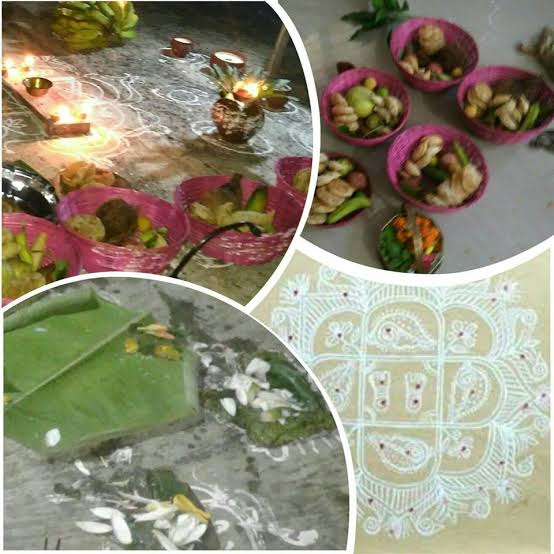
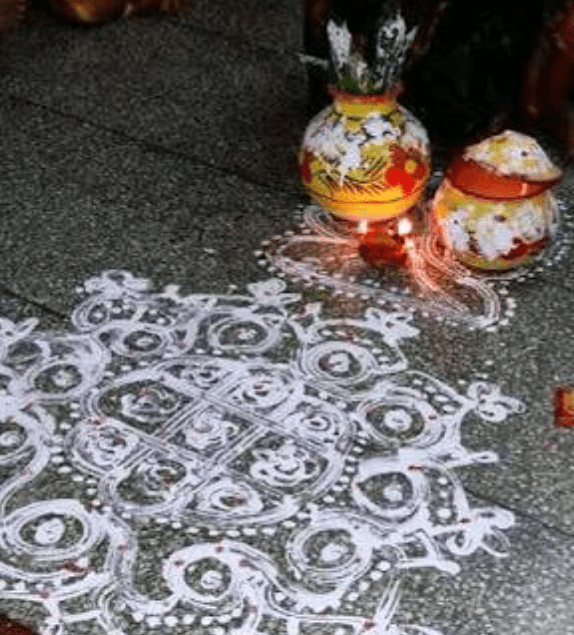
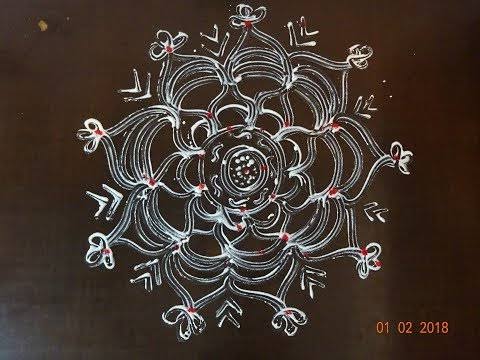
It is the exclusive festival of Mithila. Also known as Chaurchan is celebrated with all enthusiasm and positivity. In most of the places in India this day is celebrated as the day of Shidhivinayak Ganesh that is Ganesh Chaturthi. This festival falls in August / September.Worship of the moon God and Ganpati jee is being done for the welfare of the family. On this day the Puja is performed after day – long fasting by gents/ ladies of the family in evening when the Chandrma / moon is visible as well as when the chauth tithi is prevailing. The festival is mostly famous or popular among the localites because of the food also . The specialised include – curd( stored in new earthen pot), Curd is considered very special in this festival. cookies ( pedukiya ( gujiya), poori,fruits, kheer, khaja – laddoo ( localsweets) . These all are decorated in bamboo wicker shallow containers ( known as Daliya) . Ashtjal Airpan (Rangoli) is used for the Puja which is drawn in the courtyard under open sky .
3. Jitiya
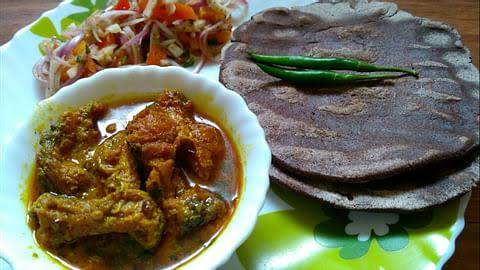
Jitiya is a festival of all the great mothers of the Mithlanchal and celebrated by each and everyone of the family. It is celebrated in september . The mothers keep fast for their children’s good and long life. The fast is considered very difficult as it is three days of fast and it is kept drinking without a drop of water. First day is Nahaye- khaye (Saptmi) . One this day one can take food only one time after bathe and then fast for the whole day. Second day is Jitiya Nirjala Vrat (Ashtmi). Third day is Paran ( Navmi) . In the third day of fast there is a tradition to serve the poors . On the third day ladies worship Jitiya Mata at the bank of river. Ornaments, Sindoor is gifted to Mata Jitiya as per the ritual. There is special food eaten in this festival . Marwa Roti( Ragi chapati) Nuni Saag ( leafy vegie)Maachh( Local fish ) .
4.Anant Puja/ Anant Chaturdashi
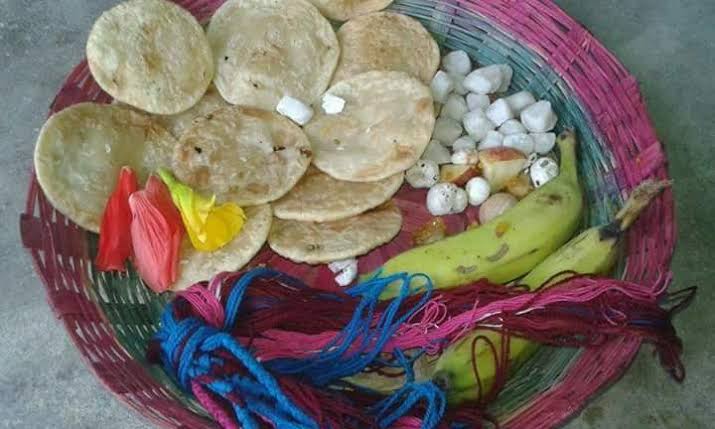
Anant Chaturdashi is celebrated in Chaturthi tithi of Shukla Paksh of Bhadrapad maas , mostly in August/ september. It falls ten days after Ganesh Chaturthi . God Vishnu is being worshipped in this festival. In Mithila it is celebrated with its own ritual and it has its own charm. 14 tilaks ( small vertical strips ) of vermillion are made on a wooden plank and 14 Pua( deep fried sweet wheat bread ) are placed on a vermillion strips. A bowl containing Panchamrit of milk, curd, jaggery, honey and and ghee . A thread with 14 knots , symbolizing Lord Anant wrapped on a cucumber and is swirled five times in this ‘ocean of Milk ‘ . Later, this Anant thread is tied on the right arm above the elbow by men. Women tie this on their left arm . This Anant thread is removed after 14 days .
5. Sama Chakeva
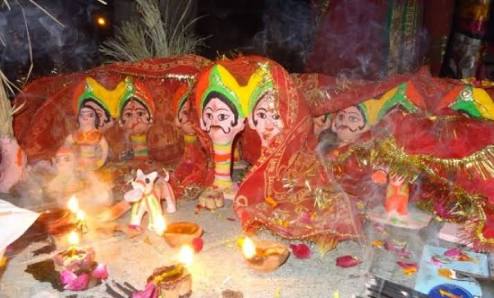
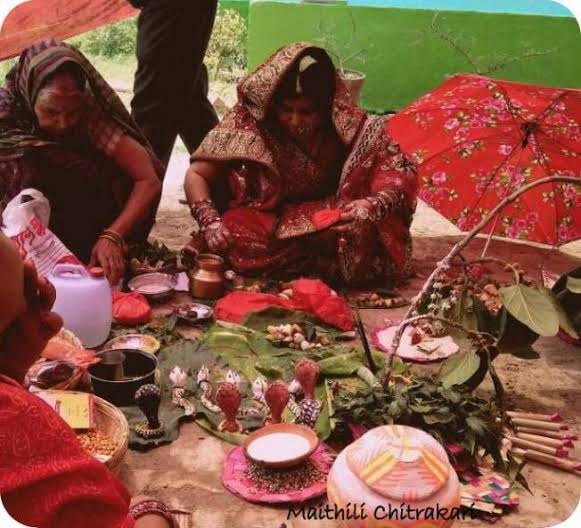
Sama Chakeva is exclusively celebrated in Mithila only. It is the festival of Brothers and Sisters. It is celebrated in the month of November . It starts from the night of Chhath Puja and it continues till Kartik Purnima. This festival includes folk theatre and folk songs. It celebrates love between brothers and sisters. Sisters assemble near the ghats of Chhath with a basket containing small idols of Sama Chakeva , candles and clay. All sing traditional songs , perform some rituals like exchanging baskets. On the day of Kartik Purnima ( end day of this festival) sisters take a dip in river and the idols are immersed in the river . The festival is celebrated by the sisters for their brother’s long and prosperous life. The belief behind the festival says the story of Sama a daughter of Krishna who had been falsely accused of wrong doing. Her father punished her by turning her into a bird , but the love and sacrifice of her brother Chakeva eventually allowed her to regain human form.
6. Sapta Dora
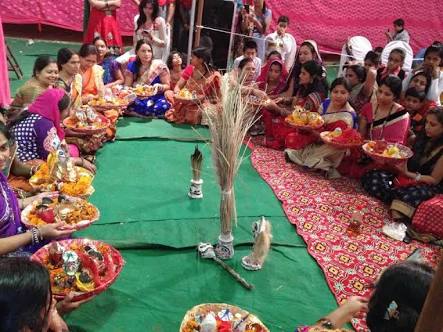
Sapta Dora is a festival celebrated by the ladies of Mithila . It starts the day after Holi (the day after Purnima / full moon) in the month of February or March and ends on the last sunday of Baisakh. Every sunday , women keep fast and listen to the folk tales (katha) associated with this festival. In the morning after holi wood woven basket filled with fruits and pakwaans(fried fritters) are decorated by the women of Mithila and Sapta Mai is worshipped by them. Fast is kept for following sundays but the stories can be shared with just a little dhoob (grass) in hand. On the last sunday , the prayer ceremony is just as celebrated as the first , when the baskets are prepared once again and Puja idols are immersed to the river. Story telling, Alpana , Kalash, Sindoor , rice flitters, sprouted lentils, betel leaves, betel nut, coconut, banana shoots are the speciality of this festival. The festival is done for the welfare of the family.
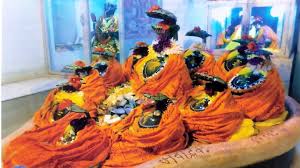
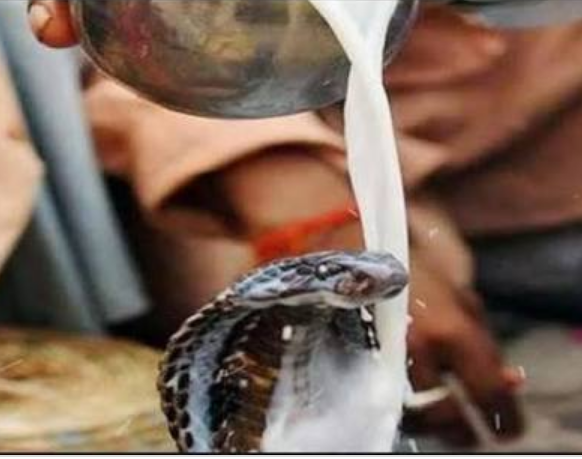
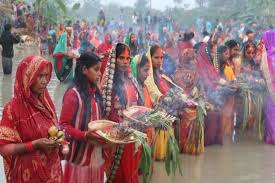
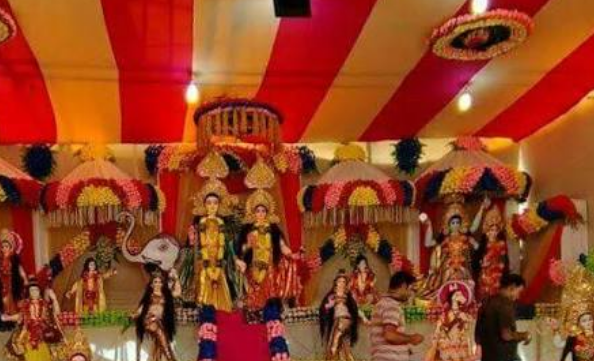
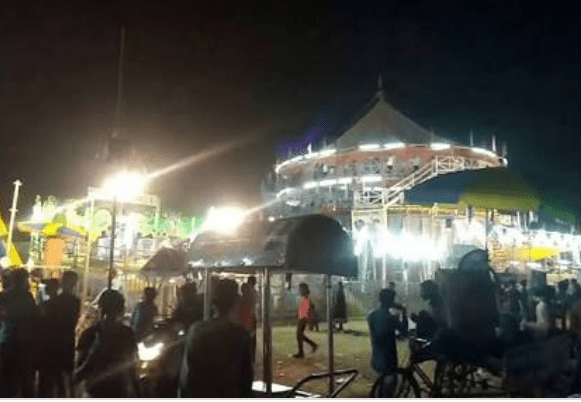
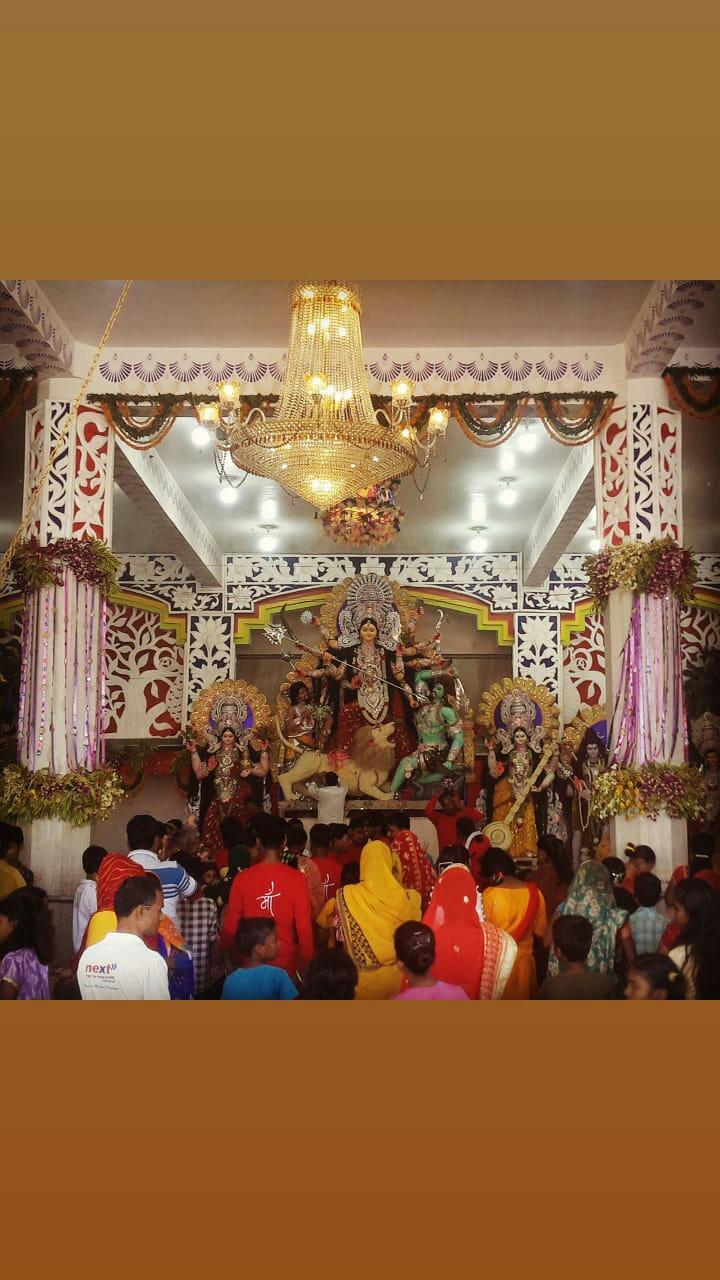
These festivals are exclusively celebrated in Mithila only. Other than these , festivals like Devothaan Ekadasi , Narak Nivaran Chaturdashi, Makar Sankranti, Saraswati Puja, MahaShivratri, Indra Puja, Chhath puja , Bhatri – Dwitiya ( Bhai – dooj) Naag Panchami, Durga Puja, Diwali,Holi are also celebrated with great pump and show
Ekadas Rudra Mahadev Mandir at Maha Shivratri, MadhubaniIndra pujaSaraswati pujaAirpan ( Rangoli)Fest
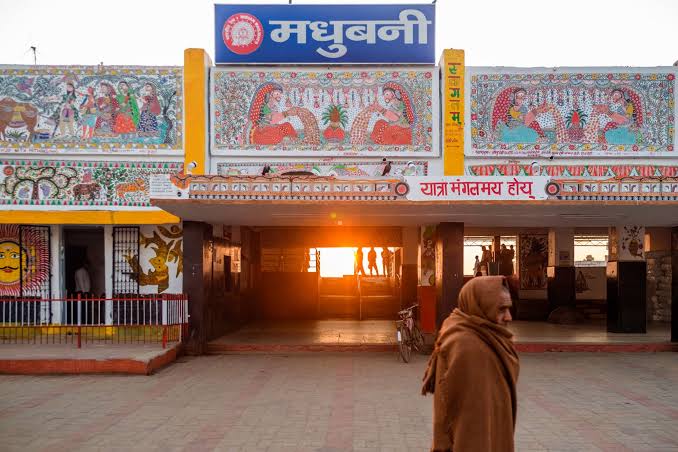
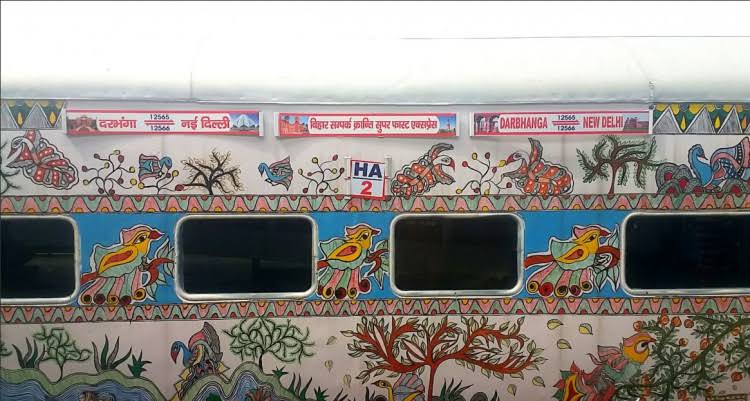
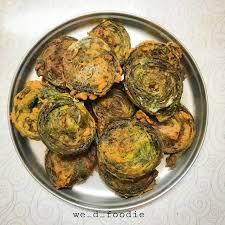
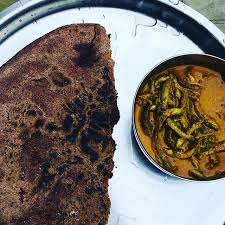
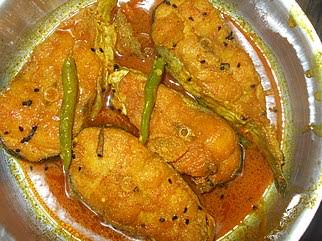
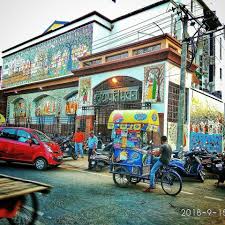
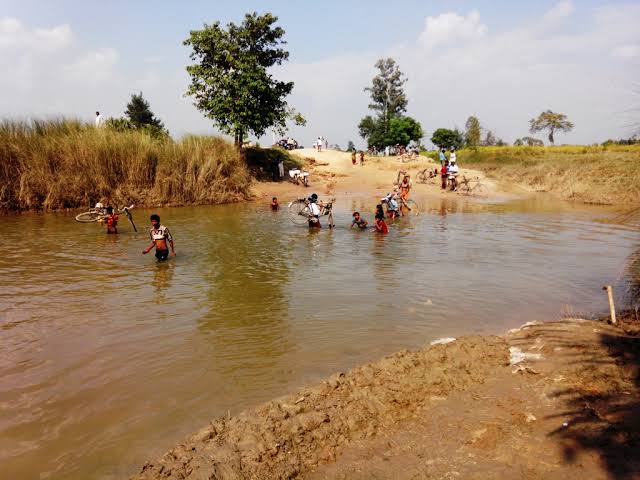
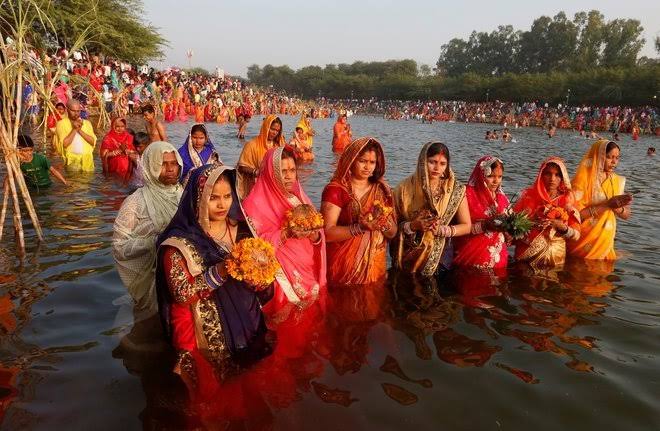
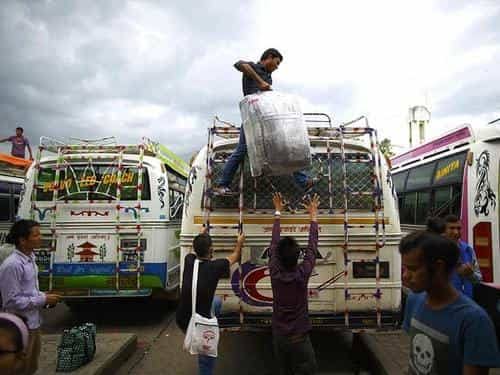
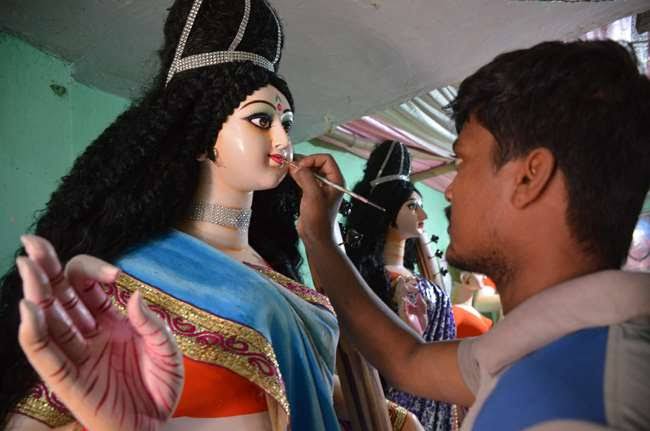
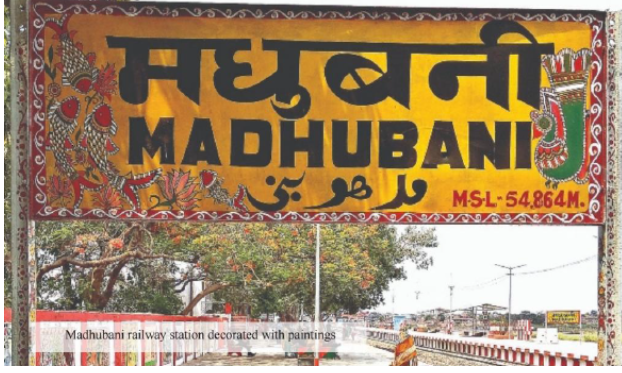
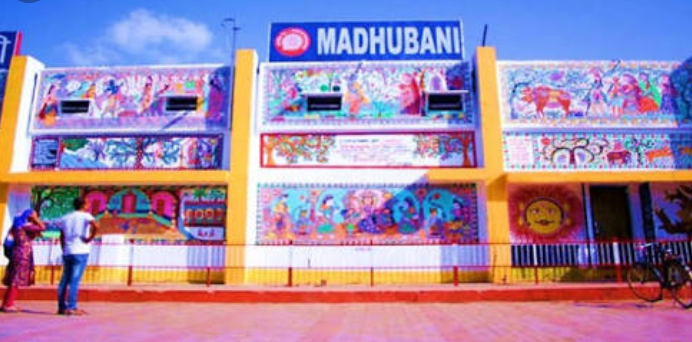
PaintingMadhubani Railway stationTrainSymbol of MithilaJhijhiya DanceEkadas Rudra Mahadev MandirArikonch Maruaa – roti Maara maachhMaachh Jhor( Fish curry)Market placeMaithil thaliLocal pujaVat – SavitriDala (use in local festival)Jhijhiya DanceMundanMaithil FilmVillageLocal functionMaithil FilmAiripan ( Rangoli)Local festival Local festival VillagePaintingDurga PujaMelaFieldJhijhiya danceVillageRoad to VillagePondChhathBus StandArtist making ma Devi’ s statueMarriage customKalash
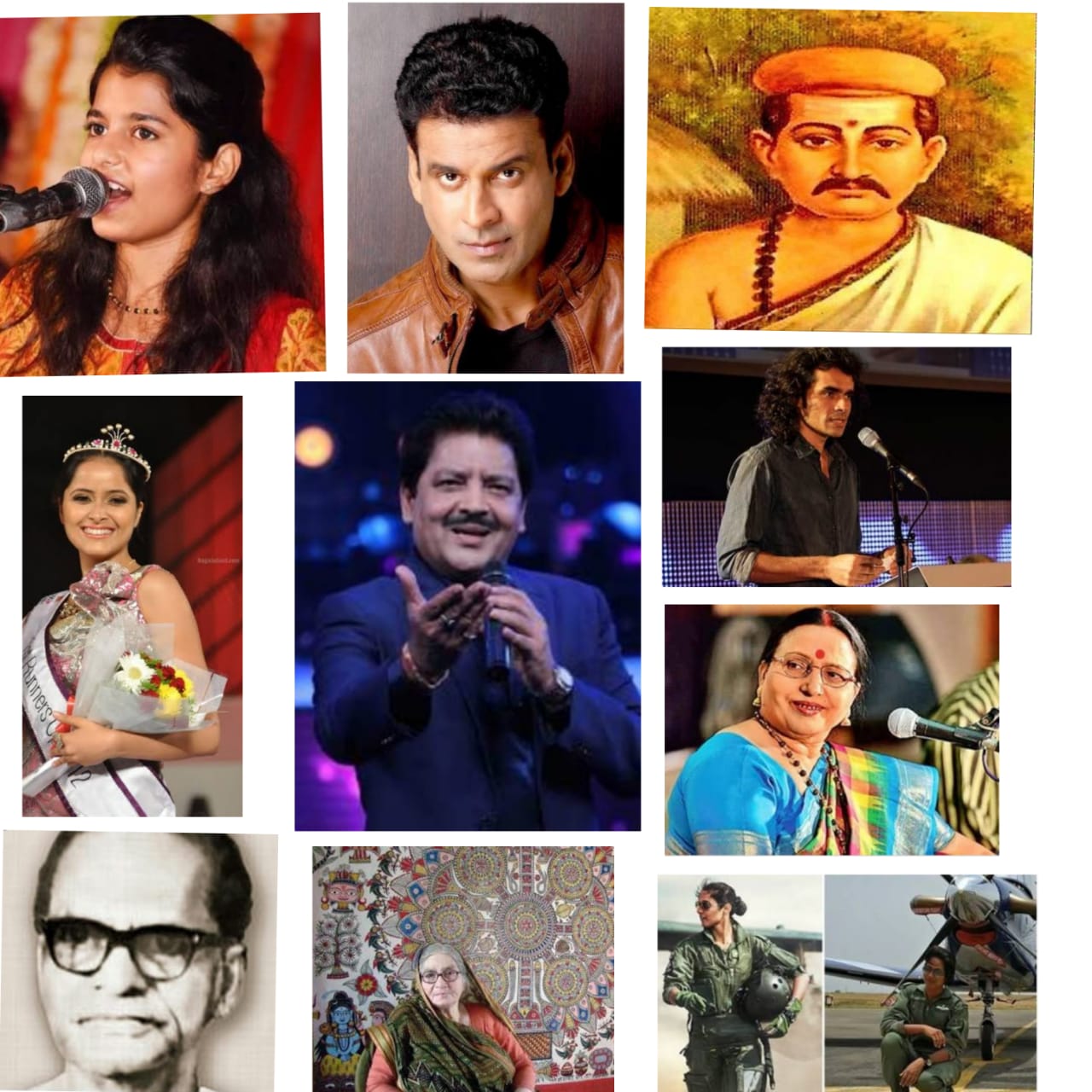
It may say that the place is known for its people.The charm of the people made a place identifiable and recognisable. The place give the person identity and the person give the place popularity. When the person become a personality , it reflects the essence of the place. Here are some lists of personalities from Mithila with their glory and charm.
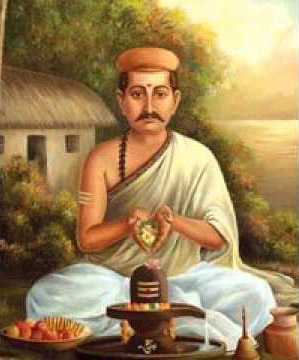
1. Vidyapati
Popular by the title ‘ Maithil Kavi Kokil’ Vidyapati is the great poet of Mithila of 14th centuary.He was the Maithili language poet whose work is as great as him. Vidyapati’s influence was not just restricted to Maithili , he was the great poet of sanskrit too. His influence is extended to other Eastern literary traditions also. Born to Shaivite Brahmin family in the village of Bisfi in the Madhubani district . He is known as the ‘ Man of Knowledge‘ as his name derived from two sanskrit words, Vidya means knowledge and Pati means master i.e, master of knowledge. He is mainly known for his love songs and prayers for Lord Shiva. He also wrote on other topics including ethics , history , geography and law. He has also did great works in Odia literature and Bengali literature. His works include – Purusa Pariksha( moral teachings) , Likhanabli, BHU parikrama, Danavakyavali, Varsakrtya.
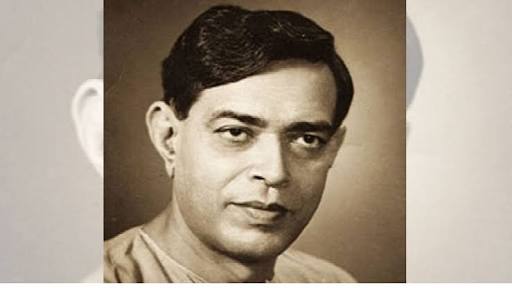
2.Ramdhari Singh Dinkar
Ramdhari Singh Dinkar is considered as one of the most important modern Hindi Poets. Other than writing poetries , he was also an essayist and a patriot. He wrote various Nationalist poetries at the time of Independence . Born in Simaraya , he had a vision of patriotism and nationalism . His works include Rashmirathi, Hunkar, Renuka, Mitti Tilak, Urvashi. For his great literary works he was awarded by Padma Bhushan, Sahitya Akademi Award and janpith Award.
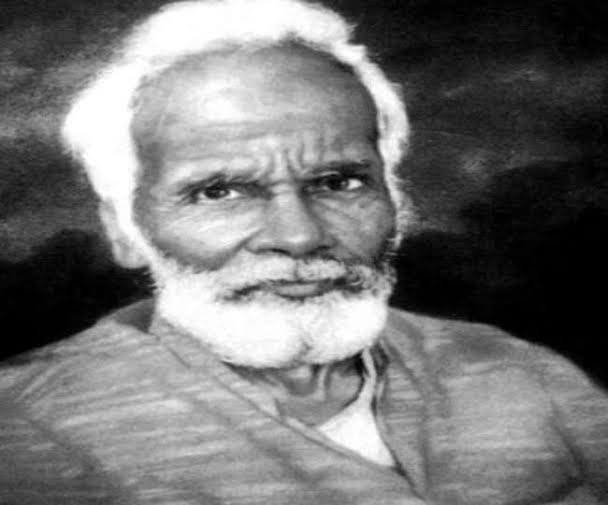
3. Nagarjun
Among the great poets of Mithila Vaidyanath Mishra who is famous by his pen name Nagarjun is a treasure of Mithila.He is a great poet of Hindi and Maithili language. He is known as Jankavi – The People’s poet . Born in Tarauni village in Darbhanga district but recognised by the native of Satlakha village of Madhubani . Nagarjun is regarded as the most prominent protagonist of modernity in Mithila. He is well known for writing Novels, Short stories , literary biographics and trvelogues. His literary work Yatri is something which is considered as one of the best collection of writeups. It includes poetries. Some of them are : Bharat Mata, Antim Pranaam, Vandana, Vilaap. For his work he has been awarded by Sahitya Akademi Award and Sahitya Akademi Fellowship.
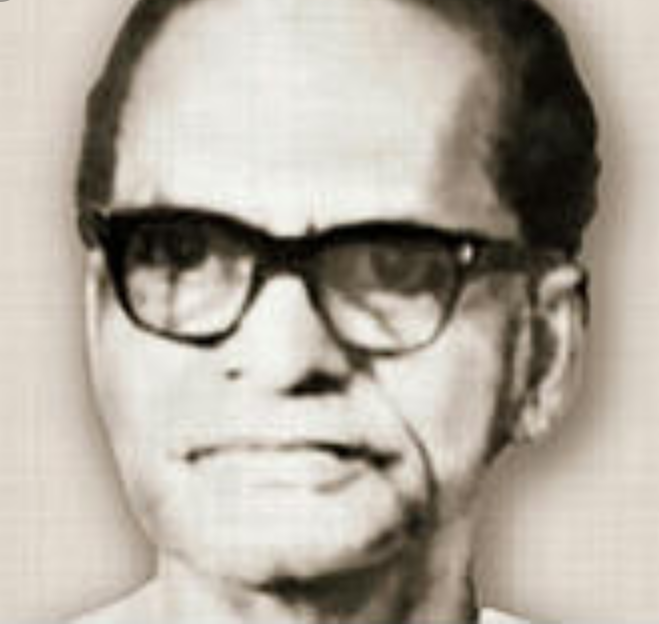
4.Acharya Ramlochan saran
Acharya Ram Lochan Saran a Hindi litterateur , grammarian and publisher is one of the great personalities of Mithila. His works in magazines Balak Marg, Honhar, Himalaya and many more is the examples of great works. Laherisarai in Darbhanga became a hub of Publishing because of Ram Lochan ji. Born in Sitamarhi his hindi primer Manohar Balpothi attempted to teach the Devnagri alphabet to beginners. The Raja and the princess of Darbhanga Raj publicly honoured his contribution in the city and the development of intelligents creative artists , writers , poets and spirituals .
Gajendra Thankur, Dhirendra Premarshi, Radha Krishna Chaudhary, Surendra Jha, Usha Kiran Khan, Binod Bihari Verma, Chandranath Mishra Amar , Jyotirishwar Thakur , Kashikant Mishra Madhup, Hetukar Jha, Ramdeo Jha, Gangesh Gunjan, Mayananda Misra, Hari Mohan Jha are some of the great writers and poets of Mithila.
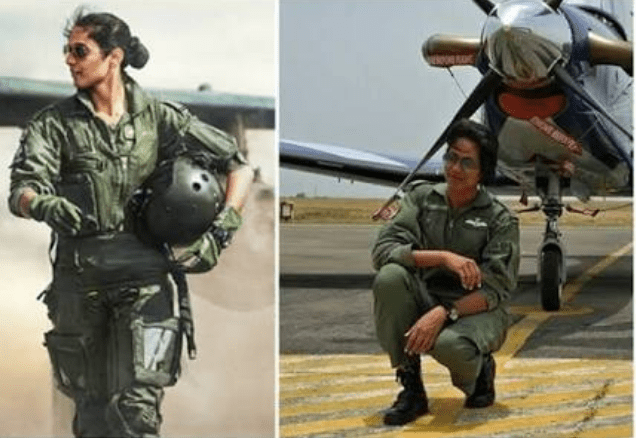
5. Bhawna Kanth
Bhawna Kanth the proud daughter of Mithila is one of the three firstwomenfighterstream pilots in Indian history. 24 year old Bhawna Kanth is from Darbhanga district who is writing the history in the Indian airforce .
6. Gonu Jha
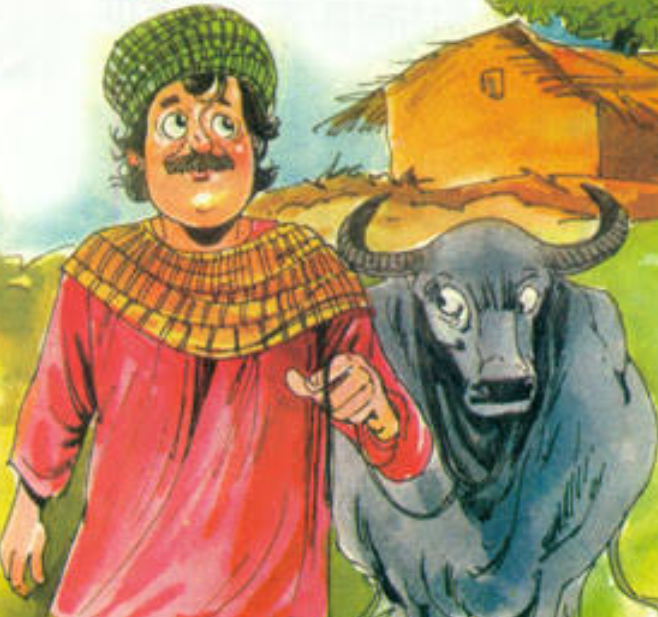
Gonu Jha is the prominant personality, ready – witted character of Mithila. He was the contemporary of king Hari Singh of Mithila in the 13th centuary C. E. He was from Darbhanga district . There are several humorous Maithili language folktales about him . His works include Gonu Jha ki anokhi duniya, Gonu Jha ki rochak kathayein, Gonu Jha ke manoranjak Kisse.
7. shilpa Singh
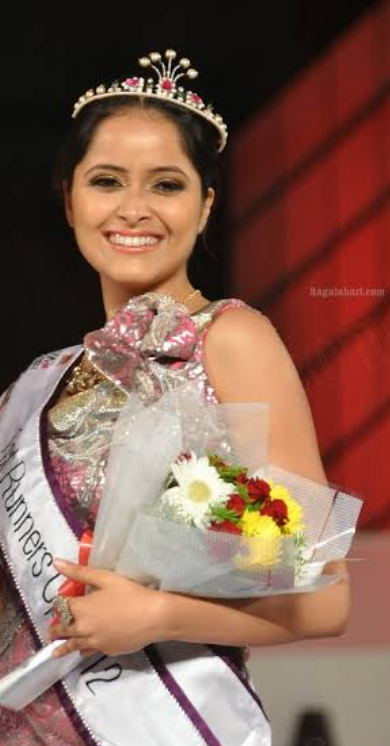
Shilpa Singh is the beauty pageant titleholder and Runner – up at I am she – Miss Universe India 2012. Born in Samastipur district , she has reprented India at the Miss Universe 2012 pageant at Las Vegas and become one of the semi finalist after topping the interview preliminary competition.
8. Sharda Sinha
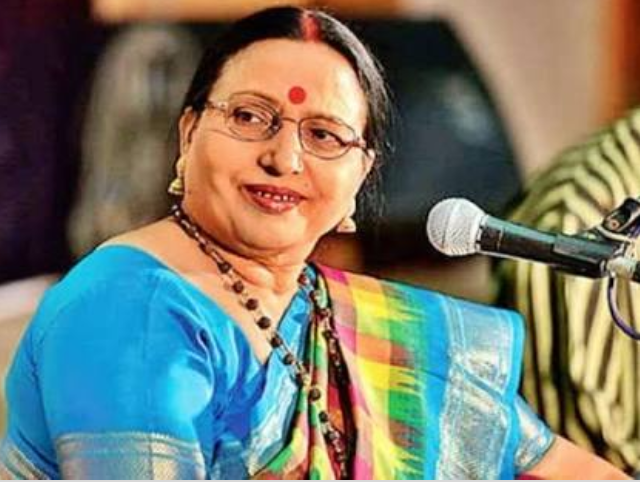
Sharda Sinha is a household name in Mithila. She is a Maithili language folk singer, known for her Maithili version of the Chhath Puja themed song’ Ho Dinanath’. Other than Maithili she is sprinkling her magical voice in Bhojpuri and Maghi language too. sharda Sinha is awarded by Padma Shri for her contribution to the Music industry . In Bollywood her songs Kahe Toh se Sajna from the film Maine pyaar kiya(1989) , Taar Bijli from Gangs of Wasseypur part 2, Babul from Hum aapke hain kaun are some of the popular songs .
9. Maithili Thakur
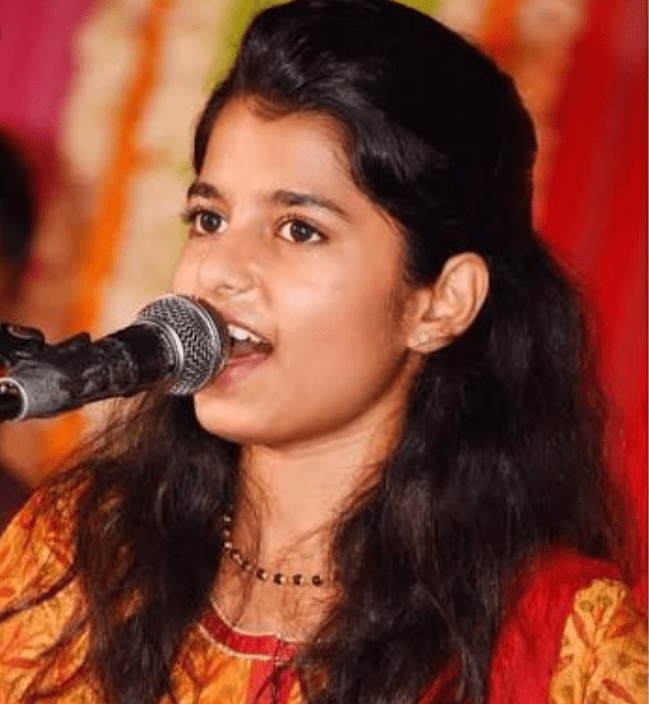
Maithili Thakur is a Runner up of a reality show Rising Star 2017 . Belong from Benipatti , Madhubani she is recently the sensational voice of India. She has a very appleaing voice and sings in many languages other than hindi too. She is a trained Indian classical singer and a outstanding singer of Maithili and Bhojpuri languages. She has represented Mithila in various platforms. She has selected as the brand ambassador of Madhubani by the Election commission.
There are a beautiful number of Sahitya Akademi Awardees in Mithila in writings and poetries. Amit Patha won the award for Raaj- Upraag a poetry collection. Rishi Bashistha has given the award for his qork ‘Ee phoolak Guldasta’ – a story book. Prof. Bina Thakur , Yasodhar Jha, Ramanand Renu, Bhimnath Jha , Hari Mohan Jha are some more names in the Awardees list . Other than these great personalities in Sahitya Akademi Awardees list , there are more names whose work is shinning in the literary field.
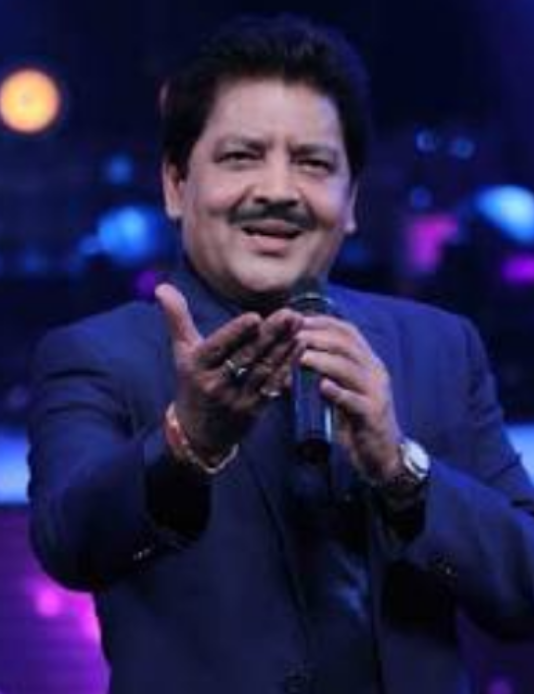
10. Udit Narayan
Udit Narayan is one of the most outstanding varsetile singer of Bollywood music industry. He has given hundreds of songs to the music industry and has become the household name. This playback singer belong to Saharsa has given his voice to Telugu, Tamil, Malyalam, Kannad, Odia , Nepali , Bhojpuri, Bengali and Maithil film industry. In his start of his career in Hindi Cinema he got the chance to debu with legends like Mohammad Rafi Sahaab and Kishore Kumar . This sensational singer has won many awards including four National Film Awards and Five Filmfare awards. He is also awarded by the Padma shree and Padma Bhushan.
Many local singers and musicians are also making there great presence in the Maithili music industry. Many shows and albums are being presented by them . They are winning the hearts of the people by sprinkling the entertainment in their lives. They have a lot to say by their songs and this magic can be seen at the time of festivals when local songs are been the demand of the time .Some of them are Poonam Misra, Kunj Bihari, Ranjana Jha, Kumkum Jha and many more.
11. vikas Kumar Jha
Vikas Kumar Jha is a journalist and an author who belong to Sitamadhi district. He is best known for his fiction and non-fiction works like ‘ Mc Cluskie ganj: The story of the only Anglo – Indian village in India that received the Katha Uk Honour at the House of Commons , London. Worked in News Express where he has anchored some talk shows like Suno Patliputra , Kya bole Bihar. These talk shows gave him immense popularity. He has also worked in Maya Magazine , Ravivaar and Outlook Magazine. He has been the editor of Rashtriya Prasang. Being a journalist he has covered various political, social , and cultural issues inbhis span of 35 years in Hindi Journalism.
12. Karpuri Devi
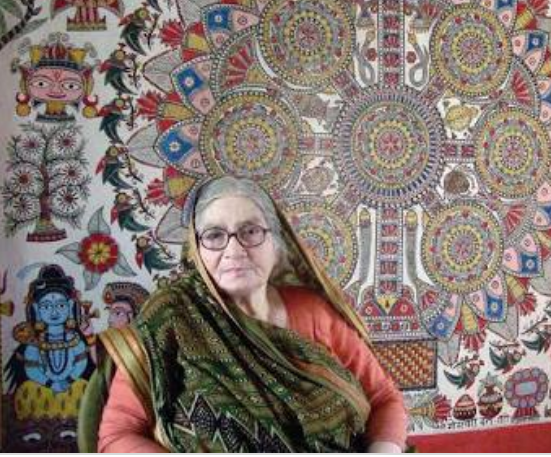
Belonged to the first generation of MithilaPainting artists who brought this art form on the global map of the folk art and with her came Madhubani district , espicially its Ranti Village , on the world map. This eminent Mithila painting artist is the creator of Mithila Museum in Japan. She is the most travelled Mithila artist who had visited Japan 9 times . She is the acclaimed artist and the winner of several state awards and National merit certificate given by the ministry of textiles, Union government.
13. Godawari Dutta
93 year old Mithila artist , The Padma Shri winner Godavari Dutta has made Mithila proud. In 2019, A museum in Japan displayed her paintings . In 2006, president Pratibha Patil conferred the title of ‘Ship Guru’ on her. Belong to Darbhanga district she has tutored 50k students in India and abroad in Madhubani Art. There is a story very famous about her. It is said that P.M. Indira Gandhi used to keep Godavari Dutta’s paintings in her office.
Bharti Dayal, Baoa Devi, Ganga Devi are among the great painting artists of Mithila.
Mithila gave great actors and directors to the Bollywood. Manoj Bajpaye , Imtiaz Ali , Neha Sharma , Sriti Jha , Narendra Jha , Pankaj Jha and Imtiaz Ali are among them.
Sriti JhaImtiaz Ali
15. Imtiaz Ali
The great name among the list of the directors and writers of Bollywood is Imtiaz Ali. The present Cinema of India is incomplete without his films. The super- duper hit film Jab we met director belong to Darbhanga district. He is known for his best directorial work in the films like love aaj kal , Tamasha , love aaj kal 2 , Rockstar. His films are very much liked by the audiences. He is one of the growing director of Bollywood.
Manoj BajpayeNeha Sharma
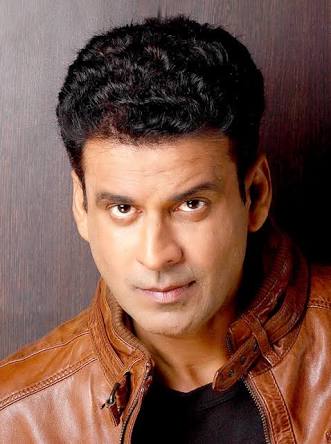
16. Manoj Bajpaye needs no introduction in Bollywood . From Belwa village in Champaran district continues to mesmerize the Indian audience with his serious acting. Films like Satya , Gangs of Wasseypur, Rajneeti , Sarkaar are his most loved films by the audience.
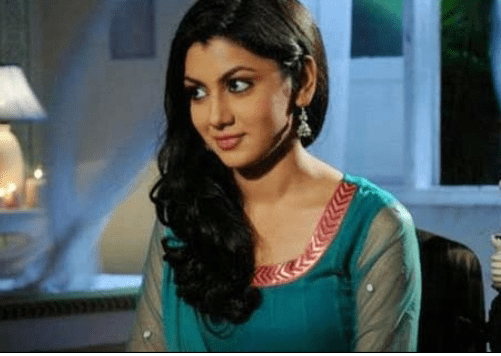
17. Sriti Jha the television daily soap actress from Begusarai acted in television serial kumkum Bhagya which has made her popular celebrity among the household of the country.
18. Neha Sharma is the Bollywood film actress from Bhagalpur who is known for her good acting works in the films. Kya super cool hain hum, Yungistaan , crook are her films which is quite famous . She has been figured out Times of India 50 most desirable women’s poll .
19. Narendra Jha The great actor of Hindi Cinema Mr. Jha is known for his work in Bollywood productions; Belong to Madhubani district he is famous for Doordarshan’s Shanti. Haider, Raees, My father Iqbal, Humari Adhoori Kahani, Kaabil has witnessed the acting of such a great actor. His screen presence was much more to bring smiles on the aufience’s faces. He is also famous for his works in tv serials like Begusarai, Raavan , Havan anf many more.
Tourism is the soul of any place which not only defines the history of the place but also signifies the culture and tradition which has been following from thousands of years. What made any place special? What made any place popular in the world’s eye ? The tourism of the place has the major role in estabilishing the particular place beautifully in front of the globe. Not only this , tourism is the identification of the place as well as it helps in the growth and development of the place too.
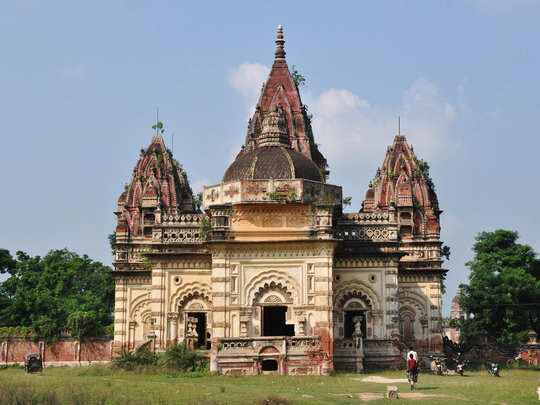
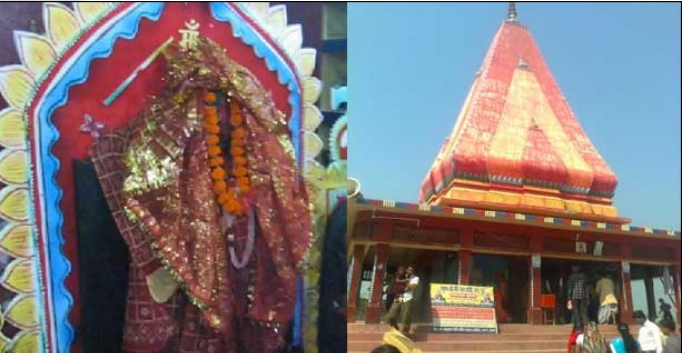
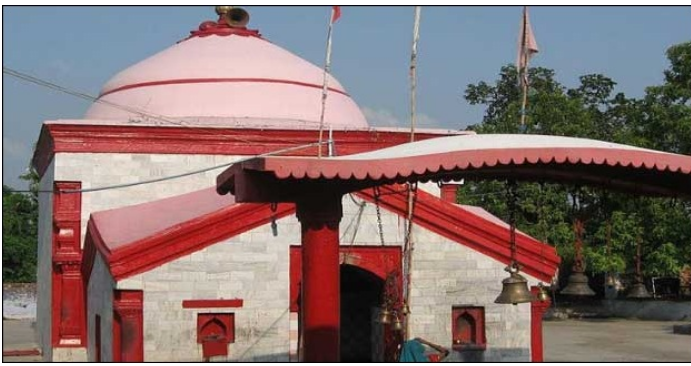
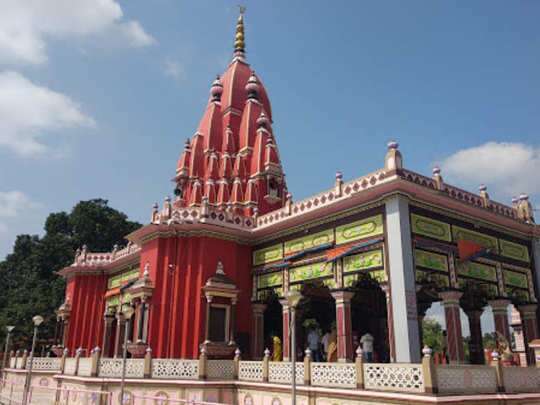
Mithila is a place which has its cultural and historical glory which is described by the beautiful and magnificant tourist places .Talking about Mithila, in tourist places mostly temples and palaces come which was made by the kings in their kingship periods. Some of them are of thousands years old and are still shininng in the eyes of the tourists of all over the world . So let’s come with your tour guide in this beautuful journey of Mithila tourism.
1.JANAKPUR DHAM
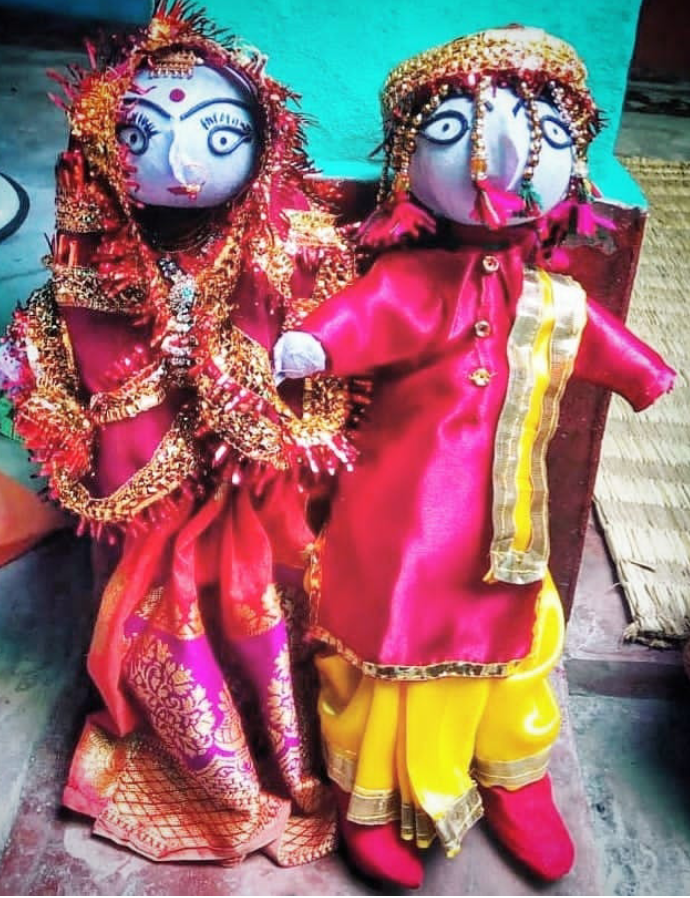
Janakpur Dham is the birth place of Mata Sita . Janki is the name of Mata Sita.Janakpur was the capital of ancient Mithila. It is the famous place for Hindu pilgrims. The place keeps the history of King Janak and Mata Sita . The place comprises of the palace of King Janak which is the place of Sita and Ram’s wedding too . The city is thronged by worshipers and visitors alike especially during the festival of Vivaah Panchmi. Vivaah Panchmi is the auspicious day of the marriage ceremony day of Sita – Ram which is celebrated every year with great pomp and show. This annual festival is celebrated for one week in Janakpur Dham.Janki Temple is the most visited place in Nepal. It was a palace of Janak Maharaj with 365 saligrams. There is an attached museum with mesmerizing effect. It contains relics from the time of Sita Mata as well as the diormas of the life of Mata Sita. In the museum there kept puppets which portray the life history of Sita and Ram.
To reach Janakpur one have to travel till Jaynagar by train and then can take a taxi from there. There is also air route . By air one can reach Kathmandu , the capital city of Nepal and then can take road trip to Janakpur.
2.DHANUSHA
Dhanusha is the district of Janakpur Zone. It is famous for the temples. Ram Mandir, Jaleshwar, Ram Sita Vivaah Mandap, Dolakha Bhimsen Mandir , Ratna sagar Temple are some of the prominant places to visit. After travelling to Ma Janki Mandir , travellers come here for sure. It is said that for Mata Sita Swaymbar , when Lord Ram touched the bow, the bow broke up into three pieces , one piece went over the sky ,second one in the ocean and the third part of the bow fell over this place . The hindi name of bow is Dhanush from which the place found its name Dhanusha. That the part of the bow is still here, people worship the bow .
3.SITAMARHI
It is a place situated on the bank of Lakhandei(tributiry of Bagmati) river.In Valmiki Ramayan , it is written that King Janak found a girl child while ploughing a field and he named her Sita.The God gifted Sita brought an end to the year long drought and famine in Mithila. The place has its name from Mata Sita . There is a temple here named Janki Mandir where the devotees come and celebrate the birth of ma Sita by worshipping.
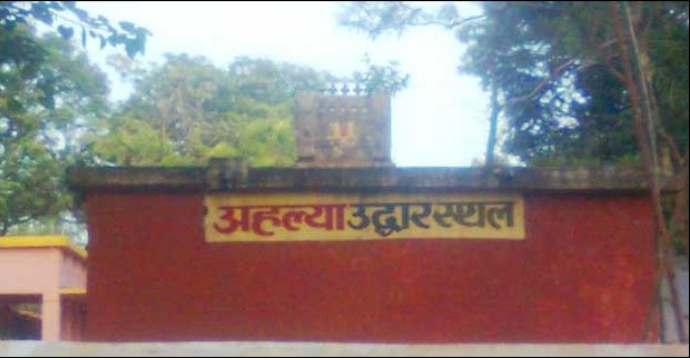
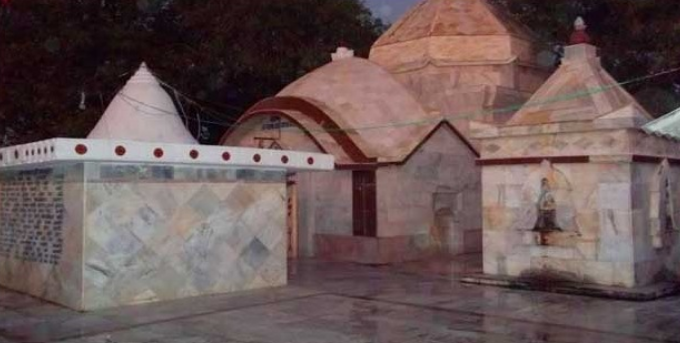
3.AHILYA ASTHAN
Located in Darbhanga district . There is a belief from Valmiki Ramayan that Lord Rama on his way to Dhanusha freed a Saint wife ‘Ahilya’ from curse which turned her to a stone. It is one of the famous tourist places of Mithila.
4.BALIRAJGARH
It is situated about a distance of 30 kms from Madhubani district . The exact location is the Babu barhi village. It is the ancient remains of kingdom of legendry king Bali , the son of Prahlaad .
5. KALYANESHWAR
It is an anicient temple of Shiva located in Kalna village near Madhubani
6.CHAMUNDA ASTHAN
It is a temple of maa Durga located at Katra Police station in Muzaffarpur district.
7. KAPILESHWAR
A place which is renowed for Shiva temple. There is a belief that Shiva Linga was estabilished by ancient sage Kapil.
9.SHRI RAGESHWARI
It is located in Dokhar near Madhubani. It is said that this place on which temple has built now was a hut of famous Saint Lakshmi Nath Gosai. Saint with mystical powers. His creations on Lord Krishna are very famous.
10.JITWARPUR
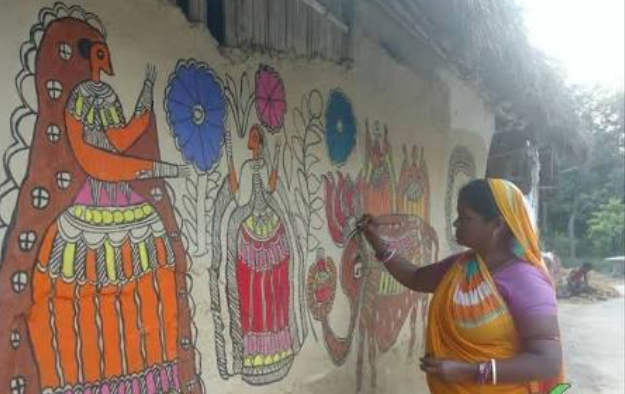
It is a village near Madhubani district. This village has got a world wide recognition for re – estabilishing Mithila art on world map. Travellers come here to see the Mithila painting on the walls of the natives’ homes as well as the paintings that are being stored in the archives of the village.
11.RAJNAGAR MAHAL
It is situated in Rajnagar town near Madhubani district. There is a palace depicting the kingship of King Rameshwar who was ruling hundreds of years ago in this place. It is said that Rajnagar was the old capital of Darbhanga kingdom.
12. UCHHAITH BHAGWATI
It is a temple if Mata Kali , situated near Madhubani district . It has a historic importance from the past. It is believed that Kalidas , the great Maitjili poet achieved blessings from Ma Kali here at this place. It is a very famous religious place among the natives. Large fairs held every year at the time of Navratra.
13. UGRATARA ASTHAN
This place is famous because it is a birth place of Scholar Mandan Mishra whose wife Bharti defeated Shankracharya in ‘Shashtrath’. Here is a temple of Mata Sita. It is located in Saharasa district.
14.Mata shyama Kali Mandir
Situated in the campus of Mithila University, in the Darbhanga district . This is a magnificiant temple of Ma Kali
15.SAURATH
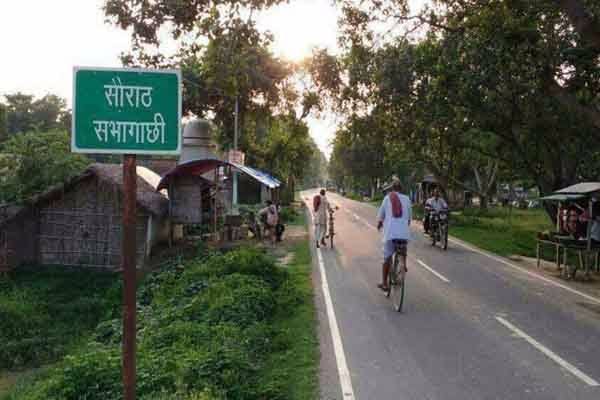
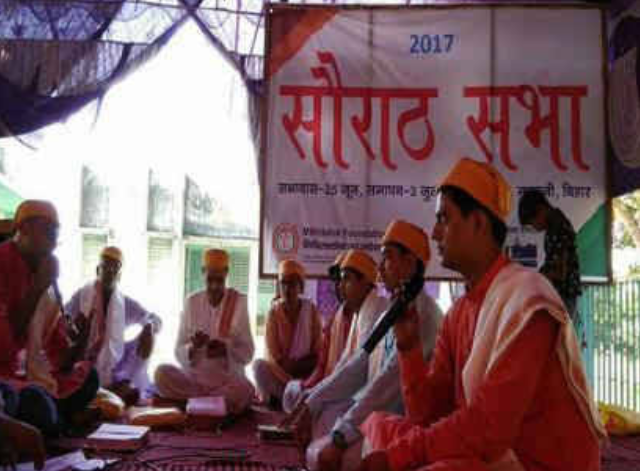
Road side village on Madhubani -Jaynagar road and contains a temple known as Somnath Mahadev Mandir. It owes its importance to the annual sabha held by the Maithili Brahmins for negotiating marriages.
16. Raj Area
Darbhanga was the seat of the King of Darbhanga. So Raj Palace is in Darbhanga district.The Raj area is well developed and beautifully laid-out complex of palaces, temples, offices , parks , gardens and ponds. There are a number of palaces built by the successive Kings.Important among them being Nargauna palace ,Anandbagh Bhawan and Bela palace. A number of buildingsare in the use of SanskritUniversityand L. N. Mithila University. The old Raj Library have been taken over by the Mithila University. The Kings of Darbhanga have traditionally been very great patrons of art and literature and through their magnificance have always provided encouragement to the scholars of Maithili amd Sanskrit.
17. CHHAPRAR
It is a village situated near Madhubani district. Having a temple of Lord Mahadeva on the bank of the Kamla river aroumd which fairs are held on the ocassion of Kartik and Maghi purnima.
18. CHANDRADHARI MUSEUM
The museum is located in the Darbhanga district. The aim if the museum is to collect,to preserve, and to display the artifacts of historical , archeological and cultural importance of the region. The museum is divided into several gallaries , they are as follows: Glass , textile , miniature painting,modern painting, stone sculpture,wood,mother of pearls gallary, natural gallery .
19.BHIKHA SALAMI MAJAR
It is situated in the Darbhanga district . A fair is to organised between 12th and 16th day during the Ramzan.
20.MANOKAAMNA TEMPLE
This temple has constructed with the marvel . In fact it is a Hanuman temple where a little and beautiful statue of Hanuman is built of marvel. It is situated in the Raj campus in Darbhanga.It is a belief of the common people that whosoever come here and whatever he or she has want to wish, it is fulfilled here.People use to write their wishes on the walls of temple and it is a belief that all of the wishes come true.
21. MANGARAUNI
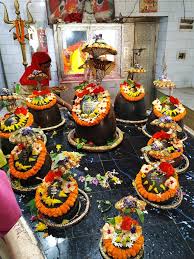
A village situated near Madhubani district famous for its hundreds of years old Eleven shivlings constituted at the one place in one temple. It is also known as Ekadash Rudra Mahadev Mandir. People from distant places come to visit this auspicious place.
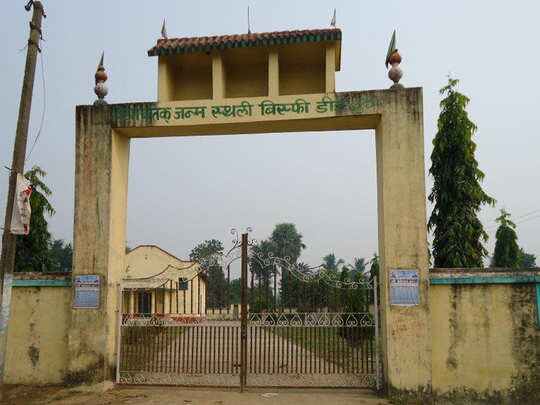
22.BISFI
It is a village near Madhubani district . It is the birth place of the great poet of Mithilia Vidyapati. There is a story which is very famous among the folks of the village . It is said that Vidyapati was a great disciple of lord Shiva , so once lord Shiva came to the earth lived with him as a servant for so many months .
It is a belief that’Marriages are made in heaven’.It is also said that life partners has already decided and the marriage plays the role of connecting them. India has been always popular for its culture and traditions and marriage is one of the biggest ceremony of Indians.The bond between a husband and a wife is among the most solemn of human relationship.Wedding is an ausicious occassion and is done by the utmost enthusiasm . It is an extravagent affair between two families which is constituted by a traditional bent of mind. In Mithila it has its own traditions and rituals which has been following from thousands of years. There are many communities in Mithila region and all have there own wedding rituals , but MaithilBrahmims’ wedding is something which is considered as one of the popular among all because of its speciality and pecularity .Inhabitants of Mithila have until today managed to retain ties with their past traditions.
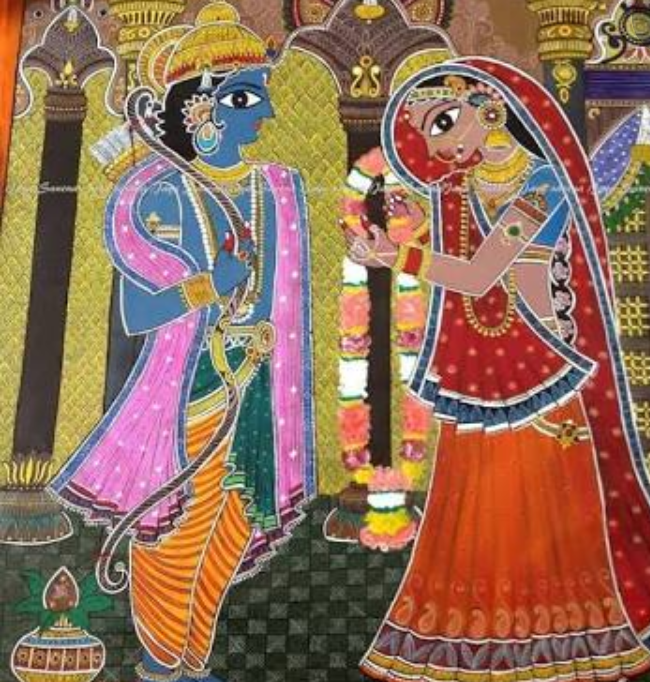
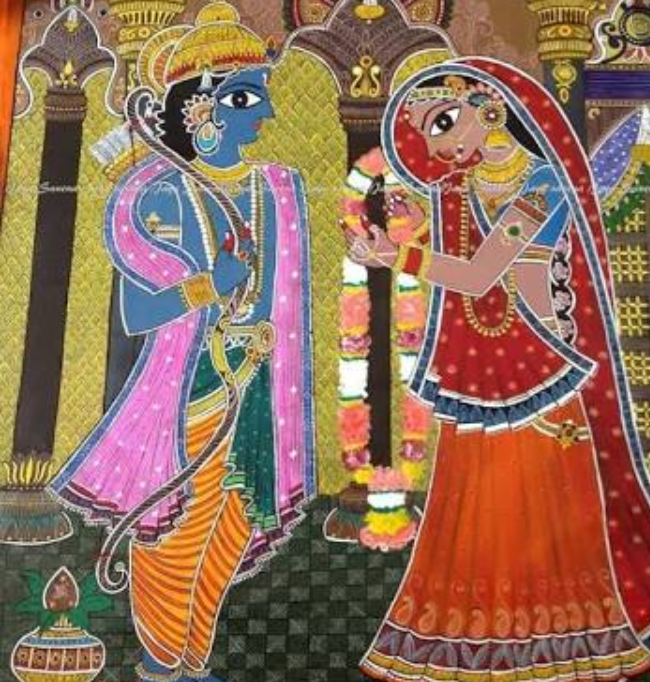
The major question that come into mind is , why only Maithil Brahmins wedding is special among all? It is because it has a direct connection to Ramayana. It is a belief that Maithil Brahmins’ marriage happens the same way with the same customs and rites as the marriage of Lord Rama and Mata Sita is mentioned in the Ramayana. Mata Sita was the daughter of Raja Janak of Mithila. For her wedding Raja Janak called for a ‘swayambar’ . Lord Rama won her in the ‘swaymbar’ and married her. Songs related to Ram and Sita is sung only. Thus this kind of marriage is exclusive to Mithila only.
Lord Rama and Mata Sita
Saurath sabha (Bada Gaachhi)
In the old times, this was a fair of bride- grooms held in the marriage season in the Saurath Villageof the Madhubani districtof Mithila. All the ‘elligible’ grooms would come to this fair , male members of the bride family would also reach, marriages would be fixed in this fair, and almost immediately carried out. This was something exclusive to the Mithila region which is now not in the tradition.The local folks are trying to revive this tradition .
Customs of marriages of Maithil Brahmins are very special and peculiar .
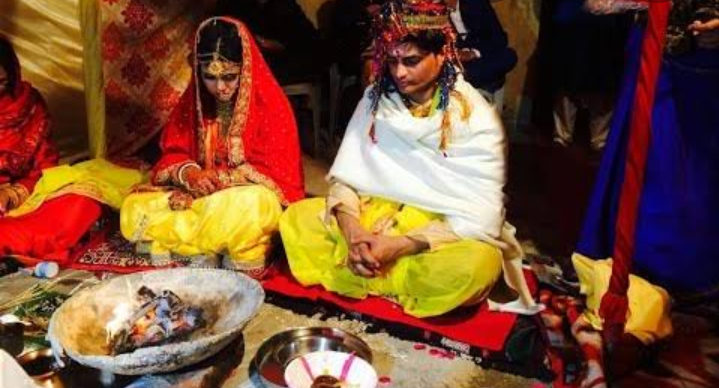
Maithil bride and groom
🌸 Marriage is not a ‘marriage on day -1 and Vidai on day -2 , period’ kind of ocassion in Maithil Brahmins. It is a four day affairs. Yes and without Chaturthi( 4th day of marriage) is not valid . Groom have to live at Bride’s home for four days , have to do many rituals and then can go with his bride or maybe sometime not with her. Traditionally, Bride does not go to her in law’s house even after chaturthi, that happens only in Dwirangman/Vidai which taken place in some odd year of marriage (1st, 3rd, 5th , 7th) due to early age of boys and girls. Now Dwirangman done soon after Chaturthi usually within 15 days , since within 15 days one need not look for a particular Mahurta – any day is fine.
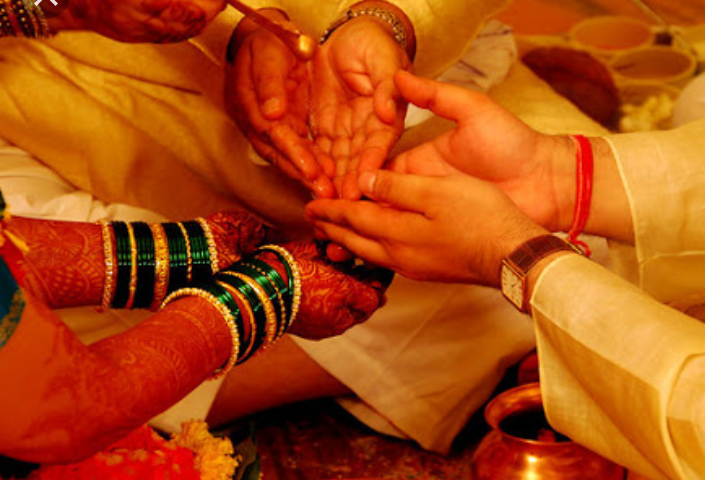
In Mithila the bride and the groom are called as ‘Kaniya and var‘ rspectively.This pictur is a resemblance of the bride and groom being put in the puja-vidhi(ritual)
🌸 For a marriage to take place , the 1st thing to be looked at is’Gotra’. This system is familier to the people of many other Indian communities too. Each Gotra is named after some great Rishi/Monk . People belonging to a particular gotra are supposedly descendents of the Rishi after whom the gotra is named. Hence, people from the same gotra are considered brothers and sisters and cannot be married to each other. So for marriage to be happen the Bride and Groom should have same caste but different gotra.
🌸 There are things like Mool(stocks),Paanti which determine how high your Kul(lineage) is . Now consider this. If it were just the gotra the two families would have different gotra , then only the girl and the boy will marry. And also, there will be no any marriage relationship between these two families for seven generations. It means for the marriage to take place tjere should be no marriage affair between tjese two families for seven generations. So , after gotra is sorted out, family tree of past seven generations is matched to see that the intended bride and groom are not in any relation, where marriage should be prohibited . This process is called sidhananta . No family maintains its family tree. It is done by some people who are into this profession and maintaining family trees. They are called Panjiyaar. That is why they say There is only one person made for you!Not many people can possibly pass all these tests . Talking about these traditions following now, then yes some of them are not followed by those who have setteled somewhere else but those who are stills live in Mithila follows all the traditions till now.
It is a belief that Kanyadaan or the gift of a girl in marriage is equal to a gift to a God. Wedding is a grand affair in the Maithil Brahmin caste. Having their own cultural and social traditions , the marriage ceremonies involve several steps or rituals that start from the pre-wedding period and extend till the post wedding period. The number of rites, traditions and rituals are perform on the wedding day in which involvement of the both families can be seen.
Rituals and Rites
Day before wedding day (Bride’s place)
🌸Mandappachadan/ Marhwa(settling of the Mandap / wedding alter)
Set up with bamboos and decorated with banana trees and mango leaves in the courtyard one day before martiage at the Bride’s place.
🌸Day Time: Bunch of married women gathered at to be bride’s place for singing the local songs of Lord Shiva, Lord Hanuman, Goddess Durga and songs referring to Brahmins. These married women are welcomed by the bride’s family with vermillion(sindoor) and hair – oil as a gift . They consider it very auspicious. Bride’s elder sister or her father’s sister fry paddy seeds (dhaan ka lava). At the evening ,all the wedding clothes, ornaments and accessories of bride’s, groom’s , and the clothes of thecperson who will do Kanyadaan are kept together .
Bride- wedding Saree, Lahthi(bangles) Groom-Dhoti, Kurta, Chadar(shawl), Janeu(sacred thread), Khadaam(slippers made up of wood), Paag(a very auspicious accesory of Mithila wear as a cap on head),Dhunesh, Darador(wear on waist) These are the local costumes that Bride and Groom must wear on their wedding .
Paag
Wedding Day
Bride take bath in the morning and wear new clothes and live the whole day with open hair.(The clothes that the bride wear the whole day has been given to the washerwoman, because washerwoman is considerd as the suhaag Giver to her.
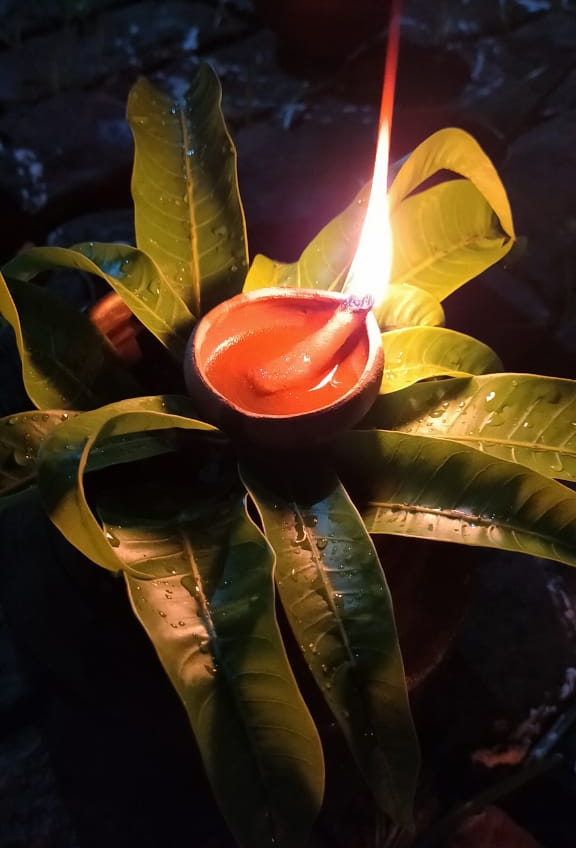
Kohbar Ghar A special place/room which has been selected for doing all the rituals during marriage, where bride and groom has to live for four days till Chaturthi.This place is decorated with Kohbar painting on one wall . An earthan pot called Kalash with four – wicked lamp, called Chaumukh on its top is placed in the Kohbar ghar.
Kohbar Ghar
The Bride have to keep a betel-nut(sauns- supari) the whole day.
In afternoon, Pandit(priest) , Bride, and the person who is suppose to do Kanayadaan ritual(mostly they are the old aged of the family like grandfather, grandmother etc.) gathered at the Kul Devi/ family God place that is placed in some part of the home only and pray for her good wedding life and this is known as Matrika Puja.
In the evening, the washerwoman give blessings to the bride as Suhaag . Ritual related to this: The washerwoman dip her 4-5 hair in a pot of water and the bride have to drink that water. She also serves Chura-Dahi(local food) by her own hand to the Bride. Now the bride gift her the saree that she wore the whole day. This ritual is consider as very auspicious and it is happening in the same way till now.
Before coming Of Baraat, (The friends and family of the groom who come with all fun and enthusiasm for the wedding which is headed by the groom only) the bride worships the mango tree and Mahuwatree with the help of grinned rice(pithaar) and red colored sacred thread.It is a belief that each and every girl take the blessings of nature for her marriage. This shows how people of Mithila coneented with the motjer nature.
Now the Baraat has arrived . These are the name of the traditions that has beem done after coming of Baraat.
AagyaDala: From Bride’s family elder member go to the groom’s family with a big plate made up of bamboo sticks decorated with Dhoop and incense sticks (Changeda). Now groom’s family placed clothes, ornaments and other accessories in the changeda for bride, her mother and other elders of the house and give permission for the initiation of the wedding.
Bride’s friends and realtives take groom to the house and greeted with sweets(Biggi).
The wedding is always about the enjoyment and celebration. And people of Mithila has made each and every ritual so interesting and amazing which is full of hillarious acts that no rite seem to be boring and just a tradition.
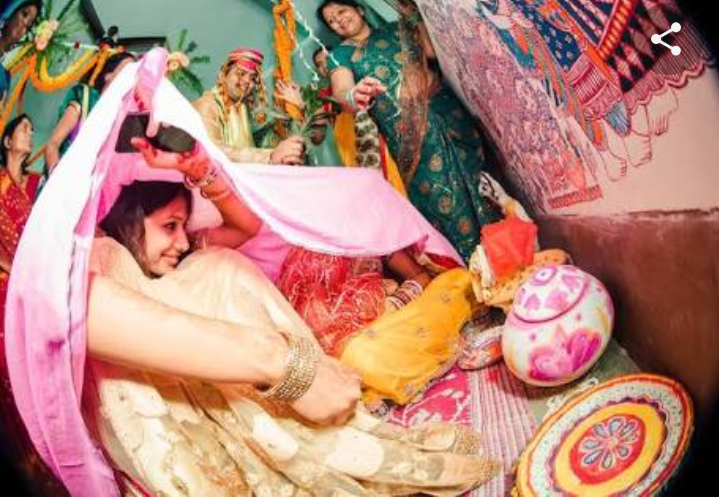
Now going back to the wedding day the next ritual is Parichhan ( welcoming of the groom by the ladies of the bride’s side). All the rituals done by a experienced lady of the bride’s side who have also the responsibility to become a mediater between the bride and the groom for the next four days as in old times mostly arranged marriage happened , so boy and girl are not known to each other, and thus this lady used to connect them . The lady in local language called as Vidhkari. In Parichhan vidhkari started asking questions realted to the households, making fun of him in a traditional way , apply Kaajal and chaanan and then make him enter to the Kohbar ghar by holding his nose with the help of betel leaf.It is considered as a very funny scene .
The next ritual is Naina Jogin that takes place in Kohbar ghar.In this ritual groom have to find her bride who has been hidden under the big shawl with her sister. This ritual is very entertaining , the ladies of the bride’s side has been singing the local wedding songs . Here , the groom have to encounter with the bride’s sister’s attack of curd in her hand which is suppose to put on the groom’s face.
Naina Jogin
The next ritual is Othangar kootna .
After this Bride and groom are made to sit side by side in the mandapa. The ritual of Kanyadaan is started. Now Vivaah yagya has also started with the chanting of mantras by the priest and with the background local wedding songs.
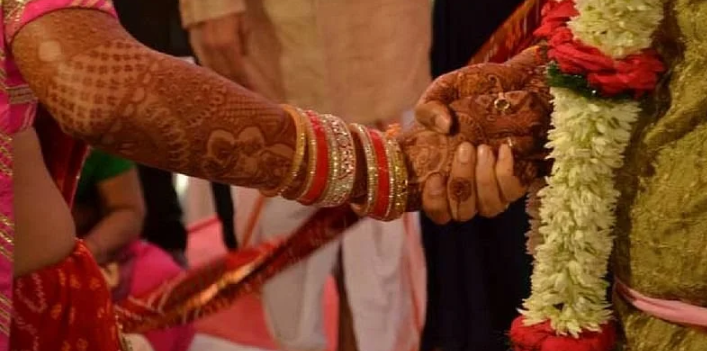
Lavadahan as a ritual has been done by them where bride have to stand in front of the groom, with a plate made up of bamboo sticks(konia) . The groom hold her shoulder and the brother of the bride put lava (paddy seeds) on the plate three times and all the times bride and groom fluckered them in the air by moving three times around the mandapa. It may said that these are the first few steps that the couple takes together to mark the beginning of their married life.
In Mithila Vivaah , the Barber, the washerwoman , and many more local professionals of the society are being valued much .
Shilarohan, Sindoordaan, ghoonghat. Chumaun, Doorbaakshat, Naghar are the rituals being done at the wedding night. One more speciallity of Mithila Vivah is that it takes place the whole night until the morning. It is thelongestrunning wedding in theIndian culture.
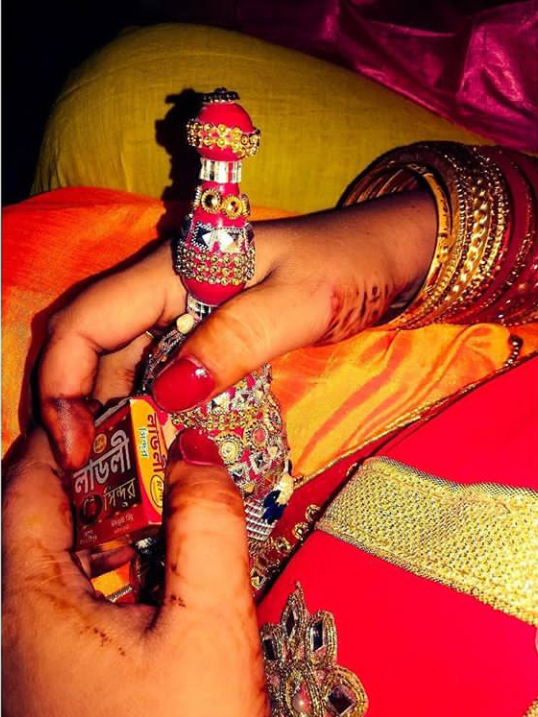
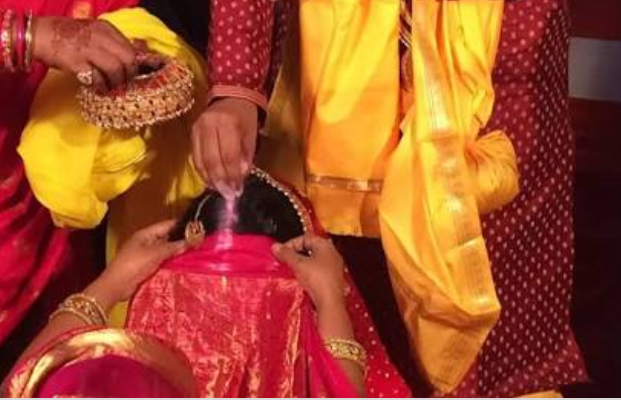
Shilarohan is a ritual done by the couple in the starting of the marriage ceremony.In this ritual the bride keep her right leg on a religious stone(shila) and the groom touches it and chants mantras.Sindoordaan means applying sindoor(vermillion)on the bride’s head. In Mithila the sindoor that applies on the wedding night on the bride’s head is not the red vermillion, it is their own traditional vermillion known as Bhuswa Sindoor , it is in the pink color. The original red sindoor is applied on the 4th day of the marriage(chaturthi). Ghoonghat is a tradition in which the bride is being gifted saree and ornaments as the blessings by the groom’s elder brother. This is a ritual in which groom’s elder brother put the veil of the bride down while the groom put it up . It happened for the three times. Chumaun and Doorbaakshat are the local traditions in which blessings are given to the new couole by the elder married women of the house or the community.Next ritual is Naghar in which bride’s elder sister or her father’s sister fill two soil pots and keep them in the Kohbar ghar.Now the first day of wedding has ended here.
Sindoordaan
2nd day of wedding
It is a ritual that the bride, the groom and the vidhkari have to survive on only sweet foods for four days . They are not allowed to eat salt. They are not allowed to take bathe also.Now the second day of wedding started in Kohbar ghar where some more rituals is done . The bride do Gauri Pujan with her groom . The groom opens the braid of the bride as a ritual , in another ritual he opens her fist too which she is suppose to make the fist three times and everytime the groom has to open her fist by his left hand. These rituals are entertaining and the ladies of the house who organises them enjoyes a lot. Another ritual is Mauhak in which many sweet food items has been made such as kheer, mithai . The food plates got ready with them and there happens once more a very entertaining act in which vidhkari, groom, bride and the ladies of the house participated.Again it follows Doorbaakshat and Chumaun.These rituals happens until the day before chaturthi.
Chaturthi(original wedding day)
On the 4th day of the marriage the bride and the groom are prepared for the original marriage. They are again dressed in the wedding clothes. The Kohbar ghar is prepared and decorated with airipan(rangoli) . Both are made to sit with each other . The priest again chants the mantras and the groom today put the red vermillion on the bride’s head. Now tje wedding is consider the real wedding.
The next day of the Chaturthi the bride with the five married ladies of the house go to the nearby pond with a plate having sindoor, satanja(mixture of grains) ,hair oil , clothes . The ladies apply sindoor and oil on the bride’s head as a blessing. She gifts them Satanja . This ritual is known as Danauhi. Now the bride is all ready to go with the groom. In old times , this day is the day when the groom go back to his house alone but in todays time the bride also go with him .Its all choice now.
The bride’s arrival to her groom’s house is known as Dwiraagman . Now all the riruals happens at the groom’s place.
The culture of Mithila and the rituals that have been following depicts the people’s respect towards the nature the traditions and the common folks. The songs has a great role in the wedding. From the initiation of the wedding to the vidai ritual songs describe each ritual appropriately. The Mithila wedding is always flourishing and shinning because of its folks who are still following and keeping their traditions alive. May thetradition and the culture of this place livelong.
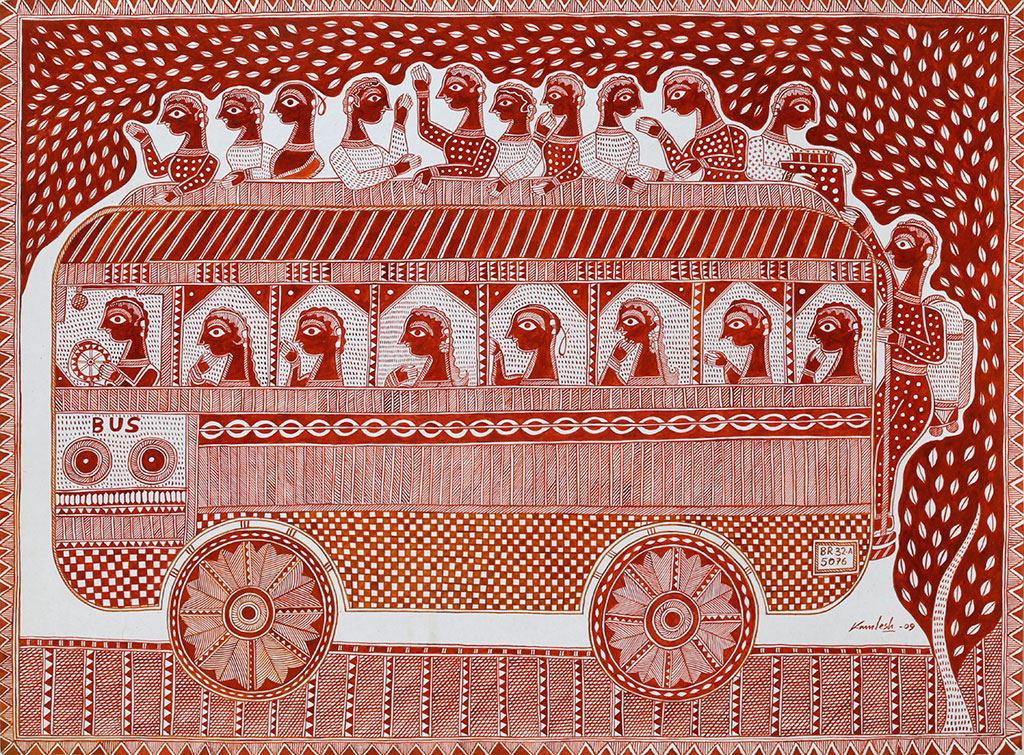
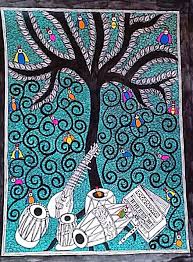
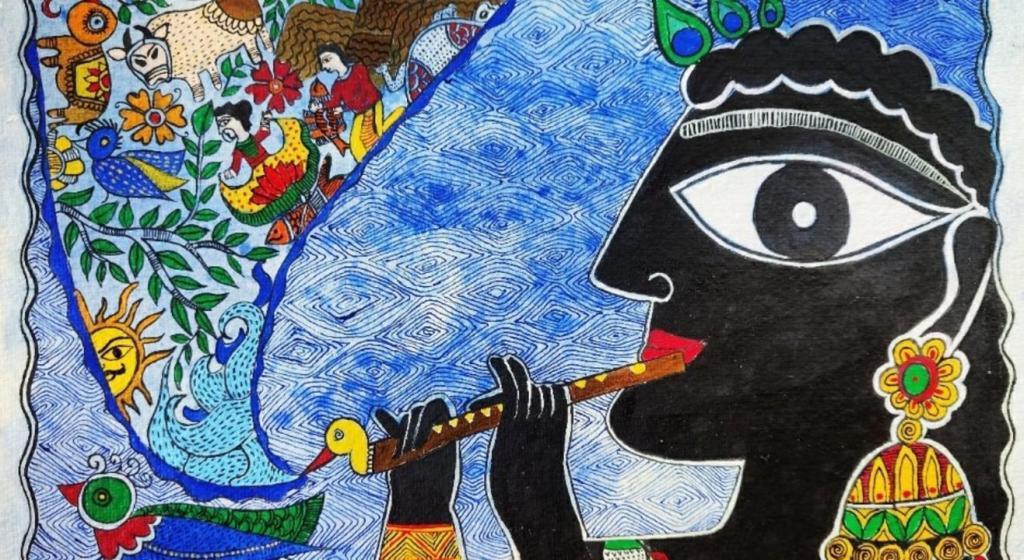
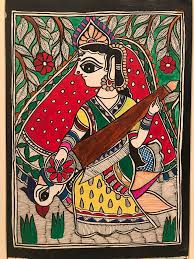
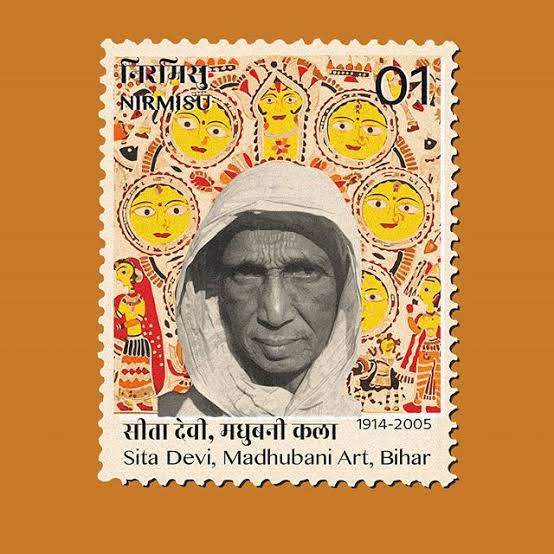
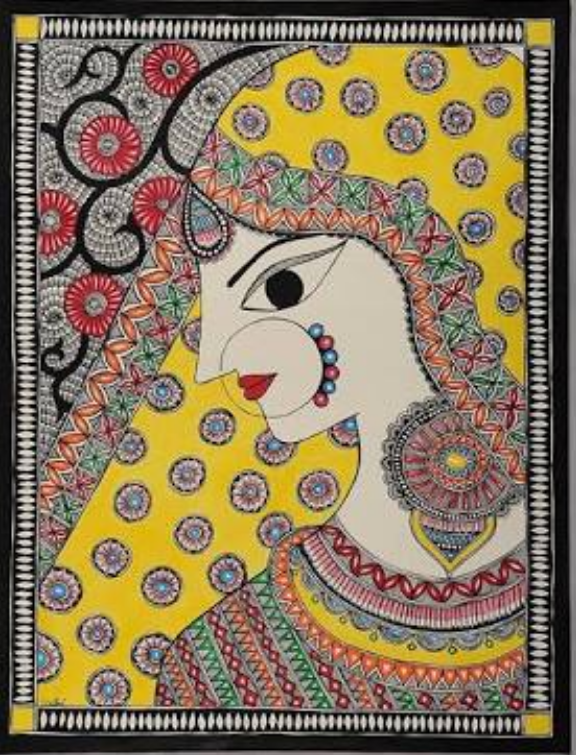
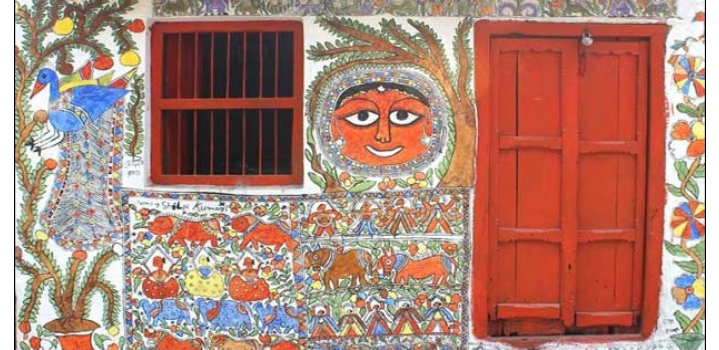
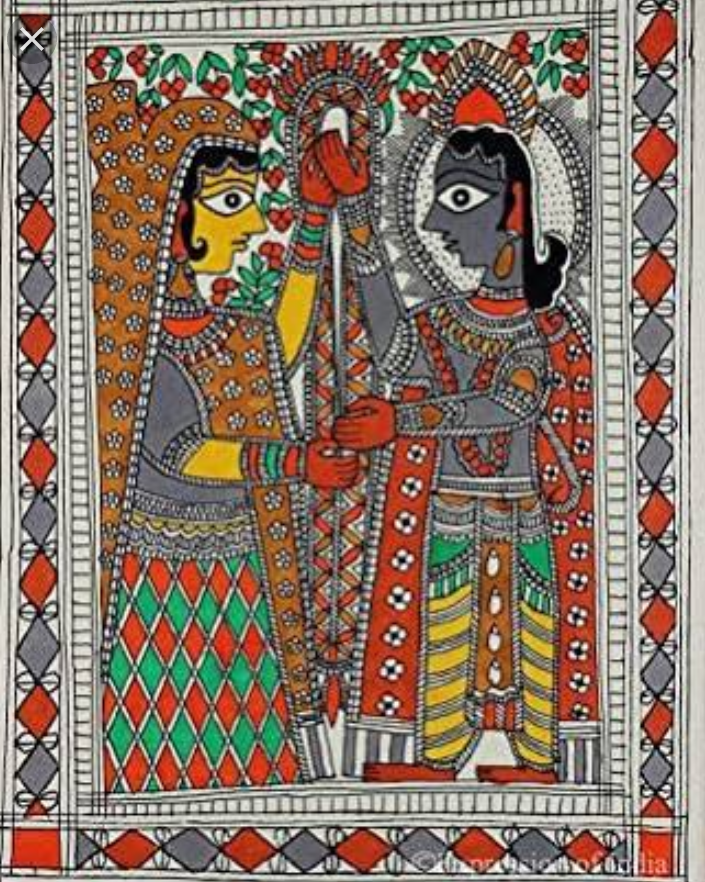
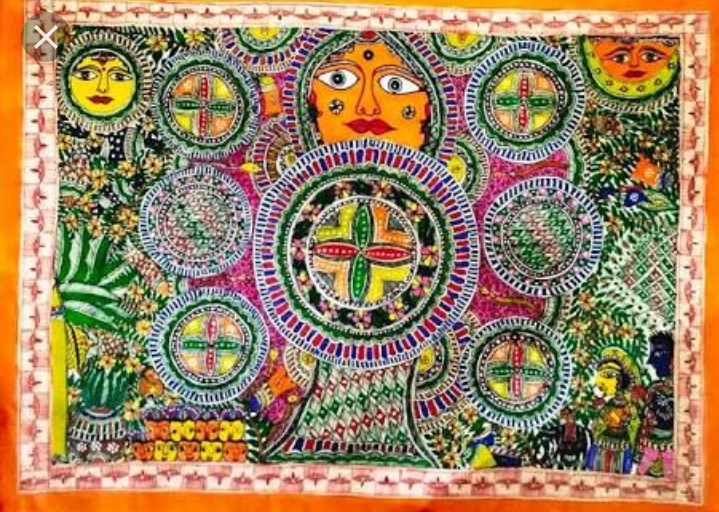
The place has its own charm, when it’s speciality is world-famous.And that speciality of Mithila is its art, its painting which is called as Mithila Painting or Madhubani painting. This is the style of Indian painting practised in the Mithila region.Why specially Madhubani Painting? it is because , Madhubani is the birth place of this painting ,where now the world has eye on it. The painting is the identification mark of the city. Madhubani word means forest of honey(Madhuban) , more specifically it is said that people of this city speaks very sweetly their local language Maithili so Madhubani word came from (Madhur +Vaani), which means sweet dilect. The people , the culture and everything here is so close to the nature that even its paintings depict the nature. The paintings have thousands of stories to tell. The paintings have countless memories to cherish. The paintings are the mirror of the culture that this city has been following from thousands of years.The paintings are those glimpses of the society which has seen several sacrifices for its art and its custom.
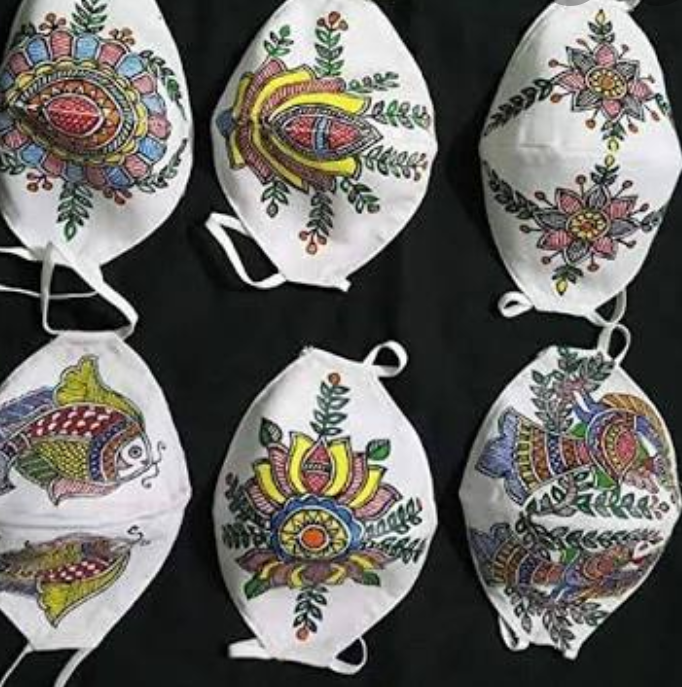
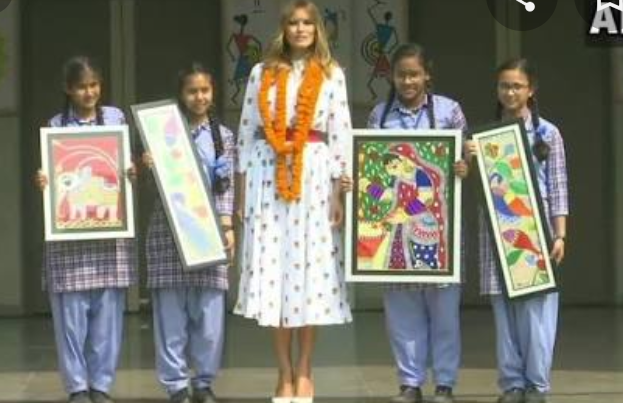
Mithila Painting is one of the most famous art forms of India. It is the representation of ritual content.Mithila paintings are exclusive monopoly of artists . The paintings have depiction of social life which describes the strong connectedness of the people.Today the painting has its roots in Madhubani only but its spread is all of the world now.It is the demand of the Art markets of the world. From Dilli Haat in Delhi to Folk art market in Santa Fe in USA it is mesmerizing the world and the folks.Many companies has collaborated with the artists of Madhubani and are doing great businesses . The story of Mithila painting has started on the walls of the houses of the natives now it has evolved itself according to the fashion and changing generations. Now we can see this art form on the papers, clothes of different varities , ( stoles, sarees,salwaar Kameez, long skirt and so on) , useable products such as pen , pencil , mug, and lots of 3d objects. Recently Amazon has collaborated with the artists of Madhubani and has been preparing face masks with Mithila painting on them.This shows the grip of the painting in the global marketing. It is making itself appreciable beyond boundries of India and attracting art loving people. Japan , Germany , France and USA are the countries who are pouring their immense love to this beautiful heritage of Mithila.The art has recently been gifted to the first lady of the America Melania Trump while her first time arriving to India.
History and Origin
The history of the painting can be seen in the Ramayana . It is believed that the king of Mithila Raja Janak had first commissioned rural artists to paint palace walls . The ocassion was Janak’s daughter’s wedding Rajkumari Sita with Lord Rama.For making the paint more attractive , shinny and realistic , artists mixes cow dung and rock salt to the natural colors. The history of the painting has its roots in medival period too. It has said that many kings has bunch of Mithila paintings in their palaces which also reflects the magnificant history behind the painting.
But it came into limelight after the earthquake of 1934 . Because of the earthquake widespread destruction was faced by the people if the city. A British officer William G. Archer visited visited Madhubani for the inspection. While inspecting the walls of the destructed houses he found Mithila painting which was similar to the work of western artists Miro and Picaso. He took some pictures and wrote in an art magazine. Thus Madhubani painting also became known in the outside world.
In antiquity , this art was made on mud- walls or soil- ground on certain auspicious ocassions and that erased by time. And this is why there has been no preservation of the worus.
The painting imerged as a source of inome when the city faced drought in the years (1966-1968). All India handicrafts Board encouraged the women of Mithila to make painting for commercial purpose. Since then Mithila’s women started making paintings , sell them and help their family’s source of income.
Traditional fashion of paintings developed in the Mithila region , in the villages of Jitwarpur and Ranti, near the town Madhubani. Origin is quite unknown.
First craft village of the world – Jitwarpur(Madhhbani)
Themes
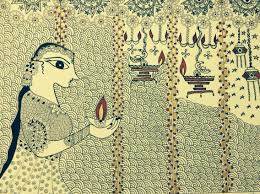
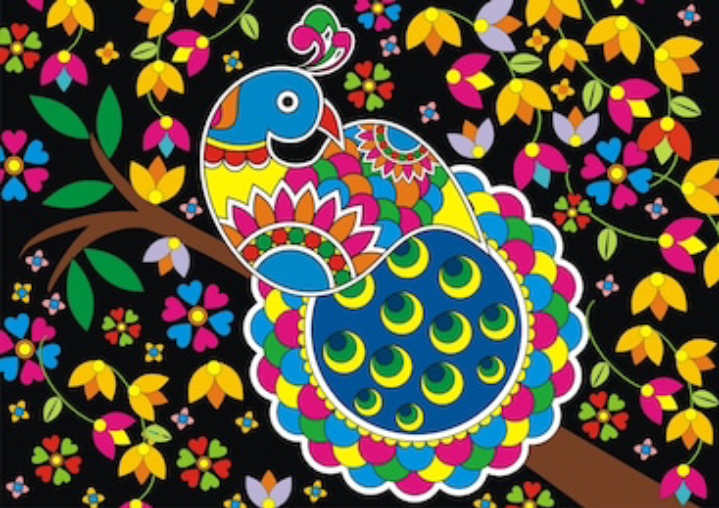
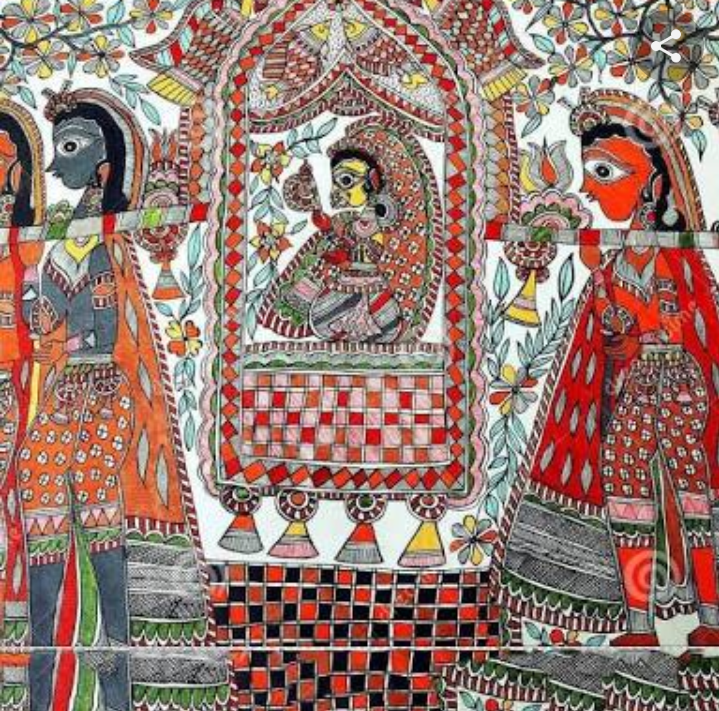
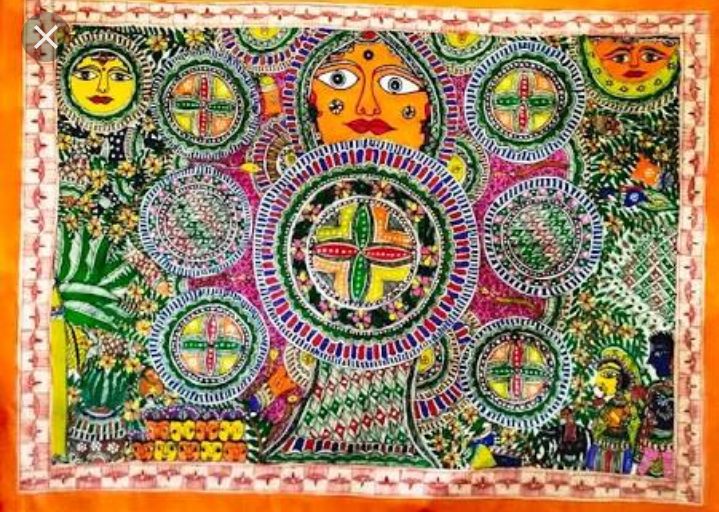
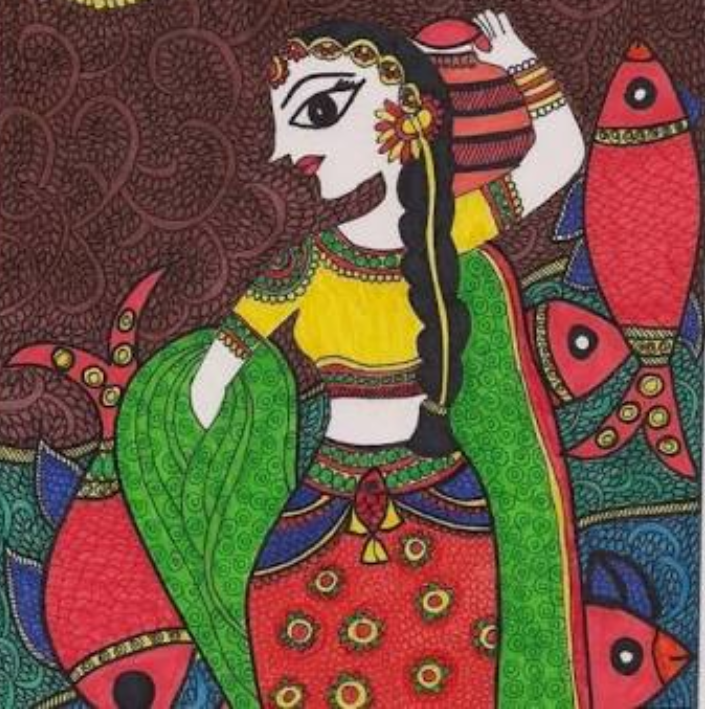
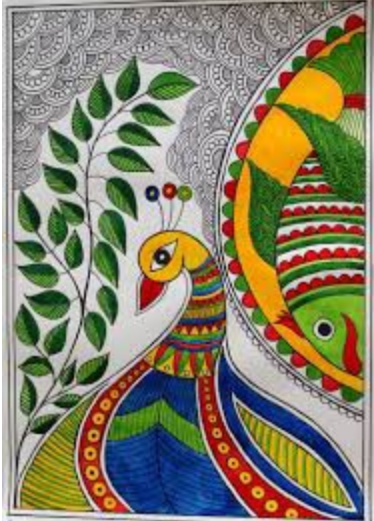
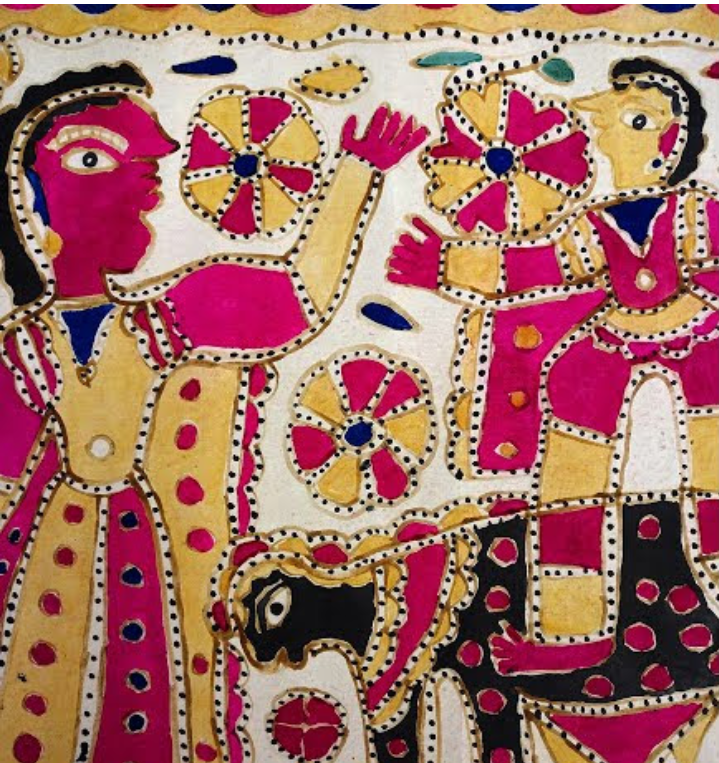
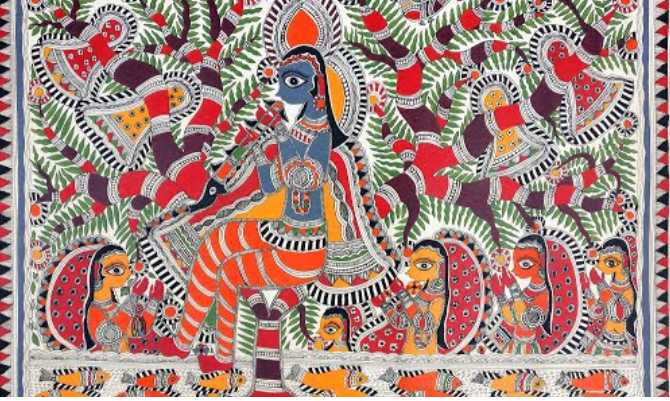
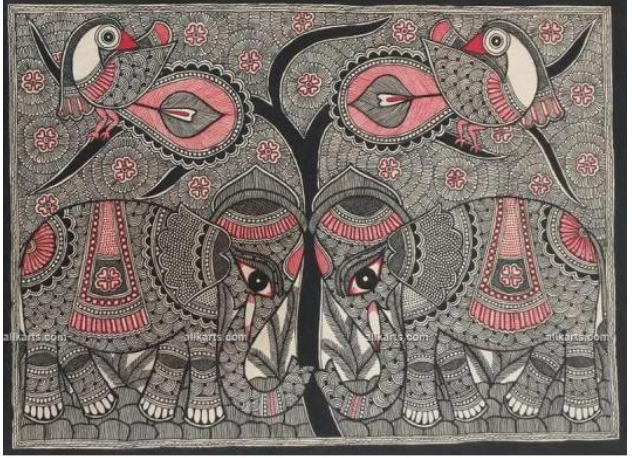
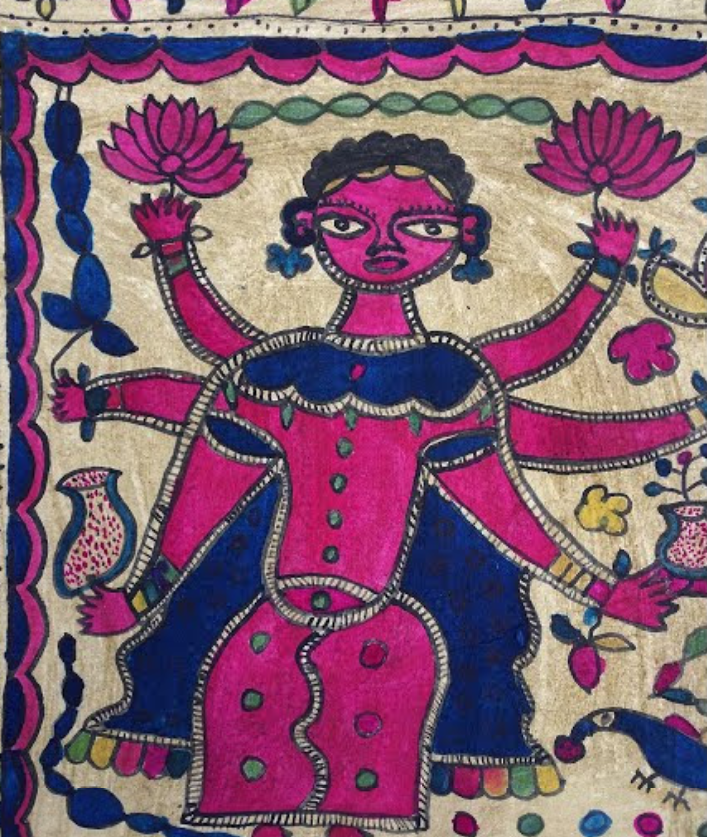
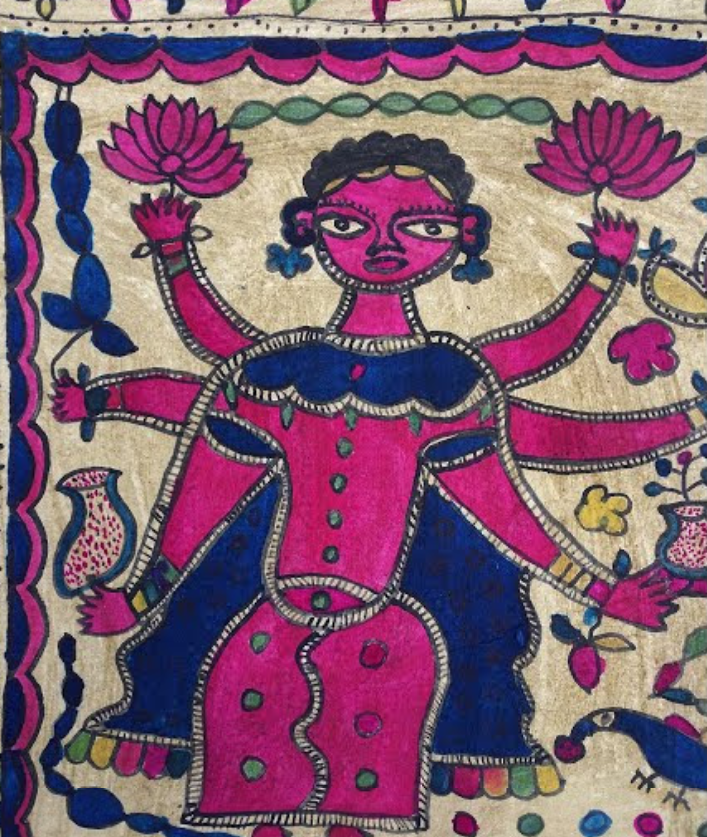
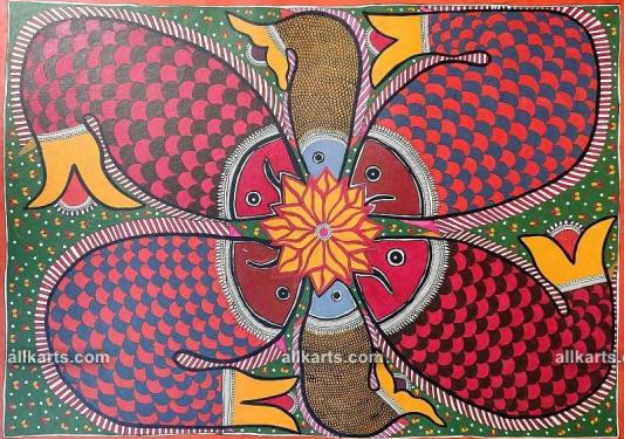
Paintings are mostly influenced by the religious motifs and beliefs of Indians. In the paintings one can see love for the nature and devotion for the Hindu deities. Central theme of all the paintings is love and fertility. It also sbows the aspect of the daily life of a woman or man of tbis region.People of Mithila is connected with nature which can be seen in these paintings . Painting of lotus, tree , bamboo , forest , snake , elephant, fish, tortoise ,parrot , peacock and many more can be seen. Artists used to depict the tales of religious characters/Gods such as Lord Krishna, lord shiva, lord Rama , goddess kali sita andany more. Few paintings also showcased the scenes from the royal court proceedings from the time and the events.
Painting Technique
The essential materials to make the painting are a cloth on which the painting will be made or a handmadepaper. Preferably a thick sheet of A3 size (handmade papers are now not in so much use). Nib pen is needed which should be very thin.Other than this more tools such as fingers, twigs , Brushes , matchstics are used. Pencil, eraser and a ruler are must in use.Talking about the colors in anicient time natural dyes i,e,. pigments of flowers and fruits , plant leaves are used as colouring material. But now- a-days natural colours are in less use.For cloth fabric colors are used else paster color can be used.Yellow, orange , Red, Blue and green are called natural colors. Where as additional colors are lemon yellow, mustard yellow, orange red, sky blue, navy , purple , brown , ochra and light green. For silk cloth acrylic color is used.
Ways of painting
1. Kachni uses delicate fine lines to fill the painting and not much color is used. It is also known as Kayastha style of painting. It is the line art. Mainly black and brilliant red colors are used to make the Kachni style paintings. It depicts the fertility and life.
Kachni
2. Bharni basically means shading/ filling. It uses solid colors to shade and fill the pictures. It uses black outlines filled with vibrant color.
Bharni
Characteristics
1. The detailing of the painting is very fine . Thats why it takes a lot of patience while making.
2.Human figures have faces that are naive and almost birdlike and pointed noses in contrast to the sophistication of the detailing.
3. Contrast is used and more care about the pattern.
4. Prominant outlines and borders in every painting is very much essential.
5. Creatures in the painting have bulging fish like eyes.
6.Every painting show harmonized appeareance. You won’t be able to find a minutest empty space . If there was any gap left , artists used to fill the void by depicting dazzling flowers, birds,geometric patterns and animals. This is the uniqueness of this painting.
Types
There are 49 types of painting style in which Godhna style is the style in which cow dung base background and thin outlining are used.
Tatto style depicted the stories of king, Moon ,sun and Rahu.
Tantric style depicted the colors and descriptions in tantric texts.
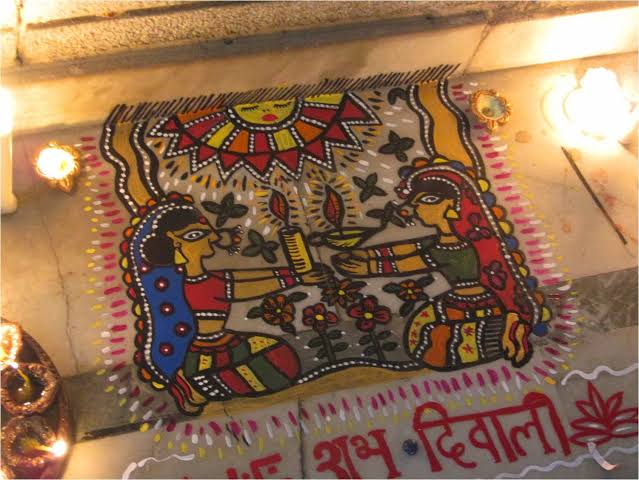
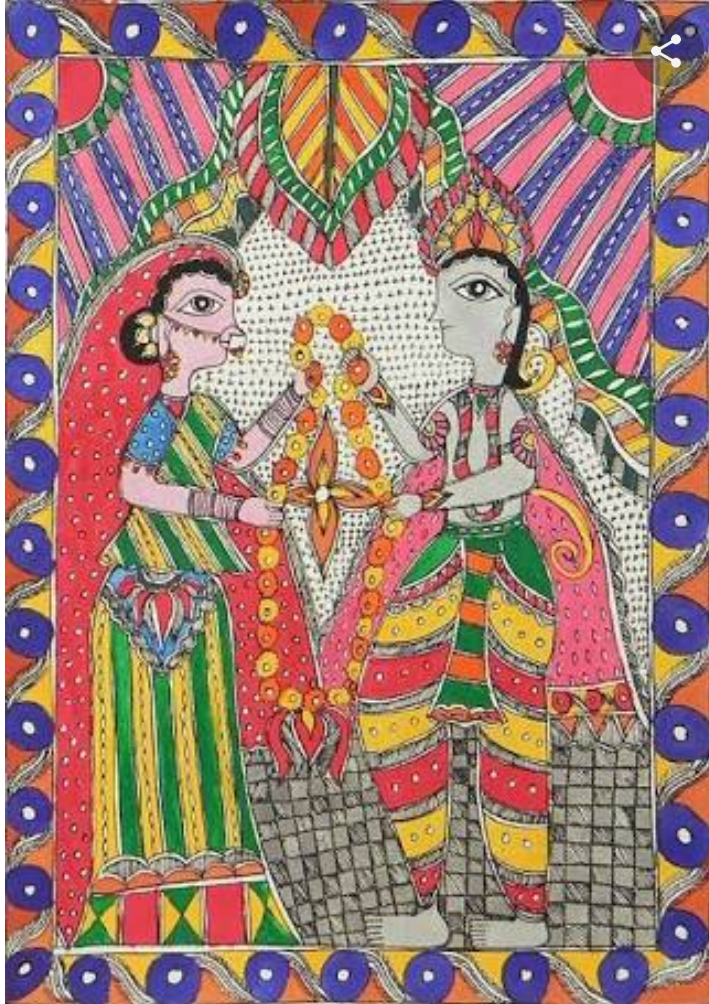
The highly symbolic paintings are used KOHBAR . In Mithila the walls of the houses were used to be decorated with various eye-catching dedigns on the ocassion of marriages and other festivals. But now this way of celebration has restricted to some parts only. Kohbar is the style of painting which is also painted on wall at the bride’s home . It is also known as Bridal Chamber where couples spent the first few days of their married life. In this painting the devine couples like Shiva- Parvati, Ram-Sita, Krishna-Radha are made . Sun and moon with things related with the marraige of Mithila is also made. It is said that all these give blessings to the new couple.
Kohbar
Paintings have several stories and purpose which the artists depicted very smoothly .
The painting is the kit of survival of the artists here. Many artists are also very famous internationally and their work are making India proud all over the world. The evolution of the Mithila painting tells the story of the flavours of the passion and Culture . The people are preserving their customs and blessings of their forefathers in a very magniciant way.They deserve all the happiness amd succesess of the life.


















 Mithila lifestyle and culture